Showing posts with label greensberg. Show all posts

Monday, January 5, 2009

Greensburg, Kansas Tornado Study Complete

Greensburg, Kansas Tornado Study Complete

In one of the most in-depth studies completed of the Greensburg, Kansas tornado outbreak, researchers from the University of Oklahoma have concluded that the mesocyclone that spawned that tornado may have been much stronger than originally believed.

The study authored by meteorologists Les Lemon and Mike Umscheid reveals the minute-by-minute evolution of the once-in-a-lifetime outbreak. As reported in the Kansas City Star (Greensburg study finds that storm contained 22 tornadoes), the storm may have contained more tornadoes than originally thought:

A large, long-lasting tornado 1.7 miles wide and measuring EF5 on the Enhanced Fujita scale virtually wiped Greensburg from the map shortly before 10 p.m. on May 4, 2007. Eleven people were killed and more than 50 others were injured.

It was one of 22 tornadoes that touched down in southern and central Kansas from the same thunderstorm complex on the night of May 4 and early morning of May 5.

That’s more tornadoes than initially thought, said Mike Umscheid, co-author of the study and the meteorologist who issued the “tornado emergency” warning that night for the Dodge City branch of the National Weather Service. A handful of small satellite tornadoes rotating around larger twisters initially went unnoticed.

In particular, a few of the tornadoes were very large and may have exceeded the previous record set by the Moore, OK tornado of May 3, 1999:

The Greensburg tornado registered at the top of the Fujita scale, with peak winds estimated at more than 200 miles an hour based on damage in downtown Greensburg.

The tornado that struck Moore, Okla., and other suburbs of Oklahoma City on May 3, 1999, was labeled perhaps the strongest tornado ever recorded.

But research shows the Greensburg tornado had EF3 or stronger damage in a track at least a mile wide — at least double the size of the Moore tornado.

As always, the tornado strength was measured by the damage path:

After destroying 95 percent of Greensburg, the tornado continued north, then curled left and looped back around, nearly striking the town a second time before lifting…

The Greensburg and Trousdale tornadoes were so intense the weather service’s radar in Dodge City detected vortex holes in them — something the radar had never done before, Umscheid said.

A vortex hole “is what you would see in the eye of a hurricane,” except it’s in a tornado, he said. They form when winds are rotating so rapidly they pull debris and even large raindrops from the storm’s center.

The Trousdale tornado’s vortex hole was about two miles in diameter — or not much smaller than the eye of Hurricane Charley, a Category 4 hurricane in 2004.

This study has also taught many meteorologists more about mesocyclones - the birthplace of tornadoes:

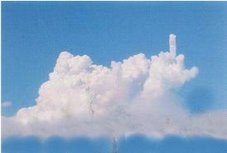
The outbreak featured something else researchers had never seen before: the mesocyclone — or “mother ship” cloud from which tornadoes develop — was rotating as rapidly as the tornadoes.

Typically, the mesocyclones rotate slowly. The Greensburg outbreak featured mesocyclones rotating so rapidly it was hard to tell them apart from the actual tornadoes on radar, the researchers said.

WEATHER NOTE

Hell trip from east timor

TIN Can Bay fisherman Kevin Lee knew there was a big wave out there somewhere as his fishing boat Faysea G pushed its way through atrocious weather and almost total darkness near East Timor.

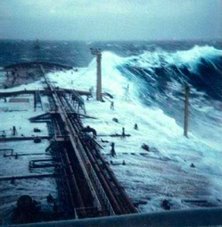
Kevin knew he had found that big wave when a huge breaker, riding up on the back of another big swell, smashed in the wheelhouse windows, six or seven metres above the waterline on the boat's third level.

In a second, the vessel's upper deck was flooded, the electrics shorted out, fires started inside one wall and circuit breakers cut out the lights and instruments.

“It took out all the electrics. All we had left was the GPS and auto pilot,” Kevin said this week.

Mysteriously, it had the opposite effect on his mobile phone, which had been malfunctioning but which suddenly started working again in the chaos of the wheelhouse.

“The boys thought it was raining downstairs. Water was just pouring down from the top to the bottom deck.

“We lost the 24v and the 240v circuits but we had to get some things back on just to keep going.

“We had to bolt to the engine room and get the generator out.”

Meanwhile, back in Tin Can Bay, Kevin's brother Peter, who was tracking the vessel via satellite, knew something was wrong.

“He knew we were in trouble by the way we'd turned around to go with the sea while we boarded up the smashed windows,” Kevin said.

“We had to get the broken glass out, sealastic a board across the windows, then bolt those to another board inside and tighten it up. Then more sealastic,” he said.

After a season of prawning in Indonesia and a refit, the return trip had been uneventful, except for Kevin's failed attempts to hold down food after picking up a stomach bug in Djakarta.

“From Djakarta to Bundaberg 25 days later, I couldn't eat. I lost about nine or 10kg and ended up in hospital for a couple of weeks.”

Things turned rough as the vessel motored past Timor.

“The sea was flat all the way to East Timor but right from there to Australia we just got smashed.

“It was a hell trip,” he said.

“Hell” was made even worse for Kevin, who had to spend a lot of his time in the cramped and smelly confines of the engine room.

“I'm the skipper/engineer and I had work to do on the engine, even if I was throwing up,” he explained.

Not to mention getting tossed around by the ocean.

“I don't get seasick, not for years, but it was not pleasant,” he said.

Kevin was taking a break in the wheelhouse, extracting what sustenance he could from a hot cup of tea and enjoying being above decks (bad weather or not), when near-disaster came calling.

“I was thinking, gee that's a big wave. We're riding up it and I'm willing the boat to keep moving up. It's midnight, so we couldn't see much.

“Then I saw this second wave breaking on the back of it. Three seconds later it came through and - boom!

“Don't call it a 'freak wave'. I'm not a believer in freak waves. If you're in a bad sea, there's a bad wave coming, just be ready for it.

“I've been doing it all my life and we've got a good crew. No-one freaked out. I would have hated to be in it with people who didn't know what they were doing.

“Mates of mine who know the boat couldn't believe we were in a sea so big we'd blown the windows in - and they're seamen.

“But it won't happen again. We've got 11mm glass across the front now.

“If we hit something that blows that out, I don't want to be on board!”

Kevin was fueling up the Faysea G at his family's Lee Fishing Company headquarters at Snapper Creek, getting ready for the scallop season, not so far away this time, off Bundaberg.

He's hoping for good weather.

MARITIME NOTE

CG Investigates Ship, Bridge Allision


Coast Guard Sector Field Office Grand Haven, Mich., responded to a bridge allision on the St. Joseph River, which occurred shortly before 8 a.m. Dec. 30.

The ship Manistee, a U.S. flagged freighter 620 ft in length, allided with the CSX Swing Bridge. The Coast Guard immediately contacted the owners of the bridge, who found evidence of damage to the bridge's fendering system. Structural engineers have determined that the bridge can safely carry rail traffic. The ship, which was empty, has sustained only minor damage and is not taking on water. No pollution or injuries were reported.

The cause of the incident is under investigation. The Coast Guard is conducting interviews of the witnesses and the vessel's crew, and has begun the required drug and alcohol testing.

Among the Coast Guard's many missions is the responsibility for licensing mariners, inspecting commercial vessels and investigating maritime casualties. Investigations of casualties involving commercial vessels are conducted to learn why the accident occurred in order to reduce the risk of further incidents.

The US Coast Guard issued a press release reminding the maritime community that, effective February 1, 2009, the COSPAS-SARSAT satellites will no longer monitor the 121.5/243 MHz signal transmitted by older Emergency Position Indicating Radio Beacons (EPIRBs). Mariners are strongly encouraged to replace them with the newer 406 MHz EPIRBs, which offer greatly improved performance. (12/31/08).

The Panama Canal Authority issued an advisory reminding the maritime community of restrictions on access to vessel information maintained in the Enhanced Vessel Traffic Management System (EVTMS). Advisory 34-2008 (12/29/08).


RS

Thursday, September 18, 2008

Lesson from Ike: Nobody does evacuations like Cuba

Lesson from Ike: Nobody does evacuations like Cuba

By ANITA SNOW Associated Press Writer

When Hurricane Ike struck Cuba, Ronald Matos didn't think twice about fleeing his one-room wooden house for a government shelter.

The 34-year-old construction worker and his wife, Emma Jean, got soft beds, free meals, the attention of a doctor and solicitous social workers — and the companionship of other friendly Cubans.

"We passed the night talking and telling stories, because Cubans never lose their smiles or their sense of humor," he said. "There is no electricity, but we are better protected than in our homes."

With an inefficient centralized economy and a U.S. embargo that has stifled trade, Cuba doesn't have resources to build new, hurricane-proof buildings. It doesn't have fleets of Humvees to charge through the floodwaters. Few of its people have cars to flee in, and fewer still can check on loved ones by cell phone.

But if there's one thing the communist island does right, it's evacuations. And in the end, that saves more lives than anything else.

Cuba sees more than its share of killer hurricanes, and yet in the past decade only 23 Cubans have been killed by them.

When Hurricane Gustav roared across western Cuba as a Category-4 hurricane on Aug. 30, it damaged 100,000 homes and caused billions of dollars in damage. Nobody died. The storm then moved onto Louisiana, which launched a massive evacuation and saw 26 people die.

The death toll from Hurricane Ike this week was shockingly high by Cuban standards: five. This, for a giant storm that tore across the length of the island, flattening houses in its path. Compare that with Haiti, which took glancing blows from Hanna and Ike and saw hundreds die.

The secret is the evacuations system. A quarter-million Cubans evacuated during Gustav, and the number for Ike was a staggering 2.6 million — nearly a quarter of the island's population. Most of the evacuees found family or friends to stay with, but nearly 400,000 were housed in 2,300 government shelters.

"We clearly cannot simply mimic their system, but I think there is a lot the United States can learn from Cuba's hurricane response system," said Wayne Smith, the former U.S. top diplomat in Havana. "They have a whole system of alerts that keep people clued in and we don't have anything like that."

He spoke by telephone from Mobile, Alabama, where he was talking to preparedness experts about Cuba's disaster response model.

Cuba's evacuations differ greatly from those in the United States, where people rush to airports for overbooked flights or pile into cars that clog highways. In Cuba, people are already prepared, part of a sophisticated system overseen by the president and the armed forces.

Standing evacuation plans are distributed to each household long ahead of time, and evacuation drills are held regularly. When a hurricane is approaching, state news media issue early warning, and civil defense officials activate local response networks, organized down to each block of each town.

Schools and other government buildings are quickly turned into shelters, and each is assigned a doctor and sometimes a nurse. Volunteers check stocks of blankets, water and food. Forty-eight hours before an expected hit, residents are told to prepare to evacuate.

When the storm is a day away, volunteer civil defense workers go door-to-door to ensure everyone gets out of harm's way. Government buses, cars and trucks transport evacuees to higher ground. Government shelters take in anyone who can't find a place to stay.

Of course, this is easier done in Cuba than in the United States because the communist government owns and controls most of the nation's resources. Unlike the U.S. Federal Emergency Management Agency, it doesn't have to buy supplies or contract services from private companies, or pay overtime.

Most Cubans work for the government and don't have to worry about losing wages if they take off from work. And because police keep a close eye on evacuated areas — and because most Cubans have few possessions of value anyway — looting isn't a major concern.

Cubans are taught from an early age to move quickly in the event of a natural disaster and to follow authorities' instructions. So the government rarely has to force people to leave.

The only people for whom evacuations are mandatory are pregnant women and mothers with young children, who can be fined if they don't comply.

When Ike approached, Anay Estrada was reluctant to leave the single room she shares with six others. But as she is seven months pregnant, two police officers showed up at her door.

"I didn't want to leave my mother," Estrada said from a shelter at a maternity hospital, where she waited out the storm with her 7-year-old daughter, Melani. "But they came in a patrol car so I had to go."

In addition, special attention is paid to the elderly and handicapped — people who critics say U.S. authorities abandoned when Hurricane Katrina ravaged New Orleans three years ago. Several hundred elderly and handicapped people and their companions waited out Ike in an Old Havana convent, a white, bouganvilla-covered structure with an imposing bell tower.

Part of the reason people are so obedient is that the government has a good track record of predicting what storms will be dangerous.

"By predicting hurricanes accurately almost all of the time, (Cuban) meteorologists have engendered the public's trust," said Jane Griffiths of Center for International Policy, a Washington think tank. "That's why people voluntarily respond to evacuation orders."

And if anyone has doubts, authorities quickly put an end to them. The state news media often makes examples of people who fail to move out — and who are killed or injured.

On Wednesday, an elderly man was trapped under the rubble of his evacuated Havana apartment building when he returned home before the building was inspected for safety. Coroner officials confirmed that he died.

"Unfortunately, there was irresponsibility in this case," said Lt. Col. Rolando Menendez, a firefighter overseeing rescue efforts. "But in general, the population is following civil defense measures well."

Evacuees from Hurricane Ike rest at a shelter in Havana, Tuesday, Sept. 9, 2008. Hurricane Ike roared ashore south of Cuba's densely populated capital of aging buildings Tuesday after tearing across the island nation, ravaging homes, killing at least four people and forcing 1.2 million to evacuate. (AP Photo/Fernando Llano)

Evacuees from Hurricane Ike rest at a shelter in Havana, Tuesday, Sept. 9, 2008. Hurricane Ike roared ashore south of Cuba's densely populated capital of aging buildings Tuesday after tearing across the island nation, ravaging homes, killing at least four people and forcing 1.2 million to evacuate. (AP Photo/Fernando Llano)

Evacuees from Hurricane Ike rest at a shelter in Havana, Tuesday, Sept. 9, 2008. Hurricane Ike roared ashore south of Cuba's densely populated capital of aging buildings Tuesday after tearing across the island nation, ravaging homes, killing at least four people and forcing 1.2 million to evacuate. (AP Photo/Fernando Llano)

WEATHER NOTE

Greensburg on display at Chicago museum


CHICAGO | One year after a devastating tornado in Greensburg, Kan., the Field Museum opened an exhibit this spring called “Nature Unleashed: Inside Natural Disasters.” It explains how the tornado happened and offers ideas for protecting yourself in such an event.

Twelve persons died in or near Greensburg, and 95 percent of the town’s structures were destroyed by the May 4, 2007, storm, whose winds reached 200 mph.

The exhibit, which runs through Jan. 4, includes large photos showing the aftermath of the tornado and artifacts from the south-central Kansas town that bear witness to the force of the EF-5 tornado:

•A stop sign, bent around a sign post.

•A tree stump stripped of its bark.

•A piece of bent metal embedded in a block of wood.

Besides the section on tornadoes, the exhibit also explores hurricanes, earthquakes and volcanoes.

Most of the tornado section is dedicated to the destruction in Greensburg. Other parts explain how tornadoes form and why they occur so often in the central United States, known as “tornado alley.”

A highlight is “The Tornado-in-the-Round,” a nearly 360-degree video taken by a special camera that was placed in the path of a tornado.

As visitors stand in the middle of a circle of screens, the tornado approaches from the front, moves over and passes behind them. Thrown debris appears to hit the screens loudly.

The exhibit ends on an optimistic note about efforts to rebuild Greensburg as a more environmentally friendly town. One of the final questions the exhibit asks as museum visitors exit is, “What kind of community do they (residents of Greensburg) want to be?”

NOAA'S FAMILY DISASTER PLAN

Family Disaster Plan

check markDiscuss the type of hazards that could affect your family. Know your home's vulnerability to storm surge, flooding and wind.

check markLocate a safe room or the safest areas in your home for each hurricane hazard. In certain circumstances the safest areas may not be your home but within your community.

check markDetermine escape routes from your home and places to meet. These should be measured in tens of miles rather than hundreds of miles.

check markHave an out-of-state friend as a family contact, so all your family members have a single point of contact.

check markMake a plan now for what to do with your pets if you need to evacuate.

check markPost emergency telephone numbers by your phones and make sure your children know how and when to call 911.

check markCheck your insurance coverage - flood damage is not usually covered by homeowners insurance.

check markStock non-perishable emergency supplies and a Disaster Supply Kit.

check markUse a NOAA weather radio. Remember to replace its battery every 6 months, as you do with your smoke detectors.

check markTake First Aid, CPR and disaster preparedness classes.

MARITIME NOTE

Most advanced' rescue sub tested


Rescue vessel

The world's most advanced rescue submarine, commissioned by the Chinese Navy, is undergoing trials at an underwater centre in Fort William.

Capable of operating in depths of more than 300 metres, its size means it can rescue up to 18 people at once.

The trials are taking place in Loch Linnhe, where water depths are up to 150 metres.

The vessel could deal with incidents such as Russia's Kursk disaster 2000, in which 118 sailors died.

Once the first phase of tests are completed, the LR7 will take part in a simulated rescue.

The final phase of trials, part of an extensive testing and design process, will include pilot training.

The vessel was designed and developed by Perry Slingsby Systems, part of the Aberdeen-based Triton Group.

Please turn on JavaScript. Media requires JavaScript to play.

Underwater tour of the rescue sub

BBC reporter Ben Geoghan described the experience of going down in the submarine as "quite comfortable". He said the main advantage of the LR7 is its large size.

He added: "There is, what someone described to me, as something of an underwater space race going on. One which presumably the Chinese now are leading, but the Koreans and Singaporeans are not far behind.

"The real test will come when we do get another accident at sea involving a sub to see which vessel is deployed and whether they do manage to bring back survivors."

The rescue submarine itself has a relatively quick turnaround time and can stay underwater for up to four days.

Martin Anderson, chief executive of Triton Group, said it was an "extremely exciting development".

After the trial is complete, the LR7 will undergo further checks and be fitted with ancillary equipment before being delivered to China for sea trials.


RS

Sunday, May 4, 2008

Special Edition - Back To Greensburg

May 4, 2008 Special Edition- Back To Greensberg

Greensburg Continues To Come Back To Life

(CBS)
Rather than blame God when a massive, ferocious tornado hit their tiny town almost a year ago, the people of Greensburg, Kan. turned to their faith to help get them through.

That, perhaps, sums up their can-do spirit and refusal to give in to adversity as well as anything else.


As
The Early Show continued its special weeklong series. "Tragedy to Triumph: Greensburg Rising" Thursday, we met a grandmother who suffered an unspeakable personal loss to the twister, but persevered by following her faith. We also heard from the pastors of two local churches about how they picked up the pieces -- literally -- left in the funnel's wide wake.

And it wasn't just people affected by the tornado. Their pets were, too. What became of them? We found out Thursday -- and heard from a man whose cats became his lifeline after his wife was killed by the twister -- the same day she'd finished chemotherapy for breast cancer.


We also saw the M*A*S*H*-like local hospital -- doctors needed somewhere to do their jobs after the funnel felled the building.


Among other highlights, a chat with Kansas Gov. Kathleen Sebelius about Greensburg's remarkable comeback, a progress report on the playground being built all-green, and word on two New York City firefighters so moved by what happened to Greensburg that they went there last Christmas to help the town's 220 kids bring hope and inspiration back to their families and friends.


One of the firefighters is a 9-11 survivor, the other works in a firehouse directly across from Ground Zero.


Almost ever intersection in Greensburg has a star -- 220 in all -- each hand-painted done by one of the 220 kids who live there, and each with a personal message of hope, grieving, inspiration and love.


The firemen belong to the
New York Says Thank You Foundation, a relief organization started after 9-11. Each year, volunteers help communities hit by disasters, much as folks across the country helped New York after 9-11.

A Texas family who lost their home in a tornado in 2006 was helped by the New York relief group. That family, in turn, made each of the stars to be painted and brought them to Greensburg -- their way to "Pay It Forward."

The Faithful Keep The Faith -- And It Keeps Them


Pets Rescued -- And To The Rescue


Also,
Del Monte Foods gave the people of Greensburg 50,000 pounds of pet food. Firefighters To The Rescue


Greensburg, Kansas...A look back on this date....


http://greek.wunderground.com/data/wximagenew/m/MikeTheiss/107.jpg


Greensburg, Kansas

Greensburg needs your help with reconstruction.
Please send your donations to: Greensburg Rebuilding Fund
% Greensburg State Bank, P. O. Box 787

Greensburg, Kansas 67054


Every dollar you donate will go to rebuilding our city.
620.723.2131


RS