Showing posts with label accidents. Show all posts

Tuesday, May 6, 2008

Jason-2 arrives in California

Jason-2 arrives in California
The Jason-2 ocean altimetry satellite has now arrived at its launch site in the United States.
The satellite is currently scheduled to be launched on the morning of 15 June 2008 from Vandenberg Air Force Base in California. Jason-2 was transported by road from the Thales Alenia Space plant in Cannes, France, where it was built, to Toulouse, from where it was flown by a Boeing 747 aircraft to Vandenberg, with a refuelling stop in Boston.

Before its long journey to the West Coast of the United States, the satellite underwent various tests. All environmental testing was completed by the end of 2007 at the Thales Alenia Space plant in Cannes. This was followed by the spacecraft qualification review on 11-13 March, successfully reviewing the testing of the satellite and its instruments, including environmental, thermal, acoustic, mechanical and electrical testing. Operational readiness reviews were held at EUMETSAT at the end of March and between the four partners – EUMETSAT, the French Space Agency (CNES), the US National Aeronautics and Space Administration (NASA), and the US National Oceanic and Atmospheric Administration (NOAA) – at the beginning of April. The pre-ship review authorising the beginning of transfer activities took place on 14 April.

Jason-2’s Ocean Surface Topography Mission will provide a vital contribution to the monitoring of climate change, ocean circulation and weather. Once in orbit and after it has been calibrated by the partners, the satellite will provide oceanographic products on an operational basis to the large EUMETSAT user community using the European weather satellite organisation’s proven dissemination capabilities. The main instrument onboard Jason-2 will be the Poseidon 3 dual frequency altimeter. The final orbit of the satellite will be 1,336 km above the Earth at a 66ยบ inclination.

Ocean altimetry is important for meteorology, with Nowcasting and short range forecasting on one end of the spectrum and monthly and even seasonal forecasting on the other. The assimilation of satellite altimetry measurements (notably the wave height), have considerably reduced the error in two-hourly forecasts. Upper ocean thermal structures are a key factor in the development of storms that can threaten shipping and offshore industries and thus need to be monitored. It is therefore of outmost importance that the mission not only continues but that the resulting data and products are available on an operational basis for all user groups. The mapping and modeling of the upper ocean plays a central role in enabling predictions on the medium-range (10 days), monthly and seasonal timescales. Jason-2 will provide continuity in the monitoring of climate and rising sea levels carried out by Jason-1 and TOPEX/Poseidon over the last 15 years.

Jason-2 is the continuation of the existing successful cooperation between the United States and Europe. It is a global endeavour with responsibilities for satellite development and launch shared between CNES and NASA. CNES and NOAA will be responsible for satellite operations once Jason-2 has reached orbit. NASA's Jet Propulsion Laboratory is managing the mission for NASA. Data processing will be carried out by CNES, EUMETSAT and NOAA, depending on the type of product, with EUMETSAT acting as an interface for near-real-time product distribution to European users.

WEATHER NOTE

Thousands Reported Dead After Burma Cyclone

May 5, 2008

Nearly 4,000 people are dead and nearly 3,000 are missing and dozens are injured after Cyclone Nargis hit the country of Myanmar. The United Nations (UN) states that the death toll could exceed 10,000, in what it calls an “alarming” report.

“The UN will do whatever it can to provide urgent humanitarian assistance. Because of the lack of communications, we are not quite sure what will be the total extent of damages and casualties. I am very much alarmed by incoming views that casualties have risen to more than 10,000, according to Myanmar’s foreign ministry,” said the Secretary-General of the UN, Ban Ki-moon.

The death toll has increased rapidly from Sunday’s count of only 351 deaths.

Food and water has become scarce and hundreds of thousands of people are homeless with several towns being completely destroyed. In the city of Yangon (also known as Rangoon), there is no power and much of the drinking water has been contaminated.

“What is clear is that we are dealing with a major emergency situation, and the priority needs now are shelter and clean drinking water,” said United Nations disaster response spokesman, Richard Horsey.

If the death toll continues to climb, then this would be the single most destructive natural disaster aside from the 2004 Tsunami which killed nearly 200,000 people worldwide.

There are 47.8 million people living in Myanmar with over 5 million in Yangon.

College storm-chasers catch Earle tornado

Saturday, May 3, 2008

(Photo)

College of DuPage meteorology professor Paul Sirvatka shows video images of the tornado that hit Earle, Ark. on Friday during the chase team's stay in the Best Western Inn in Dyersburg overnight. On Saturday morning the team was returning to eastern Arkansas to survey the damage.

The tornado that tore into Earle, Ark. on Friday was captured on video as it descended from churning clouds by a community college a storm-chasing team from Chicago.

"We were north of it and behind it a little bit, watching the clouds," said College of DuPage meteorology professor Paul Sirvatka, whose team stopped overnight in Dyersburg after chasing storms across the Great Plains for the last week. "Then I said to them, there should be a tornado descend in about 20 seconds. About 20 or 30 seconds later, it did."

Sirvatka called 911 and alerted authorities to the tornado formation. There we no sirens, he said.

Sirvatka said debris was in there air and as the team drove north of the city, the destruction was evident. There were no deaths reported in Earle, but more than 100 homes were destroyed.

Two deputies had crawled from beneath their patrol car that had flipped were standing by the vehicle, said Sirvatka.

"They seemed pretty shaken," he said. "But they said they were alright."

Sirvatka said he was bothered by the number of school buses on the road near the tornado.

"There were busloads of kids literally four minutes away from the tornado," he said. "And we saw that again and again."

The college offers the nation's only undergraduate degree in meteorology. The spring storm-chasing trips are open to independent scientists and weather enthusiasts and students, said Sirvatka.

After following the twister that hit Earle until it dissipated before crossing I-55 about 10 miles north of Marion, Ark., the team crossing the Mississippi River at Dyersburg "and try to get in front of the storm."

The chasers caught swirling formations over the Crockett County area, but saw no more tornados on Friday.

The team overnighted at the Best Western in Dyersburg. They were planning to assess the damage in Earle on Saturday and return to Chicago on Sunday.

Sirvatka said his team had noticed the "Storm Ready" posting at the Dyersburg welcome signs.

"Congratulations for being a Storm Ready community," said Sirvatka. "That means Dyersburg takes dangerous weather seriously. You should."

Take a Virtual Tour of NHC

New online feature brings you behind the scenes

Visitors anywhere in the world can now get a virtual tour of NOAA's National Hurricane Center. With the click of a computer mouse, the online link provides panoramic views of the different rooms in the facility, accompanied by an audio description. You will be able to move around each room in a circle, stop, back up, and zoom in. A text window is available for the hearing-impaired.

Those rooms included in the virtual tour are the National Hurricane Center operations, the Tropical Analysis and Forecast Branch (TAFB) operations, the Chief Aerial Reconnaissance Coordination All Hurricanes (CARCAH), the Federal Emergency Management Agency (FEMA) liaison, Media & Seminar Room, NOAA Miami Regional Library, and the NOAA National Weather Service Miami Forecast Office.

"This is an especially useful tool for students who are learning about tropical cyclones and weather forecasting", said Bill Read, director of NOAA's National Hurricane Center. "It also shows how the different branches of our facility work together for the best possible forecasts."

Click here to begin: http://www.nhc.noaa.gov/nhctour.shtml

MARITIME NOTE

Great Lakes Maritime Events for May

May 10 - Toronto Marine Historical Society Annual Dinner meeting
After a social time and meal at Capt. John's Restaurant aboard Jadran, enjoy an illustrated presentation on the C.P.R. passenger steamer Keewatin which celebrated her 100th anniversary in 2007.

May 17 & 18 - Door County WI Annual Lighthouse Walk
Annual tour involves five lighthouse sites from Sturgeon Bay north to Fish Creek, Wisc. Separate boat tours take passengers to or past five lighthouses on outlying islands. Sturgeon Bay, WI. www.dcmm.org

May 23-25 - 40 Mile Point Lighthouse 9th Annual Memorial Day Weekend Open House
Sponsored by the 40 Mile Point Lighthouse Society. All buildings open to the public. Includes the 4th Annual Afternoon of Arts & Crafts Show on May 24 and 25, 2008. Free admission and complimentary light refreshments. Located north of Rogers City, MI.

May 25 � Lake St. Clair & River Cruise & BoatNerd Gathering
An all day cruise leaving Hart Plaza in downtown Detroit and traveling up to the Blue Water Bridges. Co-sponsored by the Marine Historical Society of Detroit and BoatNerd.com, the trip includes a continental breakfast and deli lunch on board, and a buffet dinner at the historic St. Clair Inn. Tickets are $90.00 per person and reservations are required. Click here for details and a reservation form.

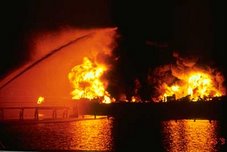
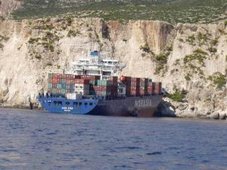
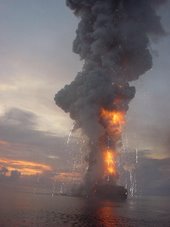
A Collage of Ship Accidents


RS

Friday, March 28, 2008

DRAMATIC INCREASES IN MERCHANT SHIP TOTAL AND PARTIAL LOSSES

DRAMATIC INCREASES IN MERCHANT SHIP TOTAL AND PARTIAL LOSSES

There has been a dramatic increase in the number of ship total and partial losses, and the upward trend looks likely to continue.

New statistics released today by the International Union of Marine Insurance (IUMI), which represents marine underwriters worldwide, indicate that the total figure for the 2006 year has jumped from an early estimate of 67 to 92 (all figures relate to ships of 500 gross tons and over), an increase of 37%.

Reported so far for 2007 are 82 total losses (compared to 67 for 2006 at the same point). If reports increase at the same level as 2006, says IUMI, by March 2009 the total will be 112. The downward trend of total losses over recent years, therefore, will be sharply arrested.

There has been an equally dramatic increase in major serious or partial losses. IUMI states: “727 serious incidents have been reported for 2006, a 6% increase since the last report, and a staggering 914 so far for 2007. This is a 270% increase in one decade, 1998-2008.”

The statistics, relating to the marine and offshore energy markets, collated and analysed by IUMI’s facts and figures, ocean hull and offshore energy committees, are based on information from a number of authoritative sources, including Lloyd’s Marine Intelligence Unit, Clarkson, Rigzone, Willis, and the International Association of Drilling Contractors.

Other highlights are:

The increase in tonnage lost in 2006 since the March 2007 report is 40% (508,141 gross tons has risen to 715,032 gt). Tonnage lost in 2007 is slightly down on 2006 at the same point – 481,741 gt.

The increase in total losses is also noticeable as a percentage of the world fleet where the percentage of tonnage lost has almost doubled from 2005 (0.06%) to 2006 (0.11%), with 2007 at this stage being 0.08%.

Weather remains the major cause of total losses but collisions have overtaken groundings as the next most common proximate cause. Of the weather losses, a total of 14 general cargo vessels over 25 years old were total losses in 2007.

The 270% increase in major serious losses over the 10-year period is equivalent to 0.64% of the fleet suffering a serious partial loss in 1998 to 1.73% in 2007. Machinery damage continues to be the major cause of serious partial losses, with a frequency of approximately 35% in the past five years.

In the offshore energy market, there is a long-term trend towards greater severity of the average loss since the early 1990s. However, the average loss frequency for 2005, 2006 and 2007 does not appear significantly higher than that seen in the early 1990s.

Analyzing the offshore losses, excluding the spate of hurricanes in 2004/5, there is a moderate trend for an increase in loss attributable to mechanical failure and design/workmanship.

Commenting on the statistics, Deirdre Littlefield, the New York-based president of IUMI, said: “These figures underline the relentless surge in marine claims that has come about due to a number of factors, not least being the shipping boom itself with ships and crews being driven harder than anyone can remember. Further, the figures dramatically demonstrate the volatility of marine risks.

“Regrettably,” she added, “this dangerous spiking of the casualty graph is happening when the worldwide premium base for marine insurers is flat and competition is rife. Underwriters are struggling to obtain realistic increases in their pricing of risks. But they can and must help themselves by showing discipline and practising responsible underwriting.

“Risk calculation, not risk taking, must be the underwriter’s primary concern.”

A new feature of this year’s statistics and analysis concerns cargo insurance. IUMI says that 2007 was another exceptional year of development in world trade. In just five years, the volume of goods moved by sea has risen by 50% and values by more than 110%.

The demand from emerging markets is still high, and also contributes to the massive increase in prices of raw materials: iron ore and scrap metals up by 200% since 2000, crude oil by 137%, coal by 130%, agricultural products by 55%.

“This creates a very positive environment for cargo insurers,” states IUMI. It adds that although undoubtedly there are uncertainties in the future, there has been no sign of a slowdown in trading activities.

In its shipping analysis, IUMI notes the continuing growth of the world tanker fleet, with 412 vessels delivered in 2007 and only 75 scrapped. However, a net growth of 337 compares with the much stronger net growth of 411 tankers in 2006.

A significant increase in the bulk carrier fleet is evident, with a net growth of 312 vessels (261 in 2006).

Also, “extraordinary growth in the container sector continued in 2007, with a net increase of 350 vessels (344 in 2006), and an increase of 2.623m. TEU capacity. Overall, the container fleet has reached 10.742m. TEU.

In shipbuilding, more than 80% of contracted gross tonnage is with South Korea, China and Japan.

Scrapping of the tanker and bulker fleets remains very low, about 0.5% of the world fleet in both sectors. Unsurprisingly, only 13 bulkers were scrapped in 2007, compared to an average of 125 per annum between 1998 and 2006. Scrap prices have reached a new high of $500 per lightweight ton.

Freight rates in the bulker market reached an all-time peak of over $40,000 a day – against $7,500 in 2002. However, tanker earnings dropped sharply in 2007, being approximately $30,000 per day, compared to nearly $40,000 in 2006; but this remains strong compared to the $20,000 in 2002. In 2007, secondhand tonnage prices in the bulker sector reached a new peak of $1,200 per dwt, comfortably exceeding the historical high for new buildings at $900 per dwt.

In its analysis of mobile offshore drilling unit statistics, IUMI says there has again been significant growth in the size of the world fleet, currently standing at 937 units. But the 49% increase since 1999 has not been reflected in the Gulf of Mexico where the fleet size has been largely static.

The surge in construction activity continues, it being estimated that 142 units are due for delivery between this year and 2010. By that year, comments IUMI, the contracted fleet will be 889 units, a 98% increase since 1999.

All the statistics and accompanying graphics can be found on the title page of IUMI’s website, www.iumi.com -ENDS-

NOTE

IUMI currently has 54 national associations as members, protecting and advancing their interests. It also provides an essential annual forum to discuss and exchange ideas, information and statistics of common interest. IUMI’s roots date back to 1874.

ISSUED BY: Denzil Stuart Associates, 67 George Row, London, SE16 4UH

Tel. +44 (0)20 7231 9963 / Fax +44 (0)20 7232 1738 / Email: ds@dsa-pr.com

Robins Note

Since 1 January 2008 there have been some 352 casualties worldwide of which some 88 were caused by heavy weather. The loss of life to date totals some 112 seafarers and passengers.

MARITIME NOTES

Jeff Charlton of 911team.org in London asked a interesting maritime question on the IAEM list-serve the other day that I thought needed to be answered.

Jeff's question?

"What if the need arises to replace a master or pilot because the ship has been affected by plague, terrorism, CBRn incident? How many have the competence or training to work in level A or B PPE (personal protection equipment)?

How many crew could assist him if a vessel was out of control? What if a ship was utilised as a terrorist vector agent and required mobility rather than destruction?"
So thanks to my shipmate at gCaptain here is the response by John Denham a former SF Bay Pilot.

First, who will be in charge. The COSCO BUSAN incident is a current example of the lack of a single responsible agent with authority to mobilize, coordinate, and direct a catastrophic event recovery operation in the San Francisco Bay area. The closest single authority to my knowledge is the Bay Area Conservation and Development Commission (BCDC) Yours truly a member of the Scientific and Technical Advisory Committee. As a state ( next level of responsible government) agency , BCDC has the civic and political sub-structure ( members from all contiguous communities) to organize, coordinate and direct what ever exists to respond, but lacks any experience. 9/11 experienced a similar problem to a lesser degree as only New York city was involved. Leadership is the critical survival element.

Second: Consider a nuclear weapons attack with CB fallout-out directed on the city of San Francisco. Without details consider San Francisco and the immediate 15 mile area is devastated. In such a scenario the leadership would probably come from out of the area. Sacramento would probably respond, and in so doing would call for federal assistance; that politically implies we can handle it but need help The federal government will probably respond with support, i.e. we will take charge and fix things as we see fit. And that may be worse than the bomb.

I have an ID card identifying me as a Department of Defense employee and shipyard pilot at the Mare Island Naval Ship Yard. I have no idea what program that was and I have no idea what I was to do; I left that job in 1981. But under the Civilian Defense organization, at one time there was a plan for identifying and organizing critical persons.

Some one (authority), will eventually make a decision that vessels must be moved, for some reason. Some to depart, some to arrive. Some just to be moved from A to B. The bay waters to my knowledge will be basically unaffected by the destruction and bad effects of man's attempt to resolve a problem with explosives. Therefore it is considered safe to move about on the water if there are no navigation restrictions e.g., bridges blocking passages .

Case 1: a heavily contaminated vessel must be moved from a pier to anchorage . The availability of a pilot is questionable as only those that live out side the bay area are probably unscathed, but the "authority" has quarantined San Francisco. No one in-out without permission.( A CD ID badge would be nice). Probably some tugs will be serviceable but crews are questionable due to blast damage, radiation and CB fall-out. If tugs are available and the decision is critical, then one tug ,with an experienced tug master and a couple SF Fireman with "bunny suits" can move the dirty ship to anchorage. It may not be a professional " no paint scratched" job but the ship is out and away from the pier. Some hero has to let go the ship's anchors. Any SF Fireman can do that (no USCG papers required) But he has to be properly clothed, unless the time exposure limit is acceptable, and instructed. Anchoring a ship is a technique, no skill required but instructing some one to do it properly is a skill. The average fireman will probably need 10 minutes of instruction to learn to lift the pawl, disengaged the wild cat and release the brake; and when the chain stops running, tighten the brake, drop the pawl and haul ass. Let the current do the rest.

Pilots are mostly needed for ship handling, docking, undocking and directing tugs. For expert, non-accident and timely ETA and ETD maneuvers they excel but if none of the professional criteria is required any one with a basic understanding of ship handling and seamanship can navigate a vessel from A to B. Local knowledge is helpful, but in an emergency one must use what is available. On December 7, 1941 a junior officer got a battleship underway to exit Pearl Harbor. He was not a qualified OOD.

An essential in bay area navigation is an understanding of the tides and currents. Any licensed deck officer should be able to determine the current and tide, many yachtsmen are more proficient than harbor pilots in that. Essentially one cannot expect perfection in emergencies, only results are needed.

Case 2. Terrorism is a case special situation. As I see it, there is no defense or procedure to deter a captured vessel proceeding from sea at full speed and ramming the south tower of the Golden Gate Bridge, or proceeding into San Francisco Bay to hit some thing. Frankly there are no worthwhile targets, except

may be making the evening news. However detonating a weapon of mass destruction is another case, and that has been presented. Piloting and navigation will have little affect.

Case 3. Any ship that is uncontrolled, unmanned and or not boardable. is a situation the USCG must resolve and as far as I know they have no afloat equipment readily available to manage that situation. With local help and time it is possible to disable the propeller; with tugs forcibly change the direction of movement and intentionally ground the vessel.(Alcatraz is handy) .If perchance a team of USCG personnel could be landed on board, say by aircraft ,VTS or a harbor pilot could communicate direction for navigation via radio to safely route the vessel to some alternate solutions e.g., grounding east of Treasure Island.

Case 4. A contaminated vessel or one with severe contagious disease is allegedly covered by government and international regulations requiring status ":pratique" be resolved before entering a port. In that case, the ship would anchor off shore in a quarantine status until the health situation was resolved. No pilot required. There have been cases where the USCG has crewed a vessel and brought it into port with the use of U.S. seaman. If, the culprit did not request entry and order a pilot he would not be boarded by the pilots and therefore be reported to the USCG. However if a renegade vessel attempts to sneak into the harbor, only the pilot boat, if on station, is available to report it to the VTS. However a USCG off shore surveillance radar may detect the rascal and attempt communication. Again the USCG has a flotilla of small cutters in near ready status to respond. A 15 knot ship will be in the bay in 45 minutes.

My experience with weapons, piloting and terrorism leads me to believe that the most probable man made scenario is a shipboard launched threat toward the harbor in Oakland for effect (less people but greater economic affect) or a strike to downtown San Francisco ( more people less affect). Essentially, there are no essential strategic target in the bay area at this time. Natural disasters such as earthquakes, hurricanes, tsunami or political rampage must be viewed as to degree of effect. Earthquakes, tsunami heading the list.

USA. MSC Napoli stern to be removed from Lyme Bay in May

Thursday, 27 March 2008

Work to remove the remaining section of MSC Napoli from Lyme Bay will begin in early May 2008. The remaining part of the stern section of the vessel remains aground in Lyme Bay with a list of 40 degrees to starboard.

Shaped explosives will be used to remove the propeller, the rudder, and to cut the propeller shaft. They will also be used to weaken the structure of the main engine to assist its removal. The aft section will then be systematically removed. The whole operation is expected to take roughly five months. SOSREP (Secretary of State's Representative for Maritime Salvage and Intervention) has made the decision to cut up the remaining section and take it away in small pieces, rather than removing it in larger pieces, following analysis of all options available. The option to cut the remaining section into smaller pieces is preferable since there could be issues with anchoring and cutting through the main engine and propeller shafting if the stern were cut up into larger pieces.

A pollution control plan will be in place throughout the entire operation. Following removal from the site, material will be transhipped to Holland for recycling. On completion a full underwater survey will be carried out to ensure that the seabed has been cleared of all recoverable debris from the MSC Napoli.

Throughout the winter, weather permitting, contractors have been conducting an inspection of the wreck, in daylight, on a fortnightly basis. When on site they have been checking for any change in status of the wreck and any evidence of pollution. They have also been recording photographs showing the status of the wreck. Inspections have been co-ordinated with periodical aerial inspections which have been carried out by MCA surveillance aircraft.

The Napoli's owners also have a response team from DRS, based in Branscombe, who have been monitoring the wreck and the Branscombe area daily. They have been patrolling and clearing any material which may have originated from MSC Napoli from all beaches in the Lyme Bay area.

Despite periods of severe weather over the last few weeks there is still no change in the status of the wreck.

Coast Guard Rescue: 4 Dead, 2 Missing Off Alaska


The Coast Guard says four crew members are dead and one missing after a Seattle-based fishing boat sank off Alaska's Dutch Harbor. The other crew members who abandoned ship were recovered safely. (March 24)

Spring is here ...we think?
Enjoy your weekend!

RS
Flag from the bridge.....
Congrad's to John Konrad of gCaptain who is a dad for the second time.....

Tuesday, March 25, 2008

Puzzling 'Eye Of A Hurricane' On Venus

Thought this might be of interest. Ever wonder what weather is like on another planet?

Puzzling 'Eye Of A Hurricane' On Venus

ScienceDaily (Mar. 17, 2008) — Venus Express has constantly been observing the south pole of Venus and has found it to be surprisingly fickle. An enormous structure with a central part that looks like the eye of a hurricane, morphs and changes shape within a matter of days, leaving scientists puzzled.

The eye of the hurricane is at the centre of a 2000 km-wide vortex. It was discovered in 1974 by the Mariner 10 spacecraft. There is a similar structure on the planet’s north pole, which was observed by the Pioneer Venus mission in 1979.

Venus Express scientists have been studying the structure in the thermal infrared, the wavelength range which reveals the temperature at the cloud-tops. Seen in this wavelength, the core of the vortex appears very bright, probably indicating that a lot of atmospheric gases are moving downward in the region, which creates a depression at the cloud-tops, making the region hotter.

“Simply put, the enormous vortex is similar to what you might see in your bathtub once you have pulled out the plug” says Giuseppe Piccioni, co-Principal Investigator for the Visible and Infrared Thermal Imaging Spectrometer (VIRTIS) on Venus Express, at IASF-INAF, Rome, Italy.

In June 2006, the vortex appeared hourglass-shaped, closely matching observations in the north polar region by Pioneer Venus. Now we know that it changes its shape within a matter of days, from orbit to orbit. The image taken on 26 February 2007 shows the 'classic' dipole shape at the centre of the vortex, similar to that which has been observed previously. But an image taken a mere 24 hours earlier shows the centre of the vortex to be almost circular, indicating that the shape of this feature can change very fast. At other times, it is typically oval.

The vortex is very complex, with atmospheric gases flowing in different directions at different altitudes.

Scientists are not sure what actually creates the vortex. Colin Wilson, at the University of Oxford, says, “One explanation is that atmospheric gases heated by the Sun at the equator, rise and then move poleward. In the polar regions, they converge and sinks again. As the gases moves towards the poles, they are deflected sideways because of the planet’s rotation.”

The dynamic nature of this vortex is similar to behaviour observed in other vortices on Earth, including those observed at the centre of hurricanes.

Investigators will keep a close watch on the polar region and its variability, in order to gain a better understanding of how it works.

Adapted from materials provided by European Space Agency.Weather notes

MARITIME NOTES

White House – conserving our oceans

The White House released a Council on Environmental Quality (CEQ) Fact Sheet on conserving our oceans through stewardship, volunteerism, and education. (3/24/08).

Bering Sea – four dead and one missing when fishing vessel sinks

The US Coast Guard issued a press release stating that it was responding to a Mayday issued by a 190-foot fishing vessel in distress in the Bering Sea. A second press release stated that four crewmembers were reported to have died and one crewmember was missing, but the other 42 crewmembers have been rescued through the combined efforts of the Coast Guard and a sister-ship of the one that sank. A third press release stated that the Coast Guard is continuing to search for the missing individual. A fourth press release states that the search for the missing crewmember has been suspended. (3/24/08).
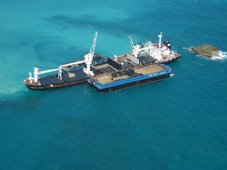
Ship owners warned over non reporting of accidents

BUSINESS EDITOR

SHIP owners and harbour contractors have been warned by a maritime specialist that they face fines of up to R60000 or three years in jail if they do not stick to accident procedures covering employees injured on duty.

The alert has been issued by Tony Edwards, of Shepstone &0x0026; Wylie‘s International Transport, following the SA Maritime Safety Authority‘s (Samsa‘s) having circulated a special notice.

It was that ship owners, masters and shore contractors must report casualties, accidents and serious injuries to them in terms of Section 259 of the Merchant Shipping Act of 1951.

Edwards said that in terms of the Act a fine of up to R5000 or imprisonment not exceeding three months could be imposed for a failure to report an accident.

“Increased penalties apply to a failure to report loss of life or serious injury, in which case the punishment may be a fine of up to R 60000 or imprisonment not exceeding three years.”

The requirement to report accidents applies to both South African-flagged and foreign- flagged ships. “Where a South African-flagged ship is involved, the accident must be reported to Samsa irrespective of where it occurred.

“An event involving a foreign-flagged ship need only be reported to Samsa if it occurred during a voyage to a South African port or within its territorial waters, or within a local port.

An accident must be reported to Samsa within 24 hours of a ship‘s arrival in a South African port. If it occurred in a South African port, it must be reported before the ship sails.


RS