 Progress reported in UN-backed efforts to reduce pollution, emissions from ships
The United Nations International Maritime Organization (IMO) has reported major progress on efforts to cut polluting and global warming emissions from ships, achieve more environmentally friendly recycling of vessels and prevent contamination from harmful organisms in ballast.
Under amendments to the so-called MARPOL (marine pollution) accords unanimously adopted by IMO's Marine Environment Protection Committee (MEPC) earlier this month, emissions of sulphur oxide (SOx), nitrogen oxide (NOx) and particulate matter from ships will be progressively reduced.
"The MEPC maintained momentum on the issue and made substantive progress in developing technical and operational measures to address such emissions, including the development of an energy efficiency design index for new ships and an energy efficiency operational index, with associated guidelines for both," the agency said in a news release.
According to a consensus estimate for 2007, CO² emissions from international shipping amounted to 843 million tons, or 2.7 per cent of global CO² emissions, as compared to the 1.8 per cent estimate in 2000. In the absence of regulation, such emissions were predicted to increase by a factor of 2.4 to 3.0 by 2050.
MARPOL Annex VI Regulations for the Prevention of Air Pollution from Ships entered into force in May 2005 and has so far been ratified by 53 countries, representing some 81.88 per cent of the gross tonnage of the world's merchant shipping fleet.
The MEPC discussed whether the application of measures to reduce or limit greenhouse gas emissions from ships should be mandatory or voluntary for all States. Several delegations spoke in favour of limiting mandatory reductions to those countries, mainly the more developed industrial nations countries listed in Annex 1 of the UN Framework Convention on Climate Change (UNFCCC).
But several other delegations said the regulatory framework should be applicable to all ships, irrespective of the flags they fly, noting that as three-quarters of the world's merchant fleet fly the flag of countries not listed in Annex I, any regulatory regime would be ineffective if it were made applicable only to Annex I countries.
On the issue of harmful aquatic organisms in ballast water, the MEPC adopted guidelines for ballast water sampling and approval of ballast water management systems as well as arrangements for responding to emergency situations involving ballast water.
It also agreed on a guidance document on minimizing the risk of ship strikes with cetaceans, such as whales. With regard to recycling, ships will be required to carry an inventory of hazardous materials, specific to each ship.
WEATHER NOTE
Emergency preparedness: Best-laid plans for worst-case disaster
By James Dowd
The message was simple and direct: Plan now to act later.
For about 150 business professionals at the second annual Emergency Preparedness and Incident Conference, the program couldn't have been more timely.
"In difficult economic times like these, companies try to stretch their dollars as far as possible and unfortunately, that means some don't invest in an emergency continuity plan," said Billy Freeman, communications specialist with Tennessee Task Force 1, an urban search-and-rescue team sponsored by the Memphis/Shelby County Emergency Management Agency.
"If it seems daunting to think about training people and implementing a comprehensive response program, then just take it a bit at a time. Just be sure to start somewhere."
That includes training employees how to respond in the event of disasters such as earthquakes, fires, floods and tornadoes, Freeman said. Companies should also maintain recovery plans with regular updates about how to resume business following a crisis.
The daylong conference, held recently at the FedEx Institute of Technology on the University of Memphis campus, featured a variety of disaster-preparedness booths and more than a dozen crisis-management and response seminars.
Organizers of the event, which was coordinated by the Mid-South Association of Contingency Planners, stressed that the best time to address an emergency is before one occurs, particularly in a region situated along the New Madrid fault line.
"In the best-case scenario, disaster planning is like insurance and you hope you never have to use it," said Ron Smith, the organization's vice president. "But you can't just close your eyes and hope for that. We don't preach gloom and doom; instead, we encourage responsibility and preparedness."
Shelby County Mayor AC Wharton, who delivered opening remarks at the conference, agreed.
"It used to be that contingency planning was something you stumbled into when there was nothing else to do," Wharton said. "Now more people are starting to plan for the unexpected and the question is not what if something happens but what might happen and what will we do when it does?"
Association leaders promote that discussion and hope more businesses -- especially smaller ones -- will join the conversation.
Founded in 2004, the group is the local chapter of the International Association of Contingency Planners. From the original 20 members, the group has more than tripled in size and is stepping up efforts to heighten public perception of disaster and emergency awareness.
"It's about having a strategy," said Damian Walch, one of the conference speakers and a nationally recognized expert in continuity and disaster planning. "We have to react differently from the way we did 10 or 15 years ago. The business supply chain is increasingly complex and it requires greater resiliency."
Gary Patterson, geologist and information-services director at the Center for Earthquake Research and Information at the UofM, praised the efforts.
"People don't like to think about this subject because it's something they can't control, but what they can control is being as prepared as possible," Patterson said. "We're doing a lot to inform people, but we've got a long way to go. Events like this help get the message across."
Most of the group's programs, such as the recent conference, are free. Annual dues are $80. The group's next meeting will be Nov. 12.
MARITIME NOTEA ship graveyard
by JANET HOWITT of the ESG
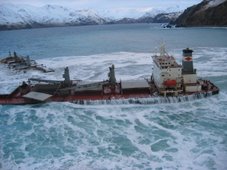
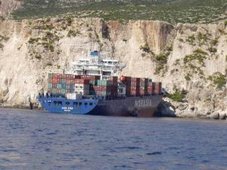
The ESG would first like to commend the efforts of emergency and rescue teams whose efforts secured the lives of the crew from the stricken vessel, Fedra in unbelievably difficult conditions.
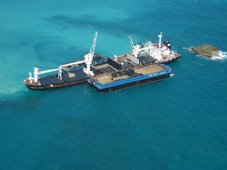
The sight of the massive metal structure brought to its knees at Europa Point, in what is fast becoming a ship graveyard has shocked and horrified all who have seen her split in two.
The area is in fact one of Gibraltar's most important ecological and historical sites and the ESG hopes that Govt plans to designate this area as an exclusion zone to all ships will go some way in avoiding certain types of accidents in the future. However that measure would not have avoided Fedra'66s crash and hopefully the ongoing police and maritime investigation will reveal some reason for this latest tragedy.
What is also of concern and has been raised by the ESG with Govt recently is the large number of vessels anchored in an off-limits zone on the eastern side of the Rock. This potential problem was also highlighted in the report into the Samothraki accident by the Maritime Administration. Several recommendations were made within that report into how ship movements and monitoring could be improved both from the Gibraltar port side and at cross border level. It is understood that the Gibraltar Govt will be applying all recommendations made.
It is hoped that authorities from both sides of the border will address the serious environmental challenges posed by the dense level of shipping activity in the Bay and avoid an ecological disaster.
Finally, the ESG has already notified the Minister for the Environment's offices that a growing number of volunteers are signing up to help clean the beaches of oil- it is a reminder yet again that there are many in the community who care and are willing to lend a hand in a time of crisis. We are now waiting for their call.
BACKGROUND:
THE REPORT INTO THE GROUNDING OF THE OIL TANKER 'SAMOTHRAKI' ON 17 MARCH 2007 MADE THE FOLLOWING RECOMMENDATIONS:
The Gibraltar Port Authority is recommended to:
1. Consider a port control policy aimed at providing a navigational assistance service.
2. Consider establishing a Southerly limit to the Eastern anchorage
3. Consider requiring all vessel anchoring within 3 miles of Gibraltar on the Eastern side to report to GPA with anchor position and basic ship information
4. Consider establishing an exclusion zone in the vicinity of Europa Point, up to 1 n.mile from the shore. 5. Consider requiring off-port limits transfers to be completed further offshore, and to the South East of Europa Point.
Managing Maritime Emergencies

Identifying risk, planning and managing emergencies, crisis communication
Monday 24th - Wednesday 26th November 2008
Bonhill House, London, UK

Have a safe and enjoyable weekend!
RS


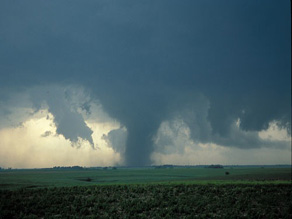
 They are warning the next residents of the White House and Congress that the U.S. needs to just about double its budget on weather and climate change research, research they say impacts everything from health and safety to transportation and national security.
  For seven decades, Great Lakes freighters - including those passing through the Soo Locks with coal, taconite and other loads - have been legally dumping cargo wastes overboard.














![[Valid RSS]](valid-rss.png "Validate my RSS feed")