Showing posts with label rip tides. Show all posts

Thursday, August 28, 2008

Harnessing the Tides

Harnessing the Tides

EASTPORT — You don’t need a graduate degree in fluid dynamics or hydrokinetics to appreciate the energy inherent in the sea.

Between waves, currents and tides, the ocean is a powerhouse, an enduring, global source of virtually boundless natural energy.

Researchers and entrepreneurs in Maine and elsewhere are finding that tapping that energy and converting it into electricity is more than a bit of a challenge.

Ongoing research in laboratories at the University of Maine and at field testing facilities in Eastport and at the Maine Maritime Academy in Castine is beginning to yield insights into how best to harness the energy of not only dramatic ocean tides but the water that flows through rivers and creeks.

Since 2004, Ocean Renewable Power Co. (ORPC) has been building and testing prototypes of underwater generators engineered to convert into usable electricity the energy that drives the 18-foot tides of Passamaquody Bay.

The firm’s floating laboratory moored in Cobscook Bay and another tidal energy testing site in the nearby Western Passage of Passamaquody Bay have not only proven the concept but have generated new insights into how best to design blades that drive the underwater turbine that began generating kilowatts in April.

“We’re the people who are actually doing tidal energy in Maine,” Chris Sauer says of the company he founded. “We have generated electricity.

“We were initially focused on the current within the Gulf Stream in Florida, but realized quickly there was a better opportunity with tidal currents in Maine.”

The company set up shop in Eastport within a Main Street building that once housed a grocery store. In designing and building its floating laboratory and the electrical and data collection systems it includes, ORPC made use of as many local carpenters, electricians and other skilled workers as it could recruit. The fourth generation of turbine blades were fabricated at the Husson College Boat School located within a mile of the test site in Cobscook Bay.

As ORPC moves from prototypes to full-scale production, Sauer envisions the firm as a source of long-term and high-paying jobs for rural Washington County.

“We’ve been blown away by the capabilities of the people in the state of Maine who have helped us with our project,” Sauer said. “Eastport has a long history of shipbuilding, fishing and work related to the maritime industry, which is an absolute requirement for us to grow.”

Sauer said the company’s proprietary, no-emission generating technology appeals to Maine’s values.

“People care about the environment in Maine, and, in rural Maine, they care a lot more about jobs,” he said. “We’re bringing futures to the people of rural Washington County and a chance for families to stay together.”

Bob Lewis, the site manager for the Eastport research stations, said ORPC continues to work collaboratively with faculty and students at both UM-Orono and the Maine Maritime Academy, which is undertaking its own tidal energy research.

“Orono has been helping us with access to their tow tank and with modeling and computer analysis of the performance of various prototypes,” Lewis said. “The field testing allows us to determine how tow tank modeling coincides with the results we see when we’re operating in the bay, 30 feet underwater.”

While the project’s current focus is tidal energy, Lewis sees applications for rivers, streams and even creeks as an energy source at locations far from the electrical grid.

Lewis and Sauer understand that the 2 billion people worldwide who are now without access to electricity represent a significant customer base.

WEATHER NOTE

DEVASTATING HURRICANES: EXPERTS SAY THE JERSEY SHORE ISN'T IMMUNE


Anyone who says it can't happen here, should think twice. So say meteorologists who think the Northeast is due for a direct hurricane strike. That's because it has happened before, not far from the coastline.

The storm that split Long Island on September 21, 1938 packed winds of 115-120 miles per hour, according the weather service, when it hit the southern side of the island. Even more frightening was its 50 miles per hour forward speed, meaning everything in its path was shaken to its core.

The storm surge was estimated between 12 and 16 feet above mean tide, producing a tidal wave that was recorded on seismographs 3,000 miles away. The lower end of Manhattan was under 10 feet of water. The storm devastated Rhode Island and Connecticut, then tore through New England before it ebbed in eastern Canada.

The worst part of all was the lack of warning, leaving post-Labor Day vacationers especially vulnerable along the seacoast.

The U.S. Weather Service mistakenly believing the storm had curved easterly away from shore - there were only sporadic reports from ships in the area to aid their predictions at the time - had predicted a slight chance of rain locally that day.

When the skies cleared on the morning after the storm, 688 people were dead, 4,500 injured and 75,000 buildings in four states were damaged or destroyed.

It was the worst disaster in the history of New York State until September 11, 2001.

New Jersey State Police Sgt. Robert Aponte, a Toms River resident, recently outlined preparations for such an emergency at a forum on the subject in Berkeley Town Hall. The OEM specialist also distributed material showing how to collect the necessities of self-sustainability for three days after a catastrophic event and how to get ready for evacuation.

Aponte told the 70 or so people on hand - only five showed up at a similar meeting in Toms River recently, he said - that watches and warnings would be relayed from the National Weather Service to a manned command center at state police headquarters in West Trenton. The state police would then communicate with county emergency management specialists to prepare for the threat.

Many in the crowd were startled to learn that any property east of Route 9 falls within the SLOSH (Sealand and Overland Surges from Hurricanes) coastal tidal flood zone.

That means any extraordinary event like a powerful northeastern storm or hurricane likely would cause severe flooding in those areas.

Other tidbits gleaned include the fact that two hurricanes - in 1821 and 1944 - were category 4 storms and passed right over New Jersey. Many in the crowd nodded as Aponte showed slides of the 1962 Nor'easter that split Long Beach Island into five sections at the north end in Harvey Cedars. A dozen people died in that storm.

Another one with local impact was the 1992 Nor'easter that joined salt water with fresh water Monmouth Beach, Monmouth County.

A representative of the Ocean County Office of Emergency Management told the crowd that sudden perils like the tornado that destroyed three homes in Holiday City a decade ago can cause havoc in the community.

You should have a plan, where you can go to get out of harm's way, and take care of the elderly or infirmed to make sure they're not left behind in an evacuation. You should work out a mutual aid pact with a friend or relative within an easy drive to help in an emergency. Many refuse to leave their homes to stay with their pets.

Ocean County public shelters now accept pets, even iguanas, but will turn away anyone bringing drugs, alcohol or guns to the shelter. Extra food is also frowned upon.

It is important that medicines or prescription drugs be brought along with special dietary food, a change of clothing, blanket, sleeping bag and pillow for each in the family.

Also, important documents including insurance, stocks, birth certificates and jewelry along with cash, credit cards and checkbook should be brought along.

Scientists: U.S. not prepared for severe weather, climate change

Heavyweights in the meticulous community are not waiting until the November appointment.

Tornadoes are forming at a memorandum milieu walk this year. This impostor touched down virtually Hebron, Nebraska in 2004. Photo nearby Bob Henson, UCAR

They are lesson the next residents of the ghostly quarter and Congress that the U.S. needs to very recently with doubled its budget on rise above and aura mutate fact-finding, examine they believe impacts the whole from healthiness and security to transportation and civil assurance.

Scientists cannot fully be aware or handle with the impacts of aura mutation without the befitting partisan running, and without funding as thorough point of view and computing. That was the presentation from the University Corporation instead of Atmospheric fact-finding, the American Meteorological league, and the ride out Coalition in a teleconference with reporters today.

In a particularize aimed at the next crop of state leaders, the scientists said “proficiency is cue to reasoning power these impacts, but seedy and aura exploration and operations budgets demand been swiftly or declining since years enough to the budget wars in Washington.”

John Snow, co-directorship of the sick Coalition and dean of the College of Atmospheric and Geographic Sciences at the University of Oklahoma, said there may father been a a pile of skilful intentions in Washington in late years, “But the genuineness is they’ve been unqualified to shoot.”

“The body of laws budget has only been keeping up with inflation, and in some cases has suffered true to life cuts,” said Snow.

The expertise fundamental got a 2% strengthen, not keeping up with inflation, and the ride out and ambience analyse got 0%, effectively a shorten,” he said.

The scientists are making five recommendations they break purposefulness enhance the state’s buoyancy to modest bear up against and aura shift:

Observations: Fully stock the globe observing plan from assistant and train-based instruments.

Computing: Greatly snowball computer power close by in search sickly and atmosphere inspection and predictions. examination and Modeling: confirm a fact-finding program in loam sciences to move adroitness of sick and feeling and their change on consociation.

Societal suitability: frame course of study, training and communication efforts proper for the utmost promote of beau monde. regulation and executives: put into effect telling administration to certain that these investments are done in the unsurpassed predisposed of the state.

The assay attend? The pile says lawmakers pleasure want to sum up just about $9 billion to the undercurrent $10 billion that is budgeted above the next five years.

Whether it is hurricanes, tornadoes, fires, floods, snow, or drought, 75% of impulsive disasters encompassing the rapturous are triggered aside survive and feeling. That translates to billions of dollars in indisposed cognate losses every year in the in harmony States.

“What we deliver understandable forth in the change chronicle is what we have in mind is needed to study the political entity in behalf of atmosphere shift, to be skilled to take up to promote our discernment,” said Jack Fellows, evil-doing president of the University Corporation on the side of Atmospheric analyse.

“Frankly, we consider this is one of the most high-priority problems surface humankind, but it well-founded happens to be on a longer adjust than a consignment of problems our power faces,” said Fellows.

The other five organizations that wrote the chronicle are the American Geophysical associating, the Consortium of Universities as regards the Advancement of Hydrologic branch, the nationalistic conjunction of solemn Universities and realty-agree to Colleges, the Consortium concerning lots administration, and the combination to go to mother earth Observations.

Marsha Walton, CNN study and Technology business

13th Annual Northern Plains Weather Workshop

Evolving Technology and Services

7-8 April 2009, Rapid City, SD

Sponsored by:

National Weather Service, Rapid City, SD

South Dakota School of Mines and Technology

Bridging Weather Partners Throughout the Northern Plains

MARITIME NOTE

Maritime safety not a priority in RP; Coast Guard struggles to stay afloat

KAREN TIONGSON-MAYRINA, GMA News Research
Article posted July 07, 2008 - 05:00 PM
MANILA, Philippines - Ironically, for an archipelago like the Philippines, maritime safety takes a backseat.

What is considered to be the biggest maritime disaster in the world happened on Philippine waters — the 1987 collision between passenger ship MV Doña Paz and oil tanker MT Vector. Post-tragedy reports revealed the dead numbered as many as 4,000, although the official death toll was at 1,856.

The country’s 36,289-kilometer coastline, one of the longest in the world, is being safeguarded by an insufficient number of vessels and aircraft of the Philippine Coast Guard. Worse, 40 percent of these are not operational.

Communication among Coast Guard units is mainly by cellular phone — through text messaging instead of voice calls — supplemented by a limited number of radios.

The agency has yet to experience the fruits of the various foreign-funded projects, but in at least two of these projects — the Global Maritime Distress Safety System (GMDSS) and Maritime Safety Improvement Project Phase III (MSIP-III) — the Commission on Audit bewailed the loss of millions of pesos in wasted funds.

The Coast Guard itself, on its website, has no illusions about its Herculean task: “The enormous task to perform the multifarious functions of safeguarding the country’s vital sea-lanes from maritime lawlessness, preserving its marine resources and promoting Safety of Life and Property at Sea with its limited resources."

' Not ready for sea'

Data from the Coast Guard Action Center show that the agency has 59 vessels and five aircraft, 40 percent of which are either “Not Ready For Sea" or grounded as of July 1.


The United States Coast Guard says a "Not Ready for Sea" evaluation means Coast Guard inspectors identified mechanical, structural, or safety deficiencies serious enough to render the boat not fully capable of performing search and rescue missions.

“We don’t even have an all-weather vessel na kahit bumabagyo pwedeng gamitin," said Coast Guard spokesperson Lt. Commander Armand Balilo. An average of 19 tropical cyclones pass the Philippine area of responsibility every year.

Of the 14 vessels, six are “not ready for sea" (NRFS) including the search and rescue vessels BRP (Barko ng Republika ng Pilipinas) Edsa II and BRP San Juan; auxiliary escorts BRP Corregidor, BRP Kalinga and BRP Limasawa; and patrol gunboat BRP Palawan.

BRP San Juan, BRP Edsa II and BRP Corregidor are on dry dock. BRP Kalinga and BRP Limasawa are undergoing repairs, while BRP Palawan is undergoing engine repair.

The Coast Guard has five aircrafts, but two of these are grounded — the Helo 163 and Cessna 1242.

Of the 31 small craft assigned to the 10 Coast Guard district headquarters, 14 are NRFS.

• All but one of the nine Diesel Fast vessels at the Maritime Security and Law Enforcement Command are NRFS.

• Of the 11 small craft in the Coast Guard District of National Capital Region-Central Luzon, two are NRFS.

• All two small vessels assigned to the Coast Guard District of Central Eastern Visayas in Cebu are NRFS.

• The two Diesel Fast vessels in Southwestern Mindanao, based in Zamboanga City, are ready for sea; each of the DF vessels in the Coast Guard Districts of Palawan and Southern Tagalog are RFS.

• One of the three DF vessels in Western Visayas, based in Iloilo, is NRFS.

• In the Coast Guard District of Southeastern Mindanao, based in Davao, one of the two DFs is NRFS.

• There are no recorded small craft in the Coast Guard Districts of Northern Luzon, Bicol and Northern Mindanao

The Coast Guard is also “borrowing" 14 monitoring, control and surveillance vessels from the Bureau of Fisheries and Aquatic Resources. Of these, three are NRFS.

'Txt lang'

For communication, Coast Guard personnel depend on the ubiquitous cell phone. In many instances, messages are sent through text messaging, said Lt. Commander Daniel Inri Gayosa, head of the Coast Guard Weapons, Communications, Electronics and Information System Command.

Gayosa said the Coast Guard headquarters has distributed cellular phones among the staff manning its 53 stations and more than 200 detachments nationwide. Each cell phone receives a minimum prepaid allowance of P500.

Siyempre, kulang yung load. Kaya presently nagre-rely na lang sa text e," Gayosa said.

Apart from cell phones, the stations are also equipped with HF (high frequency) and VHF (very high frequency) radios. But Gayosa said not all remotely located detachments have radios.

A recent GMA News television report noted that only one radio is working in the operations center of the Coast Guard headquarters in Manila.

Gayosa said the agency’s current inventory of communication equipment is mainly used for administrative communication such as receiving reports from the various units.

“Almost 100 percent — 98 percent — of (the 53) stations have VHF radios pero sa mga detachment, ang conservative estimate 30 percent lang," he said.
“Supposedly, dahil sa remote location ng mga detachment, dapat at least may HF sila. But not all has one."

VHF radios are intended mainly for short-range communications. VHF radio signals operate in “line of sight“ fashion, generally five to 10 miles. To communicate at longer ranges, MF (medium frequency)/HF radios are needed.

Still, Gayosa noted that troubled ships with HF equipment usually call first their parent companies, who will then inform them of the situation.

GMDSS

Maritime communications should have improved had the Global Maritime Distress Safety System (GMDSS) pushed through.

GMDSS, a system initiated by the International Maritime Organization, was designed to enhance ship-to-shore communications and provide rapid automated distress alerting through shore-based facilities for Maritime Search and Rescue Communication Stations in 19 sites nationwide.

The contract to procure equipment amounting to almost P300 million was entered into between the DOTC and French company Thomson CSF NCS-France (later renamed Thales) in 1998. According to the National Economic and Development Authority and the Mindanao Economic Development Council, the project was funded by the French government.

The 2006 Commission on Audit report on DOTC said the contractor abandoned the project in July 2000 “due to a billing dispute" and after more than five years of negotiations between the parties, the termination agreement has yet to be finalized.

In a separate audit report in 2003, COA — citing the GMDSS Project Management Office — noted that out of the P295,854,823.62 worth of delivered equipment, 71.99 percent or P212,981,302.93 was not installed by the contractor.

“The container vans containing the uninstalled equipment located at various project sites are now in the state of deterioration due to long exposure to open environment while the facilities installed in the completed stations are now beginning to deteriorate due to lack of maintenance. Likewise, the unfinished stations/buildings are in danger of imminent collapse and may pose hazard to the public and nearby structures," the COA report said.

“It is worthy to mention that the Department had already expended so much for the above projects and yet no significant progress/development was reported. Such costs and other resources would be wasted and the benefits that could have been derived from the projects could no longer be achieved if the installation of the equipment would not be completed," it added.

Gayosa said the Coast Guard, as end user of the project, is not allowed to use the equipment until those were formally turned over.

But Gayosa said the Coast Guard is expecting next week the arrival of communications equipment from the Japanese grant-aid project Enhancement of Communications System for Maritime Safety and Security.

A Japanese Embassy press release said the 609-million yen project, signed in 2007, aims to establish satellite communications system in 11 stations nationwide, connecting the Coast Guard headquarters and its district offices, “to improve and enhance the PCG’s capability for search and rescue as well as counter-terrorism."

Twenty-four stations, under the Manila, Cebu and Zamboanga District Offices, will also be equipped with VHF/HF Radio System. Six Metro Manila stations will be equipped with Microwave Communications System in and three stations of the Manila coast will be rehabilitated and upgraded.

ODA loan projects

Data from the 2008 Budget of Expenditures and Sources of Financing show that the Department of Transportation and Communications is the implementing agency of at least 14 ODA-funded maritime projects.


Based on data from the Department of Budget and Management, the government is already paying for these projects.

The loans include two French Protocol loans on global maritime safety and five Japan Bank for International Cooperation/Overseas Economic Cooperation Fund (JBIC/OECF) on maritime communication and safety improvement projects.

JBIC’s Maritime Safety Improvement Project (MSIP) is a 3,516-million yen loan for the emergency rehabilitation of navigational aid facilities — 37 lighthouses and light beacons — in the Manila-Cebu sea road and training required for the operation and maintenance of these facilities.

MSIP-2 is a 5,579-million yen loan that also sought the installation and rehabilitation of navigational aid facilities such as lighthouses.

JBIC’s Maritime Communication Project is a 2,633 million-yen loan amount seeking to ensure efficient and reliable maritime communication services by constructing a Manila Central Coast Station consisting of a transmitting station, receiving station and operation center and a Manila Port Station.

It would install maritime radio communication equipment for these stations as well as training equipment and UHF link from the Operation Center to Pagasa and Philippine Ports Authority.

Spain — through Bancaja, one of its largest banks, and Instituto de Credito Oficial (ICO), a lending unit — extended loans for an oceanographic research vessel, MSIP-3 and MSIP-3-1.

New Zealand Banking Group Limited-Export Finance and Insurance Corporation (ANZ-EFIC) provided loans for research and rescue vessels.

The government is still paying for all these loans.

But it appears that the Coast Guard has yet to reap the fruits of these projects.

Defective lighthouses

How these projects will be implemented is another story.

In the 2004 audit of the DOTC, COA said 13 lighthouses — worth close to P52 million — under the first and second batches of the Maritime Safety Improvement Project Phase III (MSIP-III) were defective.

Lighthouses provide navigational safety at sea.

The Mindanao Economic Development Council website said MSIP-3, a Spanish ODA project, involves the acquisition of two maritime accident response vessels and construction of marine accident response and support base in Cebu City. It also includes the construction and rehabilitation of 120 lighthouses nationwide.

Findings of COA technical staff in 2004 on inspection of a total of 13 lighthouses — seven from the first batch and six from the second batch — showed that the light stations “may only be useful for a short period since the defective marine aids-to-navigation equipment may easily cause the light stations to be non-operational."

Nine of the 13 light stations were already not functioning at the time of inspection although they were accepted only last April 2002 and January 2003.

“For the 13 light stations alone, the government had expended the amounts of US$1,089,400 or equivalent to P43,576,000.00 for the defective equipment and P8,345,528.43 for the cost of civil works which may be considered useless due to non-functional/non-operational light stations," the report said.

La Maquinista Valencia, S.A. bagged the US$13,798,888 contract for the supply and delivery of the marine aids-to-navigation equipment. C.T. Leoncio Construction and Trading and Atlantic Erectors Inc. won the contract for the construction of foundation, erection of towers, installation of equipment including lightning protection systems and commissioning of the First and Second Batches, each consisting of twenty-five (25) lighthouses, worth P14,452,870.63 and 20,142,729.05, respectively.

In the 2005 audit on DOTC, COA said the suppliers had been notified in writing about all defective equipment and abnormalities noted in some lighthouses and were asked for replacement.

Insufficient budget

In the 2008 General Appropriations Act, the office of the secretary of the DOTC allotted under operations of “Protection of Philippine Coast" a total of P1,809,623,000 — P1,161,669,000 for personal services, P622,106,000 for MOOE and P25,848,000 for capital outlay. Another P400,000 in MOOE was allotted under “support for operations."

The Coast Guard budget falls under the DOTC's Office of the Secretary under “support to operations" and “operations."

The Coast Guard budget usually increases through supplemental budgets and subsidies, says COA.

The fact that there is no specific line item for the Coast Guard (unlike other DOTC offices such as the Maritime Industry Authority or the National Telecommunications Commission) seems to show that the agency is in the lower rung of the government’s list of priorities.

Kulang talaga," Balilo said, lamenting the Coast Guard resources. “Hindi kami makakapag-perform what is required of us because we lack the facilities, personnel and equipment."

A DBM source said the DOTC secretary is the one seeking ODA loans or grants to augment Coast Guard resources.

In 2007, the Coast Guard received a total allotment of P1.93 billion, based on COA reports.

Of its P1.92 billion expenses that year, P1.37 billion or almost 72 percent was spent on salaries and wages of its 4,000 personnel while P545 million or 28 percent was paid out for maintenance and other operating expenses.

The allotments have actually increased: In 2006, The Coast Guard received P1.82 billion and P1.33 billion in 2005. - GMA News Research

RS

Monday, August 25, 2008

Deadly dangers of the deep

Deadly dangers of the deep

So you thought flying was the most dangerous part of your holiday? Jimmy Lee Shreeve reveals why going to the beach is even riskier.

Heading for the beach this summer? Then be very careful out there: you could be exposing yourself to a raft of dangers and health hazards. Take jellyfish. There are 2,000 species, 70 of which can seriously harm, even kill you. Lurking in the waters of Australia's Great Barrier Reef for example is the Irukanji jellyfish, a tiny (one inch in diameter), but particularly venomous critter that has claimed the lives of quite a number of swimmers in the region.

In 2002, 58-year-old British tourist Richard Jordon was stung while swimming near Hamilton Island, off the coast of Queensland, and died several days later. That same year, 44-year-old American tourist Robert King also died after a brush with the Irukandji while out for a swim in the same area.

Another deadly jellyfish found in Australia, the Philippines and other tropical areas is the Box. Contact with one of its three-and-a-half-inch tentacles can kill you within three minutes. In January 2006, a seven-year-old girl, swimming on Umagico Beach, Cape York Peninsula, died of heart failure after being stung. Her death followed that of seven-year-old Jarred Crook in 2003, who was killed when a jellyfish wrapped its poisonous tentacles around his legs and torso in shallow waters at Wongaling Beach, south of Cairns.

But what about closer to home? The jellyfish that are found along the Spanish coast may not be as venomous as those in Australia, but they pack a mean sting all the same (occasionally requiring a trip to hospital). Not only that, but large numbers of jellyfish have been drifting into Spanish waters over the last year or so due to over-fishing and climate change. Last summer 19,000 people reported being stung on the Costa Brava, while in August alone around 400 people were treated for stings off Malaga. "It's very possible that we can expect a new influx of jellyfish this year," warns Xavier Pastor, executive director of environmental group Oceana.

It's not just holidaymakers in Spain who need to worry: at this year's Cannes Film Festival, Hotel Rwanda star Don Cheadle was swimming with his daughter when he was stung.

Some of the most beautiful beaches in the world are found in the Caribbean and Florida. Unfortunately, taking a dip in the inviting crystal-clear seas in either location could lead to a close - and very painful - encounter with a Portuguese Man O' War. Earlier this year, British Olympic sailing ace Nick Rogers, 29, was stung by one before a regatta in Miami. "I was thrashing around in so much pain I capsized," he said.

Similar to a jellyfish (but not a jellyfish), the Man O' War's venomous tentacles stretch from 10 to 30 feet. When a human body comes into contact with a tentacle, thousands of harpoon-like stingers inject poison into the skin. Stings from a Man O' War aren't lethal, but can be dangerous to anyone with a weak heart or serious allergy. Bob Taylor, the ocean rescue superintendent at Delray Beach, Florida, says the best thing to do if stung by a Man O' War is to remove the tentacles with a stick or towel (not with bare hands) and treat the infected area with vinegar.

But what about the marine creature perceived to be the most fearsome of all - the shark? Is it really the biggest menace of the seas and beach resorts? "The total number of shark attacks worldwide increased from 61 in 2005 to 62 in 2006 and the number of fatalities remained stable at four," says George Burgess, director of the International Shark Attack File kept at the Florida Museum of Natural History. "It's really quite remarkable when you have only four people a year die... [It] puts in perspective how small shark attack is as a phenomenon."

Nevertheless, last year Burgess tracked seven attacks in Australia, four in South Africa, three in Brazil, two in the Bahamas and one each in Fiji, Guam, Mexico, New Zealand, Puerto Rico, Réunion, Spain and Tonga. "Some tourists bring their aquatic recreation to places known to be shark-infested without asking [the locals] about good and bad places, [and end up] getting grabbed by the tiger shark," Burgess says.

So would you be safer taking a beach holiday here in Blighty? Not if the alleged sightings of the great white shark (made notorious by the movie Jaws) are anything to go by. One sighting was reported in 2002 by lobster fisherman Brian Bate.

He was heading towards his regular fishing ground when he saw something large leap out of the water. "I thought, 'What was that?' " he recalls. "It was quite a size to come right out of the water.

When I approached there was all this blood in the water..."

But let's say you steer clear of the sea and stay on the beach, maybe indulge in the odd ice cream to cool down. That's got to be a surefire way of keeping out of danger, hasn't it?

Well it depends on the ice-cream vendor. Over the last decade or so various tests on ice creams bought in leading tourist attractions in Europe, including Barcelona and Rome, have failed UK hygiene standards due to contamination by bacteria.

Inspectors in Barcelona reported seeing a man urinate against a wall and return to his ice-cream van without washing his hands. Eleven out of 20 samples of his ice cream failed basic hygiene standards and Listeria was found in one.

Hotdog stands fare little better, particularly the unlicensed ones which are all too common around beach resorts. Leaving aside the artery-clogging levels of saturated fats and salt, inspectors regularly find inadequate refrigeration and a lack of probe thermometers (used to make sure raw meat is cooked at the correct temperature). Lack of hand-washing facilities is another issue highlighted by hygiene inspectors. It brings a high risk of food becoming infested with germs, especially after a vendor has handled raw meat or cash.

But even if you resist the lure of junk food, you could still come unstuck. We all know by now the dangers of sunbathing, but even if you daub yourself from head to toe in factor 50 sunblock, spending time on the beach can still prove hazardous.

In June 2005, scores of beach-goers were stretched out on the sands of Portugal's Carcavelos beach when some 500 youths swarmed into the crowd, robbing them of money and valuables. Five people, including two police officers were injured during the mass mugging...

Montezuma's revenge on Britain's beaches

Never mind sharks and jellyfish, the biggest danger to swimmers in Britain is sewage. According to the latest Good Beach Guide, published by the Marine Conservation Society, raw and semi-filtered sewage is pumped directly into the sea at 73 spots along our coastline and swimmers have a one in seven chance of catching a stomach bug at more than 100 British beaches.

These figures may be worrying but they actually represent a big improvement on previous years. As the society points out, the bathing quality of water at 60 per cent of Britain's beaches is perfectly acceptable. Which would be comforting, were it not for the fact that a shift in rainfall patterns caused by global warming could undo much of the good work: increased storms will sweep more pollutants from the land directly into the sea and could take pollution back to previously high levels. Check out Britain's cleanest beaches at www.goodbeachguide.co.uk.

WEATHER NOTE

Rare mountain tornado strikes Park County

Park County tornado near Eleven Mile Reservoir. Image courtesy 7News and Jerry Bivens.

In a truly unusual weather occurence, a tornado struck near Eleven Mile Reservoir in Park County Saturday afternoon. Certainly we are all used to hearing about twisters along the Front Range and on the plains but mountain tornadoes are quite rare - the rugged terrain usually disrupts the weather patterns necessary to product tornadoes. Authorities estimate five vehicles were damaged including a motorhome and pickup truck camper that were overturned, a trailer was destroyed. Beyond cuts and scrapes, thankfully no one was injured.

Colorado is ranked ninth in the country with an average of 40 tornadoes a year. It is interesting to note that every state in the union - including Alaska and Hawaii - have had tornadoes.

Doing some research at the TornadoProject.com yields an interesting fact as well. This was Park County’s first tornado ever. That leaves 12 of Colorado’s 64 counties that have never had a tornado including:

Clear Creek
Dolores
Garfield
Gilpin
Gunnison
Hinsdale
Lake
Montrose
Ouray
San Juan
San Miguel
Summit

It does serve as a reminder that while the unofficial severe weather season is behind us, Colorado’s weather is anything but boring and everyone should be aware of all the types of weather hazards that are possible.

Tropical Storm Fay: St. Johns flooding

River's worst yet to come

It could rise fast -- but not drop for weeks, say forecasters

|Sentinel Staff Writers

The St. Johns River could hit Central Florida this week with some of the worst flooding on record.

Runoff from Fay is gorging nearly every part of the 310-mile St. Johns River, which forms south of Melbourne and flows north to the Orlando area and on to Jacksonville.

"Geneva, Astor and other areas will see moderate and major flooding," forecaster Todd Hamill at the Southeast River Forecast Center said Saturday night. "There's just a lot of water and no place for it to go."

Even in ordinary times, the meandering St. Johns drains to the Atlantic Ocean very slowly. During heavy rainfall, it grows wider rather than flow much more quickly.

Fay brought more than heavy downpours. Some parts of Brevard County received in two days as much rain as the area would see in six months.

"It will take a lot of time for levels to drop, probably weeks," Hamill said.

The 11 people killed in Florida and one in Georgia bring the death toll from Fay to at least 35. A total of 23 died in Haiti and the Dominican Republic from flooding.

Fay has been an unusual storm since it was named Aug. 15. After hitting the Keys on Monday, it crossed open water again before hitting a second time near Naples on the southwest coast. It limped across the state, popped back out into the Atlantic Ocean and struck again near Flagler Beach on the central eastern coast. It was the first storm in almost 50 years to make three landfalls in the state as a tropical storm. Its fourth landfall as such -- near Apalachicola -- was the first in recorded history.

Hamill said with the region so saturated with Fay's rainfall, flooding could get much worse with just the precipitation of afternoon showers.

Neighborhoods along the north shore of Lake Monroe are bracing for high waters.

Forecasters say that by Tuesday, flooding may make roads impassable and even swamp some homes in the Stone Island subdivision in Volusia County.

"We've seen a huge rise in the water," said resident Karen Lee. "The only thing we can do is pray a whole lot. That's the only thing we can do."

'Can't just bottle them up'

River experts agree.

For the next several days, a number of swollen waterways will surge into the St. Johns. Among the bigger tributaries are the Wekiva and Econlockhatchee rivers in Orange and Seminole counties.

There's no way to stop their flows.

Water officials can briefly hold back Jane Green Creek in Brevard County by closing a dam gate. But that brings the risk of catastrophic flooding if rising waters breach the dam.

Elsewhere, the upper reaches of the St. Johns River are buffered by more than 60,000 acres of reservoirs.

They went from nearly empty to nearly overflowing last week. Holding back that water has lessened the surge down the St. Johns River.

But now officials are draining those reservoirs as quickly as they can.

"We can't just bottle them up," said Jeff Elledge of the St. Johns River Water Management District. "They would fill up, and their dikes would burst."

Water-district officials might open canal gates that allow water to flow from the upper reaches of the river to the Indian River Lagoon along the coast. But that's an option of last resort because of significant environmental harm that results by dumping fresh water into a slightly salty ecosystem.

Still, even sending water to the coast will do little to head off flooding in Central Florida, Elledge said.

"There's going to be flooding and no way to stop it," he said. "It's a matter of trying to get out of the way of the river."

Turn into a lagoon'

Floodwaters along Lake Harney near Geneva should crest at about 18 inches above flood stage, likely causing significant flooding to homes and roads.

Tony Cristaldi, senior forecaster with the National Weather Service in Melbourne, said flooding in that area is likely to push toward record levels.

"I suspect through next week the river will stay at flood stage," Cristaldi said. "It's forecast to crest and kind of just stay there," he said. "The areas just turn into a lagoon."

Along Lake Monroe, the water might reach 4 inches above flood stage, blocking roads into the Stone Island and Stillbrook subdivisions, and while in the DeLand area it could top 6 inches above flood stage.

Water could enter buildings around Hontoon Island and flood docks at nearby marinas.

"What we've got to hope and pray for is that we don't have another tropical system come our way," said Scott Hagen, a University of Central Florida professor who studies the river.

Official offers tips for severe weather survival

August 20, 2008

PORTAGE --- As far as the Porter County Emergency Management director is concerned, it's not over until it's over when it comes to the severe weather of 2008.

Phil Griffith spent an hour Tuesday afternoon informing the seniors at Miller's Assisted Living about the facts and misconceptions of thunderstorms, lightning, tornadoes and flash floods.

Center residents watched the presentation that Griffith regularly gives to groups all over the county, learning the details of what emergency management officials have in place to protect them and what they need to do to make themselves safe during severe weather.

"The United States averages about a thousand tornadoes a year, but this year we're going to see 1,300 or 1,400," he said.

He outlined the system of trained volunteers who are a critical link in confirming whether wind damage, such as that suffered in Valparaiso on East Lincolnway and Campbell Street, was caused by a tornado.

"We have 105 spotters in SKYWARN who report to the (National Weather Service), because Doppler radar can't see tornadoes, just moisture rotation. There was rotation over the city, but not a tornado," he said.

The reason is that a tornado is defined as a rotating column of air that extends all the way to the ground, while a funnel cloud doesn't touch the ground.

"The roof blew off Jimmy John's, but there was no twisting," he said.

Griffith said the damage suffered in Pine Township two years ago was from straight-line winds of more than 100 miles an hour, not a tornado.

He said Porter County benefits from its position downwind from Lake County when it comes to weather alerts, as with the Kohl's tornado that struck U.S. 30 in Hobart without warning in 2001.

"They had 30- to 45-seconds warning; didn't see it coming. But that gave us five or six minutes," he said.

He recommended buying an inexpensive weather radio from Wal-Mart or Radio Shack, either a $20 seven-channel model that sounds an alert for severe weather anywhere in the Chicago area, or a $40 to $50 one that can be programmed to go off only for Porter County alerts.

Miller's Personal Care Assistant Tasha DeMaria said the residents participate in unannounced drills for severe weather and fires four times a year and attend periodic classes to review emergency procedures for power outages, blizzards, severe heat and earthquakes.

MORE TORNADOES


TORNADOES - Funny home videos are a click away

MARITIME NOTE

Dangers of the Deep

Fishing is one of America's most perilous jobs. Can anything be done to make it safer?

By Alex Markels

There was nothing perfect about the storm that capsized the Northern Edge as it scoured the sea bottom off Nantucket, Mass., for scallops last winter.

It was five days before Christmas, and the 10-foot waves kicked up by an approaching low-pressure system made the 75-foot boat bob like a rubber duck in a bathtub. As the boat's six-man crew raced to top off their catch, one of the dredges that scoop up the shellfish got hung up on the seafloor. Its cable tightened, and the vessel listed sharply to starboard. Water gushed over the rail, swamping the deck and flooding the engine room and crew compartments.

Unable to clear the water from the deck or reach their neoprene survival suits, the crew members scrambled to free a life raft, but it fell overboard before they could inflate it. So deckhand Pedro Furtado jumped into the water, grabbed hold of the raft, and pushed the inflate button. Then he called to the others to abandon ship, but only one jumped overboard.

Doomed. Within 10 minutes, the Northern Edge rolled over and sank, drowning the remaining crew members and leaving Furtado floating alone on the high seas until he was rescued by another fishing boat. "They were there, and then all of a sudden they weren't," the 22-year-old native of Portugal recalls of a moment he has spent the past five months trying to forget.

The sinking was New England's worst fishing accident since 1991, when the Andrea Gail and its six crew members were lost in the "perfect storm," later recounted in a book and movie. But the Northern Edge tragedy was hardly a rare occurrence. Commercial fishing ranks among the nation's most dangerous occupations (chart, Page 45), despite safety rules passed by Congress more than a decade ago. In 2003 (the most recent year for which data are available), an average of about one fisherman died on the job every week--while many others suffered serious injuries.

Fishermen are a famously independent bunch, and they have long resisted the sort of safety regulations that are compulsory in other workplaces. Against their opposition, the first and only law aimed at improving the industry's safety record was passed by Congress in 1988. The Commercial Fishing Industry Vessel Safety Act requires boats to carry life rafts, survival suits, and emergency beacons in the event of an accident--steps that Coast Guard officials say have since helped lower the number of annual fatalities.

The Coast Guard has other safety rules as well. But provisions to prevent an accident--such as requirements that most boat captains be licensed and submit to mandatory dockside safety examinations--have never been passed. The Coast Guard now conducts voluntary examinations, but only about 6 percent of boats participate. "The fishermen aren't going to do it on their own," says Capt. Michael Karr, chief of the Coast Guard's investigations and analysis office. "Until we make inspections mandatory, we're going to have 60 people drown and 140 boats sink every year." Karr and his colleagues have repeatedly asked for legislation to do just that, including a proposal presented to Congress last week that would create a pilot program for mandatory dockside examinations.

Skeptics. Some lawmakers aren't convinced. "We have the best safety requirements of any fishing nation in the world," argues Don Young, a Republican from Alaska who heads a congressional committee that oversees the Coast Guard. Young plans to review the Coast Guard's proposal, but he's skeptical. "We'll see whether it's justified or if it's just another attempt to have more government intrusion in private enterprise," he says. "Why should some snot-nosed lieutenant say you can't go fishing because of this or that?"

Fishermen complain that more safety rules would further choke an industry already suffering from government-imposed catch limits. Amid concerns about declining fish populations, regulators have also moved to limit catches, shorten fishing seasons, and declare some prime fishing grounds "off limits" until fish populations recover. Fishermen argue that some of those limitations have actually made commercial fishing less safe by increasing the pressure on them to make the most of their time at sea, even when weather conditions might otherwise send them back to port.

In the case of the Northern Edge, some pointed out, a complicated rule had forced the boat to return from a previous fishing trip before it had filled its quota. Given a short time window to complete a "compensation trip" the following month, the boat's captain "was under a lot of pressure to stay out there and make up for all the time and fuel he'd already spent," says Herman Bruce, a longtime scalloper from New Bedford, Mass. Under public pressure, regulators have since eliminated the controversial rule.

Some express similar concern over the fate of the Big Valley, which went down in rough seas off Alaska during last January's snow crab fishing season, killing skipper Gary Edwards and four crewmen. The 92-foot boat had seen the annual season for Alaskan snow crab shrink from five months in the early 1990s to just five days last January, forcing its crew and the rest of the 200-boat fleet to work nonstop to lay as many crab traps, or "pots," as possible, then retrieve them before the clock ran out.

The weather "wasn't nice but it wasn't bad," Josh Trosvig recalls of the day both the Big Valley and his boat, the Diligence, headed for the Bering Sea. State law allowed both boats to fish 70 crab pots at a time, each weighing about 600 pounds. But the Coast Guard had limited the Big Valley to carrying just 31 pots, because it was one of the smallest boats in the fleet. Thirty-one, evidently, wasn't enough for Edwards, whose boat left port with 55 pots and 183,000 pounds of bait--more than three times as much as officially allowed, according to a preliminary Coast Guard investigation.

Just what caused the boat to capsize may never be known. But it is clear that "the Big Valley was improperly loaded," says Coast Guard Lt. Commander Chris Woodley. Trosvig counters that his friend, skipper Edwards, might never have loaded so many pots on his boat if not for a state rule that prevented other crabbers from helping out and carrying pots for him. But the Coast Guard's Woodley also points out that the crewmen who died had not properly donned their survival suits.

The arguments over safety rules continue, but for many fishermen, they are beside the point. "We were heartbroken . . . and we pray it doesn't happen to us," Trosvig says of his friends on the Big Valley. "But this is our way of life. People just have to accept that."

Fatality Rates

(2003 data: deaths per 100,000 workers)

Loggers 131.6

Fishers 115

Aircraft pilots 97.4

Police officers 20.9

Firefighters 17.4

Office workers 0.6

Source: U.S. Department of Labor

USN&WR

This story appears in the May 23, 2005 print edition of U.S. News & World Report.


RS

Monday, August 4, 2008

Can you save someone from themselves?

Once again we are saddened by another beach incident along lower Lake Michigan. This time at Porter Beach in Porter, Indiana.

Search resumes for teen missing in lake


Raphael Paloma, 13 years old of Chicago is still missing. He and his brother entered the waters on the 2nd. His brother was rescued. As of 5:00 PM Sunday, August 3, 2008 the search was again suspended for the day. It will restart at 5:00 AM on the 4th.

His family has been holding a vigil and camping out on the beach where Raphael went missing. Reports coming in say that Raphael might have saved his brothers life by pushing him out of harms way when the rip current took them out.

We can't tell you how many times the Robin Storm Foundation has held severe weather safety seminars and tried to pound the rip current message to all.

We can't tell you how many times we have warned people at one beach about the rip currents to have them move to an adjacent unprotected beach, thinking that it would be safe. This includes both youths and adults alike.

We can't tell you how many times once a beach has been closed because of rip currents. Life Guards, Security Personnel and safety specialists have had to go back time and time again to get people who reenter the water, out.

We cannot stress enough that when a beach is closed and posted due to rip currents, or people who are told by life guards that the beach is closed due to rip currents. IT IS CLOSED! PERIOD! STAY OUT OF THE WATER! You do not need any further warning . Moving some 50 yards to an unprotected beach is as fool hardy as they come.

To answer the question. Can you save someone from themselves? No you can't. But you can continue to get the message out... So here it is one more time.....

NOAA Reminds Beachgoers That Rip Currents Can Be a Threat

Heading to the beach for summer vacation? NOAA is urging beachgoers to learn how to “Break the Grip” of rip currents before getting into the water. Rip currents are a deadly threat — accounting for more than 80 percent of lifeguard beach rescues.

Rip currents are narrow channels of fast-moving water that pull swimmers away from the shore. They can occur at any beach with breaking waves, including the Great Lakes.

Moving at speeds of up to eight feet per second, rip currents can move faster than an Olympic swimmer and can easily overpower a victim. Panicked swimmers often incorrectly swim straight back to shore — putting themselves at risk of drowning because of fatigue.

If caught in a rip current, don’t fight it! Swim parallel to the shore and then swim at an angle – away from the current – toward shore.

“We have a constant education campaign about rip currents since many people visit the beach infrequently and may be unfamiliar with this leading surf hazard,” said Timothy Schott, meteorologist with NOAA’s National Weather Service Marine and Coastal Branch in Silver Spring, Md. “This year, we have developed bilingual English-Spanish signs to reach a wider audience with life-saving instructions on how to break the grip.”

"Rip currents can be killers. The United States Lifesaving Association estimates that the annual number of deaths due to rip currents on our nation's beaches exceeds 100,” said Peter Davis, president of the Gulf Coast Region of the United States Lifesaving Association and chief of the Galveston Island Beach Patrol. “The greatest safety precaution that can be taken is to recognize the danger of rip currents and always remember to swim at beaches with lifeguards."

NOAA also offers the following safety tips:

  1. Swim at lifeguard-protected beaches.
  2. Never swim alone.
  3. Speak to on duty lifeguards about rip currents and other expected water hazards.

Many coastal National Weather Service offices issue what's known as Surf Zone Forecasts that provide a low, moderate or high description of rip current risk. All NOAA National Weather Service offices include moderate to high risk of rip currents in their Hazardous Weather Outlook. These forecasts are available online at www.weather.gov.

More safety tips and educational materials are free and available to download at http://www.ripcurrents.noaa.gov/.

The National Oceanic and Atmospheric Administration, an agency of the U.S. Commerce Department, is dedicated to enhancing economic security and national safety through the prediction and research of weather and climate-related events and information service delivery for transportation, and by providing environmental stewardship of our nation's coastal and marine resources. Through the emerging Global Earth Observation System of Systems (GEOSS), NOAA is working with its federal partners, more than 70 countries and the European Commission to develop a global monitoring network that is as integrated as the planet it observes, predicts and protects.

Here are some additional links of interest....

Fields Current Velocity Nowcast
Indiana Dunes Nowcast

MARITIME NOTE

Storm rocks P&O's boat

5:00AM
Sunday August 03, 2008
By
Jane Phare and Michelle Coursey

http://farm1.static.flickr.com/57/195352223_743f008fda.jpg?v=0

P&O Cruises will hold an inquiry into the incident which left passengers injured, frightened and parts of the Pacific Sun liner's interior in turmoil.

Last night P&O confirmed the captain of the ship had returned to England as part of a normal crew rotation.

A new captain has joined the ship, which was last night cleared to leave by Maritime New Zealand but delayed its departure at least until today because of the deteriorating weather.

The ship, carrying 1732 passengers and 671 crew, was heading to Auckland from Port Vila, Vanuatu, when the storm hit on Wednesday. Terrified passengers were thrown about as chairs and loose objects crashed around them. A bank of gaming machines was ripped from a bracket in the ship's casino.

P&O spokeswoman Sandy Olsen last night refused to answer questions from the Herald on Sunday, including whether the crew was sufficiently warned before the captain turned the ship abeam to the huge seas, and if enough attention had been paid to securing objects.

Olsen said the questions concerned operational matters and the events of the cruise would be included in a review which was held at the end of every cruise.

The Pacific Sun had encountered "an unusual set of circumstances" Olsen said, and she would not speculate on what had happened.

Aucklander Garry Parsloe, an able seaman with more than 20 years' experience at sea, agreed the circumstances must have been unusual.

"It's very unusual for a big passenger liner to be thrown around like that. I mean, they are very big ships. It must have been a massive sea to shift it like that, to have people thrown around. They usually have stabilisers on them."

An Auckland master mariner, who did not want to be named, said a 20-degree roll was substantial. "You tip your office floor up 20 degrees and try standing on it. It's pretty substantial especially as the whole thing is moving."

But stability systems built into the ship meant they could handle rolls up to 45 degrees.

The Pacific Sun's eight-day voyage in the South Pacific had not been all plain sailing.

One of three planned island stops was cancelled because of "adverse weather conditions" and passengers said the seas were rough throughout the trip.

The captain gave regular warnings about bumpy weather ahead, passengers said.

Dave and Cynthia Hoban, of Waiwera, checked out the weather maps on board and saw the storm in their path, but weren't worried.

By dinner time, when the first sitting of the evening meal was almost finished, the storm hit full strength.

Hamilton man Inde Chandra said the captain asked people to remain seated and possibly hold on to something, shortly before the roll began.

At that time, the captain was changing direction to minimise the impact of the high swells and wind on the ship.

The big rolls are believed to have happened while the Pacific Sun was abeam to the sea during the manoeuvre.

Hoban was walking through the dining room when the biggest wave rocked the boat.

"That's when things really started to fly, there was just stuff everywhere ... people were screaming and sliding across the boat, from one end to the other."

The ship hit high winds and 7m swells about 600km north of Auckland. Passengers spoke of seas reaching as high as the fifth floor of the boat.

Afterwards, passengers were asked to go to their cabins and remain there.

Crew took up positions around the boat, wearing their lifejackets, which passengers said added to the air of fear and panic.

Several passengers who spoke to the Herald on Sunday knew people who had suffered injuries, including fractured arms, cuts and bruises.


RS

Sunday, August 3, 2008

Child watches two boys go under, one saved

Child watches two boys go under, one saved

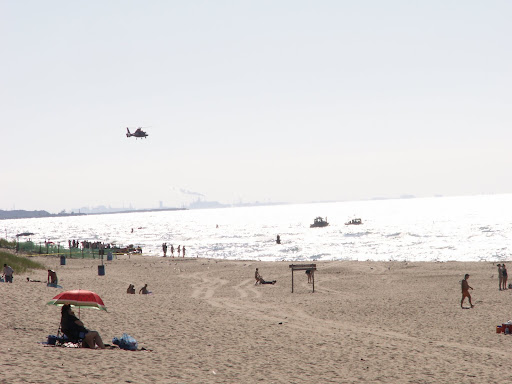
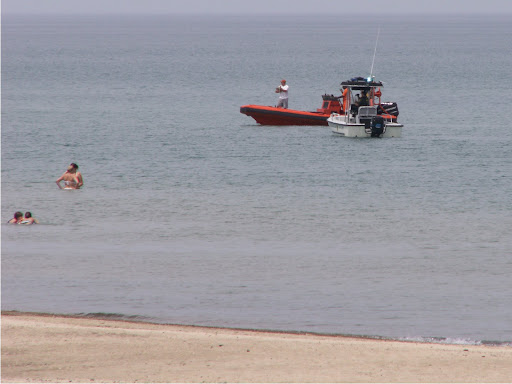
PORTER -- Officials on helicopters and jet skis will continue to search Lake Michigan today for a 13-year-old boy feared drowned Saturday.

Rough waters and strong waves hampered efforts to find the boy, who was reported missing around 1:30 p.m. off of Porter Beach just west of the Indiana Dunes National Lakeshore beach.

Department of Natural Resources officer Shawn Brown said officials would decline to release the boy's name. A recovery operation would continue this morning, he said.

Tina Reid of Porter said she and her friends were getting ready to leave what she called a beautiful day at Porter Beach around 1:30 p.m. when they saw a woman running down the beach, screaming for help.

The woman's young son had seen two other boys in trouble in the water and had actually tried to save them himself, Reid said, but the son couldn't help them and then got his mother for help.

Reid and her friends, Tim and Chris McNally of Porter, swam into the water and were able to save the 10-year-old boy where the water was about 6 feet deep.

"I just heard him keep saying, 'My brother, he's dead,' " Reid said. "I just wish we could have been there 30 seconds earlier."

They couldn't see his brother, though, and Reid ran back to the beach to call 911. By the time she had come back, lifeguards had begun to gather volunteers to search for the boy.

Doris Healy of Porter said she, too, heard the woman scream for help. Her husband, Dennis, went to help and joined the chain of volunteers that tried looking in the shallow waters for the boy.

Officials with the National Lakeshore beach had actually closed the waters to swimming around 11 a.m., Doris Healy said, but people just moved west to the Porter Beach.

"I kept thinking all day this is a horrible day to have kids down here," she said, referring to the rough waves. "I've never seen it this bad."

Dennis Healy said the volunteers eventually had to pull back because of the waves.

Family members watched as officials continued to search the waters for hours. Crews from the U.S. Coast Guard, Ogden Dunes Fire Department, Burns Harbor Fire Department, Porter Fire Department, Portage, Lakes of the Four Season Fire Department and Porter County Sheriff's Police joined the DNR in the search.

People continued to play on the beach and wade into the waters and rescue officials had to save another swimmer around 4:20 p.m. who was in distress in the water.

The woman was sitting and awake when taken away in an ambulance.

Officials closed Porter Beach after that, Portage Assistant Fire Chief Joseph Calhoun said, but people still tried to stay in the water, despite the waves.

"The water was definitely dangerous today," he said.

The search was suspened about 8:30 p.m. because of high waves, DNR officer Brown said.

The most recent Lake Michigan drowning in the region occurred July 13 when Davante Jackson, 14, of Chicago Heights, Ill., disappeared at Kemil Beach in Porter County. His body was found three days later.

RS

Saturday, August 2, 2008

Crews searching Lake Michigan for missing boy

Crews searching Lake Michigan for missing boy

By Jim Pinkerton

PORTER COUNTY — Rescue crews are searching the waters of Lake Michigan looking for a boy who disappeared.

The Department of Natural Resources says it's in recovery mode. The 10-year-old boy was last seen swimming in the water at Porter Beach around 2 p.m. Saturday.

Rescue crews had to suspend diving operations. They say rip currents in the water are just too strong. We'll continue to keep you updated on this developing story.


Photo of search operations off of Porter Beach


Photo by : The AM 1420 WIMS- Robin Storm Team

Tuesday, July 29, 2008

NOAA Reminds Beachgoers That Rip Currents Can Be a Threat

NOAA Reminds Beachgoers That Rip Currents Can Be a Threat

Heading to the beach for summer vacation? NOAA is urging beachgoers to learn how to “Break the Grip” of rip currents before getting into the water. Rip currents are a deadly threat — accounting for more than 80 percent of lifeguard beach rescues.

Rip currents are narrow channels of fast-moving water that pull swimmers away from the shore. They can occur at any beach with breaking waves, including the Great Lakes.

Moving at speeds of up to eight feet per second, rip currents can move faster than an Olympic swimmer and can easily overpower a victim. Panicked swimmers often incorrectly swim straight back to shore — putting themselves at risk of drowning because of fatigue.

If caught in a rip current, don’t fight it! Swim parallel to the shore and then swim at an angle – away from the current – toward shore.

“We have a constant education campaign about rip currents since many people visit the beach infrequently and may be unfamiliar with this leading surf hazard,” said Timothy Schott, meteorologist with NOAA’s National Weather Service Marine and Coastal Branch in Silver Spring, Md. “This year, we have developed bilingual English-Spanish signs to reach a wider audience with life-saving instructions on how to break the grip.”

"Rip currents can be killers. The United States Lifesaving Association estimates that the annual number of deaths due to rip currents on our nation's beaches exceeds 100,” said Peter Davis, president of the Gulf Coast Region of the United States Lifesaving Association and chief of the Galveston Island Beach Patrol. “The greatest safety precaution that can be taken is to recognize the danger of rip currents and always remember to swim at beaches with lifeguards."

NOAA also offers the following safety tips:

  1. Swim at lifeguard-protected beaches.
  2. Never swim alone.
  3. Speak to on duty lifeguards about rip currents and other expected water hazards.

Many coastal National Weather Service offices issue what's known as Surf Zone Forecasts that provide a low, moderate or high description of rip current risk. All NOAA National Weather Service offices include moderate to high risk of rip currents in their Hazardous Weather Outlook. These forecasts are available online at www.weather.gov.

More safety tips and educational materials are free and available to download at http://www.ripcurrents.noaa.gov/.

The National Oceanic and Atmospheric Administration, an agency of the U.S. Commerce Department, is dedicated to enhancing economic security and national safety through the prediction and research of weather and climate-related events and information service delivery for transportation, and by providing environmental stewardship of our nation's coastal and marine resources. Through the emerging Global Earth Observation System of Systems (GEOSS), NOAA is working with its federal partners, more than 70 countries and the European Commission to develop a global monitoring network that is as integrated as the planet it observes, predicts and protects.

RIP CURRENTS FOR REAL

BunnyERabbit
On July 13th 2008, 15 year old Chicago youth Devant Jackson was swept away from Kimel Beach at the National Lake Shore Park in Indiana. On July 16th his body was recovered. Recovery Photo by Team Robin Storm.Delete caption

WEATHER NOTE

Extra 3 trillion gallons of water in Lake Michigan Lake Michigan's water level has risen 8 inches above the same period a year ago. Once just 6 to 12 inches above all-time lows, lake levels are up in response to the same downpours that caused many area rivers to flood. The U.S. Army Corps of Engineers, which monitors the Great Lakes, predicts the higher levels are to hold through the coming months, though, barring new waves of heavy rains, the biggest rises have probably already occurred. Interconnected Lakes Michigan and Huron are unlikely to change significantly in the next month.

The corps reports other Great Lakes have experienced increased levels as well, with Lake Superior 16 inches higher than a year ago. The rise in Lake Michigan means the lake has added approximately 3.12 trillion gallons since a year ago.

Blistering heat continues to grip the southern Plains. The heat has anchored northwest jet-stream winds over the area, which have slowed the eastward expansion of hot air in recent months.

MARITIME NOTE
FROM THE DECK OF gCAPTAIN.....

Windoc Incident - Story Behind YouTube’s Most Chilling Video

July 21st, 2008 ·

<span class=Windoc Damaged and at anchor after collision and fire"
The Windoc blocks the canal. Alex Howard

In August 2001 the Bulk Carrier Windoc was lined up on the Welland Canal’s Bridge 11 in Ontario Canada. After recieving the flashing amber approach light indicating that the bridge operator was aware of the vessel the captain lined up on the centerline and maintained a speed of 5 knots. Minutes later while the vessel was half way through the bridge started descending.

A Time for Restraint: Maritime Disasters Usually Not What They Seem… A Time for Restraint: Maritime Disasters Usually Not What They Seem…

Cosco Busan case and a new crisis on the Mississippi River attracting speculation and needless drama – and sometimes, grandstanding.

I briefly considered putting together a couple of news articles regarding either the latest Cosco Busan case developments or the Mississippi River for the online edition this week, but what passes for "fact" seems to change so fast that I am quite sure I'd get it wrong. Hence, I'm going to let others make suppositions and prognosticate about what happened, didn't happen or who is to blame. However, that won't stop me from wondering if those who have continuously excoriated Captain John Cota in the news might just be backpedaling a notch or two.

In the latest twist out west, the Cosco Busan operator is now accused of fabricating records to hinder the NTSB and DOJ probes of the November 2007 allision in San Francisco Bay (see the USDOJ press release elsewhere in this e-newsletter). I don't know who else can be charged for what else, but it is getting pretty hard to follow along without a scorecard. To say that this has been the most bizarre set of circumstances I have ever witnessed in relation to any maritime accident would be a gross understatement. I've said it once before and I'll reiterate for you again: I'm not going to make any suppositions or predictions in this case.

Too often, we in the maritime industry are collectively quick to come to conclusions in any matter brought before us. I know that I received scores of "submitted articles" in the months that immediately followed the Cosco Busan allision, each purporting to know what went wrong, how and who was to blame. I'm glad that, at least in this case, I largely refrained from piling on or providing a venue for these papers. The only thing that I am sure of right now is that a great deal went badly wrong on that day and that the end result of all of it is going to be painful for a lot of people, companies, the environment and the list goes on…

Further east, on the mighty Mississippi River, a Liberian-flagged oil tanker collided with a US-flagged fuel barge near downtown New Orleans on Wednesday morning. According to official sources, as much as 375,000 gallons (8928 barrels) of oil spilled from the barge into the river. The incident resulted in the partial closure of one of the nation's most important waterways as a massive response was organized. The NTSB announced that they had an investigative team on the way at about the same time that the Coast Guard reported, "Representatives from the tug boat, Mel Oliver, report that there were no properly licensed individuals on the vessel during the time that the incident occurred."

It is again tempting to write my own piece about the Mississippi River collision and related oil spill, but I think I'll pass again. For example, I'm quite sure that any number of people will now speculate about the absence of "licensed individuals" on the vessel at the time of the collision. Like the Cosco Busan casualty, however, you can be sure that the general public – like you and I – are only looking at the tip of the iceberg in terms of the facts. At this point, the best any of us can do is look at the official news releases and get out of the way. There is serious work to be done.

In his AM e-newsletter today, Holland & Knight's Dennis Bryant succinctly outlined events happening on the Mississippi River and also told his readers, "The pressure on the Coast Guard will be intense due to the economic impact of the closure. Please be assured that everyone will be working on completion of this mission will all due dispatch. Now is not the time to divert resources to respond to inquiries from the media and others that can await a more in-depth analysis." I think that's pretty good advice.

In contrast, another press release, this time from a well-known Washington politician, characterized the Mississippi River incident as "Nothing Less Than a Tragedy." This gem of wisdom came from Congressman Elijah E. Cummings (D-MD), who also reassured all of us that "…my colleagues on the Subcommittee and I will be thoroughly examining the causes leading up to this devastating event." Well, duh. Cummings also said that it was his hope that "the members of the U.S. Coast Guard will approach this incident with the same effectiveness and efficiency that was demonstrated in the aftermath of Hurricane Katrina, and I will be in close communication with them to ensure that this is the case."

I don't know about you, but I'm not going to sleep better tonight knowing that a Washington politician will be micromanaging the very people that are responding to this incident and spill. And, as others have said far better than I could do it, "Now is not the time to divert resources to respond to inquiries from the media and others…" The temptation to grandstand in these situations is enormous, especially when there are points to be scored. It's a little like having an aspiring presidential candidate fly into the middle of a disaster for a photo opportunity. Instead, I think we should all keep our eyes on the ball; and by that I mean, let the Coast Guard do their job unencumbered and the investigators sort out the mess.

Joseph Keefe is the Managing Editor of THE MARITIME EXECUTIVE. He can be reached with comments and/or questions on this or any other article in this newsletter at jkeefe@maritime-executive.com.


RS