Showing posts with label drew dazzo. Show all posts

Thursday, February 28, 2008

High Tech Cowboys of the Deep Seas: The Race to Save the Cougar Ace

I post this article because it presents a interesting backgrounder on people in the marine salvage community.

A industry that many have either never heard of or do not understanding what marine salvage companies actually do or go through to get the job done.

They are truly first responders and sometimes the only responders.


High Tech Cowboys of the Deep Seas: The Race to Save the Cougar Ace

Latitude 48° 14 North. Longitude 174° 26 West.

Almost midnight on the North Pacific, about 230 miles south of Alaska's Aleutian Islands. A heavy fog blankets the sea. There's nothing but the wind spinning eddies through the mist.

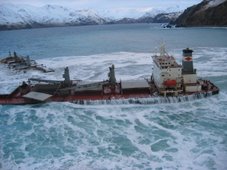
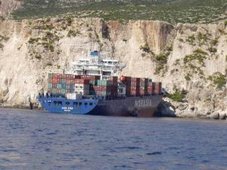
( Pix: The Cougar Ace lists at a precarious angle in Wide Bay, Alaska. Photo: Courtesy of US Coast Guard )

Out of the darkness, a rumble grows. The water begins to vibrate. Suddenly, the prow of a massive ship splits the fog. Its steel hull rises seven stories above the water and stretches two football fields back into the night. A 15,683-horsepower engine roars through the holds, pushing 55,328 tons of steel. Crisp white capital letters — COUGAR ACE — spell the ship's name above the ocean froth. A deep-sea car transport, its 14 decks are packed with 4,703 new Mazdas bound for North America. Estimated cargo value: $103 million.

Joshua Davis narrates this collection of photos and Coast Guard video taken during Titan Salvage's attempt to save the Cougar Ace.

(Video produced and edited by Wired's Annaliza Savage and Michael Lennon. Clips and photos courtesy of US Coast Guard and Titan Salvage.)

On the bridge and belowdecks, the captain and crew begin the intricate process of releasing water from the ship's ballast tanks in preparation for entry into US territorial waters. They took on the water in Japan to keep the ship steady, but US rules require that it be dumped here to prevent contaminating American marine environments. It's a tricky procedure. To maintain stability and equilibrium, the ballast tanks need to be drained of foreign water and simultaneously refilled with local water. The bridge gives the go-ahead to commence the operation, and a ship engineer uses a hydraulic-powered system to open the starboard tank valves. Water gushes out one side of the ship and pours into the ocean. It's July 23, 2006.

In the crew's quarters below the bridge, Saw "Lucky" Kyin, the ship's 41-year-old Burmese steward, rinses off in the common shower. The ship rolls underneath his feet. He's been at sea for long stretches of the past six years. In his experience, when a ship rolls to one side, it generally rolls right back the other way.

This time it doesn't. Instead, the tilt increases. For some reason, the starboard ballast tanks have failed to refill properly, and the ship has abruptly lost its balance. At the worst possible moment, a large swell hits the Cougar Ace and rolls the ship even farther to port. Objects begin to slide across the deck. They pick up momentum and crash against the port-side walls as the ship dips farther. Wedged naked in the shower stall, Kyin is confronted by an undeniable fact: The Cougar Ace is capsizing.

He lunges for a towel and staggers into the hallway as the ship's windmill-sized propeller spins out of the water. Throughout the ship, the other 22 crew members begin to lose their footing as the decks rear up. There are shouts and screams. Kyin escapes through a door into the damp night air. He's barefoot and dripping wet, and the deck is now a slick metal ramp. In an instant, he's skidding down the slope toward the Pacific. He slams into the railings and his left leg snaps, bone puncturing skin. He's now draped naked and bleeding on the railing, which has dipped to within feet of the frigid ocean. The deck towers 105 feet above him like a giant wave about to break. Kyin starts to pray.

Jackson Hole, Wyoming, 4 am.
A phone rings. Rich Habib opens his eyes and blinks in the darkness. He reaches for the phone, disturbing a pair of dogs cuddled around him. He was going to take them to the river for a swim today. Now the sound of his phone means that somewhere, somehow, a ship is going down, and he's going to have to get out of bed and go save it.

It always starts like this. Last Christmas Day, an 835-foot container vessel ran aground in Ensenada, Mexico. The phone rang, he hopped on a plane, and was soon on a Jet Ski pounding his way through the Baja surf. The ship had run aground on a beach while loaded with approximately 1,800 containers. He had to rustle up a Sikorsky Skycrane — one of the world's most powerful helicopters — to offload the cargo.

Rich Habib, Senior Salvage Master
Photo: Andrew Hetherington

Ship captains spend their careers trying to avoid a collision or grounding like this. But for Habib, nearly every month brings a welcome disaster. While people are shouting "Abandon ship!" Habib is scrambling aboard.

He's been at sea since he was 18, and now, at 51, his tanned face, square jaw, and don't even try bullshitting me stare convey a world-weary air of command. He holds an unlimited master's license, which means he's one of the select few who are qualified to pilot ships of any size, anywhere in the world. He spent his early years captaining hulking vessels that lifted other ships on board and hauled them across oceans. He helped the Navy transport a nuclear refueling facility from California to Hawaii. Now he's the senior salvage master — the guy who runs the show at sea — for Titan Salvage, a highly specialized outfit of men who race around the world saving ships.

(Full Story Wired Magazine)


MARTIME NOTES:

Messing About In Ships Podcast


Messing About In Ships Podcast #12 - Special Interview of US Coast Guard Rescue of Sailors Aboard the Yacht Sean Seymour II

February 25, 2008, 4:33 am
Filed under: podcast, shownotes

Here is the inspiring interview with the US Coast Guard helicopter rescue crew that saved the lives of three sailors aboard the yacht Sean Seymour II.

File Download:Messing About In Ships 12 - Special Interview

Interviewees:

  • Aviation Survival Technician Second Class Drew D. Dazzo, H-60 Rescue Swimmer
  • Lieutenant Commander Nevada A. Smith, H-60 Aircraft Commander
  • Lieutenant Junior Grade Aaron G. Nelson, H-60 Copilot
  • Aviation Maintenance Technician Second Class Scott D. Higgins, H-60 Flight Mechanic

Final log entry by Jean Pierre de Lutz, owner of Sean Seymour II

Robin Storm blog: Saved from the Angry Atlantic

Watch for future episodes with interviews with the C130 flight crew and the Sean Seymour II captain/owner.


RS

Friday, February 22, 2008

TRAGEDY SPAWNS HEROES: THE MAKING OF THE COAST GUARD HELICOPTER RESCUE SWIMMER PROGRAM

TRAGEDY SPAWNS HEROES:
THE MAKING OF THE COAST GUARD HELICOPTER RESCUE SWIMMER PROGRAM


By Petty Officer 2nd Class Christopher Evanson Fifth District Public Affairs


5 years ago, a tragic event claimed the lives of 31 Merchant Marines, and the Coast Guard Helicopter Rescue Swimmer Program was conceived to prevent such disasters from ever happening again. The program has been a guardian angel to many fates nearly taken by the sea.


On the morning of Feb. 12, 1983, gale force winds and 40-foot waves wreaked havoc off the coast of the small Eastern Shore community of Chincoteague, Va. Conditions were the perfect recipe for disaster, a recipe that eventually claimed the lives of 31 mariners by day's end. This tragic event proved to be more catastrophic because the Coast Guard was not prepared to respond. The sad conclusion of the S.S. Marine Electric served as a humbling blow to Coast Guard readiness, and the motto of Semper Paratus. The sacrifice of these mariners, however, indirectly saved the lives of thousands of men and women who would confront the mercy of the sea in the years to follow. The doom of the Marine Electric spawned the Coast Guard Helicopter Rescue Swimmer Program, and a new generation of lifesavers at sea.

Tragedy at Sea

The S.S. Marine Electric, a 587-foot motor vessel transporting coal departed Norfolk, Va., for Brayton Point, Mass., on Feb. 10, 1983. Thirty-four merchant mariners were aboard as a winter storm pummeled the lower Chesapeake Bay.If four-foot seas within the bay were harsh, the seas awaiting the Marine Electric in the open ocean were in excess of 40 feet.

On Feb. 12, 1983, at approximately 2:51 a.m., a Coast Guard watch stander in Ocean City, Md., was notified by the master of the Marine Electric, reporting his vessel was taking on water near the front end of the ship. By 3 a.m., the entire crew was mustered on deck near the starboard lifeboats preparing to abandon ship. At a quarter after 4 a.m., as the merchant mariners were preparing the lifeboats, the ship was struck by a powerful jolt, possibly a rogue wave, capsizing the vessel to the starboard side. The Marine Electric crew was thrown into the frigid Mid-Atlantic waters recorded at 37 degrees Fahrenheit approximately 30-miles off the coast of Chincoteague. What was an initial distress call now became a massive search and rescue case, but the following events proved far more difficult than ever imagined.

At the time, Coast Guard flight crews did not have the ability or power to deploy rescue swimmers in the sea to recover victims. As strange as it may seem, a crewmember simply lowered a rescue basket from the helicopter in the vicinity of a distressed person in the water. The rescue relied almost entirely on the victim mustering the strength to get in the basket on his or her own. In cold temperatures where shock and hypothermia were prevalent, this practice proved futile.

When a Coast Guard helicopter crew based at Air Station Elizabeth City, N.C., arrived on-scene shortly after 5 a.m., the water was flush with strobe lights, yet little sign of life existed. Not until 6:05 a.m. was a Navy rescue swimmer able to assist with the recovery. The Navy dispatched a helicopter crew from Naval Air Station Oceana in Virginia Beach, Va., which had rescue swimmers trained for search and rescue. One-by-one with the help of the crew of the 82-foot Coast Guard Cutter Point Highland, the Navy rescue swimmer recovered the bodies of the Marine Electric crew from the surface; nearly three hours after the vessel capsized.

Of the 34-crewmembers aboard the Marine Electric, 27 people were recovered; only three survived. Seven Marine Electric crewmembers were never found, possibly still aboard the ship. The deceased were later pronounced dead by medical examiners who indicated the cause of death to be hypothermia and or drowning. Meanwhile, as the sun rose, the Marine Electric had already begun a slow descent into oblivion, beneath the sea where it lay in perpetuity.

Aftermath

Following this tragedy, the Coast Guard launched one of the biggest Marine Board of Investigations in its history. Making the case more overwhelming were congressional representatives seeking to know how such a disaster could happen, and more importantly how can a similar scenario be averted. After several congressional hearings, the Coast Guard Authorization Act of 1984 was passed to ensure the Coast Guard was properly equipped to respond to such cases. An excerpt of the act reads, "The Commandant of the Coast Guard shall use such sums as are necessary, from amounts appropriated for the operational maintenance of the Coast Guard, to establish a helicopter rescue swimmer program for the purpose of training selected Coast Guard personnel in rescue swimming skills."

Introduction of the Guardian

"The Aviation Survival Technician (AST) rating's job which was created in 1969 has always been to inspect and maintain life support equipment, perform ground handling and servicing of aircraft, and conduct aviation administration duties," said Master Chief Petty Officer Donald Murray, Coast Guard Aviation Survival Technician Rating Force Manager.

The Coast Guard Helicopter Rescue Swimmer Program would become an extension of the AST mission objective, beginning very subtly in the fall of 1984, as a result of the Marine Electric tragedy. The Coast Guard joined forces withthe Navy, which permitted prospective Coast Guard helicopter rescue swimmers to train with fellow Navy swimmers at the U. S. Navy Rescue Swimmer School at Naval Air Station Pensacola, Fla. The rating initially known as Aviation Survivalman or ASM graduated five members in this first class.

After a few years of training with the Navy, it became apparent the Coast Guard needed to make modifications because some of the methods taught at the joint service school were not applicable to the Coast Guard search and rescue mission. These methods included scuba, deploying parachutes, tree extraction, and mountain rescue. The Coast Guard's main emphasis is peacetime rescues, not downed military recovery methods. In addition, the program was not without its challenges. The new feature to Coast Guard aviation generated hesitation and concern from pilots with deploying swimmers in hazardous conditions.

"When the program first became operational, there was considerable reluctance to deploy rescue swimmers except under generally favorable conditions, but it soon became apparent, however, that Coast Guard rescue swimmers would frequently be utilized in extreme weather conditions," said retired Lt. Cmdr. Richard M. Wright, in a 1996 article he authored titled "Coast Guard Rescue Swimmer Program".

Rescue swimmers assigned to Air Station Elizabeth City officially became the first operational unit with helicopter rescue swimmers March 5, 1985, with air stations throughout the country following suit throughout the following years. "The Coast Guard went fully operational with the rescue swimmer program in October of 1991 meaning all Aviation Survivalmen, [first class petty officer] and below stood rescue swimmer duty at every Coast Guard air station across the country," said Murray.

Since its inception, the Coast Guard Helicopter Rescue Swimmer program has enhanced the Coast Guard search and rescue mission. "The addition of a Rescue Swimmer asset to Helicopter search and rescue teams has had significant impact on the mission. Hurricane Katrina is our most recent reminder of the value of this asset," said Senior Chief Petty Officer Lewis Hart, who supervises the Aviation Survival Technician "A" school in Elizabeth City.

In the two-plus decades of the programs existence, several innovations in training have allowed rescue swimmers to adapt to unpredictable situations that they often encounter.

"The Rescue Swimmer Program has evolved in a number of ways but mostly in more advanced gear and training. The development of the Advanced Helicopter Rescue School in Astoria, Ore., helps train AST's in advanced techniquessuch as vertical surface rescue, sea cave rescue, heavy surf rescue, and swift water rescue," said Hart. In addition, innovations in sport science became an objective in training rescue swimmers. "The AST 'A' School has also developed a Train the Trainer 'C' School that teaches advance fitness and exercise physiology for training AST airmen and for operational fitness," added Hart.

It has been 25 years since 31 souls from the Marine Electric perished. Since this tragedy, it can be said that many lives have been indirectly saved. It is sometimes though tragedy that good can be extracted, and the Coast Guard Rescue Swimmer has fostered this. Coast Guard Helicopter Rescue swimmers have saved or assisted countless lives in the most harrowing of circumstances. In Hurricane Katrina, more than three-thousand lives were saved as the search and rescue operation unfolded on live television. In addition to survival skills in extreme elements, rescue swimmers are trained emergency medical technicians employing basic skills to victims while transporting to medical facilities ashore.

Nevertheless, perhaps the most important thing to remember is that rescue swimmers do not operate alone. It takes an entire flight crew to make saving lives a reality. "Rescue swimmers are highly visible in search and rescue cases and subsequently receive a lot of media attention," said Hart. "It would be fair to say that the media reports deemphasize the team concept with regard to the rest of the crew in such cases," he added. With lessons learned, the Coast Guard stands by for the next search and rescue case, always ready.


MARITIME NOTES:

USA. Mad Mariner introduces video Docking Game

Thursday, 21 February 2008

Mad Mariner, a leading online resource for independent reviews and in depth articles on boating, has announced the official release of The Docking Game, an Internet-based video game that allows boaters to practice and test their skills in a variety of marinas and conditions.

Chicago Maritime Festival - February 23


Coast Guard releases report on Marine Safety program

(WASHINGTON) -- The U.S. Coast Guard has released an independent study on its Marine Safety program. The report highlights the need to boost the status of Marine Safety within the Coast Guard organization. It also suggests that relations with the maritime community need to be improved. Click here to view the document.

Vessel pushed aground by ice, Azov sea - 2/15/2008 02:00
February 15, 03.15 LT –
m/v Nikolay Sutyrin was pushed aground by ice twitch in Taganrog entrance buoy area, when proceeding in ice-convoy with i/b Kapitan Demidov, in southern direction, Azov sea. Vessel got a hole in cofferdam area, hole fixed by crew. Icebreaker Kapitan Demidov returned to m/v Nikolay Sutyrin, to assist refloating. After refloating, vessel will be towed to port for repairs. M/V Nikolay Sutyrin - IMO7119460, dwt 3355 t, built 1971, river-sea type, owner Samarskaya Shipping Co., enroute Azov-Gerasun (Turkey), cargo 3225 mt coal, crew 11, flag Russia.

Messing About In Ships Podcast Episode #11
February 22, 2008, 5:43 am
Filed under: podcast, shownotes


Have a great weekend!

RS

Thursday, February 14, 2008

Improving ship safety and efficiency with proactive use of Voyage Data Recorders

Todd Ripley, Maritime Administration, Washington, DC

Thomas King, Litton Marine Systems Inc., Charlottesville, VA., Henry Chen, Ocean Systems, Inc., Oakland, CA

INTRODUCTION

The use of Shipborne Voyage Data Recorder (VDR) in the commercial maritime industry can raise both safety and operation efficiency levels. Although it is late coming compared with aviation industries, the International Maritime Organization (IMO) has recently passed the resolution A.861(20) Performance Standards for Shipborne Voyage Data Recorders. The International Electrotechnical Commission (IEC) is currently finalizing the technical specification of the VDR for type approval. Carriage requirements are now under discussion at IMO and will become a reality in the near future.

While mandatory carriage requirement is still years away, some progressive shipping companies have already started to install VDR as part of an advanced Integrated Bridge System (IBS). Actual field experience shows that cost-effective VDRs can be built and maintained to meet reasonable performance requirements with today's technology. Although the primary purpose of the VDR is for accident investigation after the fact, innovative uses of the VDR by the operators both in real-time and post voyage modes have demonstrated VDRs can improve safety as well as efficiency of operations. The concept is similar to the use of flight recorder to store engine data for maintenance in the aircraft industry. This paper describes several areas of proactive use of VDRs for central alarm management, performance efficiency monitoring, heavy weather damage avoidance and seamanship skill training.

SAFETY

The safe operation of commercial ships is most important to ship operators, regulators and the private sector. Just as in other industries, the prudent operator strives for a high degree of safety in its transportation operations. Operating safely and efficiently is a basic business requirement, which must be met just to stay in business. Today's legal liabilities make it non-profitable to operate unsafely, and can soon put sub-standard operators out of business. The risk of fighting law suits and paying judgements and fine for loss of life, injuries, damage to property, and damage to the environment make it impractical and foolish to operate un-safely.

Tools that encourage and ensure that shipping operations are conducted safely must be a priority. The VDR and its potential for improving marine transportation safety are far reaching. The extensive recording of ship navigation equipment, propulsion system and bridge command as well as alarm status provides a comprehensive analysis database. The data could be used to aid investigators in identifying causes of the accident. More important, it can also be used to study trends and precursor events, which lead to an incident, thereby assist in formulating proper procedures to avoid future similar scenarios. Incident data could be used as a training tool to make operators aware of potential hazards and assist in the avoidance of incidents. Data could also be used in the evaluation of certain critical equipment, to ensure proper maintenance and operation or to install added redundancy to further improve safety.

Furthermore, in the real-time mode and without affecting the recording function of the VDR, data can be made available for viewing by the operator to prevent accidents. The following are a few examples of the real-time use of VDR data:

    Heavy Weather Damage Avoidance

    Containers are lost and ships are damaged in severe sea states. Monitoring of vessel motion and hull stress can alert the operator when the safe operating threshold is about to be exceeded. The real-time display and analysis coupled with analytical prediction of motion and sea load with observed or forecast sea and swell condition can reduce the risk of heavy weather damage. Using these tools, the operator will be able to answer many "what if" questions on changing ship speed and heading to reduce motion and stress before it is carried out. The sensors will further confirm the operator's actions.

    Central Alarm Management

    With the proliferation of alarm signals on each piece of equipment and sensors on a modern ship, the sound and light signals quickly become confusing and unmanageable. The crew may take days to become familiar with the alarms and how to turn them off. Since the VDR is already monitoring all the major alarms, a Central Alarm Management System can automatically monitor, record and display ship's alarm at a central location so that the crew can easily identify the alarm and manage the condition in a timely manner. The entire system is designed to assist the mariner in overcoming the uncontrolled proliferation of alarms and warning sounds on modern ships by displaying the alarm status so that:

    · Alarms are easily distinguishable

    · Alerts or informs which important actions are to be taken

    · Non-important action can be postponed or transferred

    · Responsibilities, procedures, and routines are easily understood through the use of check lists and graphic display including video

    · Records are kept for later investigation and training

    Directional Stability

    A large vessel with blunt hull form can sometimes exhibit directional instability in slow forward speeds. When ship's turning is not responding to the rudder action, it can lead to collision in congested waters and grounding in narrow waterways. Real time display of turn rate, rudder angle and other factors influencing the ship's maneuver can alert the operator of potential dangers.

    Incident Investigation

    As in other transportation incident investigations, the marine incident requires accurate data records in order to gauge system and personnel performance as well as operating status prior to an incident. In maritime industry, most of these incidents are not fatal, the actions taken by the crew after the incident is also important. The VDR can record and save the data so that analysis can be made when the ship arrives next port. The determination of factors, which caused, or contributed, to an incident is most important in the prevention of similar future incidents.

    Perhaps the most notable are maritime investigation involve passenger vessels and the loss of human life. It is critical to determine which regulations, equipment, and operational procedures require modification to prevent these incidents. Also incidents which damage the environment have a "high profile" with a lot of public demand to find ways to prevent future incidents. For the operator, all ship incidents are important if lessons can be learned to avert damage in a potentially dangerous situation. The second by second replay of important ship data recorded by the VDR could be a critical tool for the marine accident investigator in the determination of specific precursor events, sources causing incidents, and subsequent actions taken to avert the incident.

    Bridge Team Training

    Shipping companies spend a great deal of effort in bridge team resource management training to ensure safe operation. Playback of VDR recording of actual operation data can provide realistic scenario to improve bridge team effectiveness and evaluate procedures for accident prevention. Corrective measures can then be reinforced via training.

EFFICIENCY

Operating efficiency is another important element in the competitive commercial shipping industry. In the long run, only the safe and efficient operator will survive in business. Efficiency can be improved only when the management can compare performance to an established base line standard. Ship operators currently rely on the crew to make observations of time, ship position, speed, engine output and other pertinent voyage data, then record them on a sheet of paper or input them into a computer data base. Uncertainties in weather conditions, effect of current, averaging process used to determine SHP, speed etc on once or twice a day basis degrade the overall data integrity. Since there is no way to check the validity of each input, the data is often of little use in performance monitoring except for record keeping purpose.

The continuous monitoring of navigation and engine data by the VDR creates an ideal database for performance evaluation in an automated fashion. Passage reports can be generated from past time history records on any selected data fields. Inferences can be made regarding the hull, engine, and propeller efficiencies as well as fuel consumption. The results can assist the management in making optimum dry-docking schedules, choosing fuel types, as well as validating claims of energy saving devices. In the real-time mode the VDR can supply critical engine data to alert operator of abnormal operating conditions before they result in engine damage. The following are a few examples of the use of VDR data in enhancing operation efficiencies:

    Engine overload

    Ships with low sea margin design of fixed pitch propeller and low speed diesel engine combination can often lead to engine overload when encountering head sea conditions. Monitoring of Shaft horsepower and RPM and displaying them on an engine overload diagram can alert the operator when approaching such conditions. The engineers can then take appropriate actions to minimize the engine wear when operating in restricted zones.

    Hull and propeller roughness monitoring

    An increase in Hull and propeller roughness can result in a large increase in fuel consumption over time. In the worst scenario, the added resistance will also cause frequent engine overload even in favorable weather conditions resulting in reduction of operating speed. The detailed recording of engine SHP, propeller RPM, and ship speed just after dry-docking can be used as a baseline for comparison with current conditions. Savings in fuel cost can be traded-off between early dry-docking, using long lasting anti-fouling paint and underwater propeller polishing.

    Performance evaluation

    Ship performance evaluation has been an elusive target due to lack of detailed navigation and engine data. Uncertainties on the effect of weather and ship's loading on fuel consumption plus changes in schedule requirement makes the performance evaluation difficult if not impossible.

    With the VDR recording actual ship position, speed, engine RPM, SHP and wind speed, it is possible to compare the performance to a known based line standard. Charter party speed claims can now be based on actual recorded ship speed and wind measurements. For owner operated ships, management can compare performance of sister ships running on the same trade route and identify deficient operating practice to improve efficiency. Historical data can also help the company naval architect in specifying proper sea margin when building new ships.

BEYOND VDR BASICS: ADDED ECONOMIC BENEFITS

Although the primary purpose of VDR is to record data for accident investigation, many real-time applications of the VDR can lead to improved safety by identifying and warning of impending danger or organize the alarms. VDR data could prove valuable for the training and education of mariners. Real life data of unfolding events could be used to simulate actual problematic situations and the decision of the student could safely be evaluated and guidance provided. Data could be used and reviewed by crews who operate in a problematic area to improve their decisions. VDR data can play a key roll in the education and training of our mariners to enhance the safety of operations.

Companies trying to become more efficient could also use VDR's information. Data collected and analysis performed by companies could be used to increase their competitive advantage. Historical vessel operating efficiency data could be collected and monitored to determine the need for vessel maintenance or modification to reduce operating cost. Performance evaluation could be carried out to identify operating deficiency. By using the VDR data, companies can improve their operating efficiencies. Safer and more efficient operations can be directly translated into cost-saving and increased profitability of those shipping companies utilizing the VDR technology.

CONCLUSION

Carriage requirements for commercial vessels will happen. It is not a question of if there will be a VDR requirement, just when. IMO has passed resolution on Performance Standards of VDR and encourages member states to vote for mandatory carriage of VDR. Discussions are focusing on passenger vessels, which have potentially the greatest impact on human life; followed by vessels which have the potential for environment impacts, such as tankers and chemical carriers, then cargo vessels. Progressive IMO implementation of carriage requirements is expected in the near future.

Currently the IEC is completing the final draft of the technical standard for the VDR. The specifications will have to be consensus standards developed collaboratively by all parties with an interest. They must allow for the cost-effective production VDRs, which can be used by the majority of the commercial shipping industry. In addition, innovative use of VDR data in both real-time and archived mode should be encouraged to bring about added benefits for the owner and operators.

In conclusion, VDRs can positively impact the commercial maritime industry. Safety will be increased just by the awareness of their existence. The utilization of VDR's in the commercial shipping industry will be a plus for the maritime industry. Just through the awareness of their existence, they will heighten operator's diligence in operating their vessels safely and efficiently. With the carriage requirements for the maritime industry coming out in the near term, the industry must be prepared for their implementation. As ships are required to carry such recording equipment, operators should take advantage of the VDR hardware and derive added benefits in enhanced safety as well as efficiency.

Acknowledgements

The research and development effort of VDR described in this paper is partially funded by an ARPA/Maritech project. Opinion expressed in this paper however, may not necessarily reflect that of Maritime Administration.

References

Chen, H. Cardone, V. and Lacey, P. "Use of Operation Support Information Technology to Increase Ship Safety and Efficiency", Society of Naval Architect and Marine Engineers, Annual Meeting 1998.

Biographies

Todd Ripley is a Naval Architect at the Maritime Administration under the U.S. Department of Transportation. He is the Maritime Administrations representative for technology development programs involving shipboard information systems and shipboard bridge systems. He is a member of ASTM and ISO and is engaged in shipbuilding and maritime standards development both at the national and international level.

Tom King is the Director of Marketing and System Sales for Litton Marine Systems. Litton Marine Systems, headed in Charlottesville, Virginia is a trade name of Litton Industries, representing the three legacy companies of Sperry Marine, Decca Marine and C. Plath.

Henry Chen is the President of Ocean Systems Inc. of Oakland, California. He has actively participated in the development of VDR hardware and software during the last 5 years. He is a member of the IEC committee formulating the draft technical requirement of VDR. His background is in naval architecture and marine systems engineering. He has a Ph.D. from MIT.

WEATHER NOTES:

The History Channel and Rogue Waves

"Join us for the amazing story of one of nature's most terrifying forces. With striking visuals from ships in storm-tossed seas, the special presents dramatic tales of rogue wave disasters throughout history, and explores the astonishing scientific discoveries surrounding this deadly phenomenon. Aided by mind-blowing CGI footage from the motion picture Poseidon by Wolfgang Petersen, director of The Perfect Storm, we reveal the awesome power of this ocean menace as it really is--a monster rising from the deep!"

STORM SPOTTER BEAU DODSON


February 12, 2008: MAJOR ICE STORM DAMAGE - WESTERN KENTUCKY

FROM THE TULLAHOMA NEWS

Sirens working, but take extra precautions against tornadoes


MARITIME NOTES


Smaller ferries in Admiralty Inlet would be dangerous


A former NOAA officer, otherwise anonymous, has filed an interesting report about weather conditions in Admiralty Inlet, where the Port Townsend-Whidbey Island ferry route runs (when it does). His verdict: the state's plans to replace the current ferry with a smaller boat would risk lives, due to the mighty winds and waves prevalent in the area.

The blogger describes, with detailed records, how the wind comes around the Olympics and creates intense pressure and high waves. That calls for boats that are "large, powerful, and sturdy," he writes. Here's his scary weather report:
By David Brewster, Ferries
Posted on February 13, 2008, Printed on February 13, 2008
http://www.crosscut.com/ferries/11537/

A former NOAA officer, otherwise anonymous, has filed an interesting report about weather conditions in Admiralty Inlet, where the Port Townsend-Whidbey Island ferry route runs (when it does). His verdict: the state's plans to replace the current ferry with a smaller boat would risk lives, due to the mighty winds and waves prevalent in the area.

The blogger describes, with detailed records, how the wind comes around the Olympics and creates intense pressure and high waves. That calls for boats that are "large, powerful, and sturdy," he writes. Here's his scary weather report:

When Southwest storm winds off the Pacific are forced to divide around the Olympic Mts., the eastern branch of these winds blows up Hood Canal. Because the mountains have forced the moving air aside, it is compressed, and by a well-known principle of fluid dynamics called the Bernoulli Principle, a flowing fluid (in this case air) that is compressed and subjected to higher pressure by dividing around an object speeds up in the immediate vicinity of the object. This is why Hood Canal experienced 100 mph winds in 1979, winds which broke apart and sank the original bridge. When this eastern branch of the “fluid” reaches the northern end of Hood Canal at the NE corner of the Olympic Peninsula and north end of the Kitsap Peninsula, it spews forth into Admiralty Inlet like water out of a fire hose and slams into the southwest side of Whidbey Island.

In calling for bigger boats to replace the scrapped small Port Townsend ferry, the writer also says there will need to be an expanded terminal at Port Townsend and a new terminal outside the tiny Keystone Harbor on Whidbey. He stresses that the Inlet is "a wild and dangerous place," as some recent episodes demonstrate:

The experience of the Keystone-Port Townsend passenger-only ferry the other day is a case in point, with the entire bow going under dark green water for what seemed like an eternity, flooding water into the passenger cabin and striking terror among the passengers. They literally thought they were about to die, screaming and helplessly running “up hill” toward the back of the boat. Another case in point is the recent event that damaged cars on a much larger San Juan Islands ferry.

The comments appear on a blog called Bitter End, run by a rescue tug captain, Richard J. Rodriguez. It's an interesting source of detailed information about our ferries, from the helm, as it were.

FINALLY

We have been blogging about the rescue of the s/v Sean Seamour II by the United States Coast Guard for some time now. The crew that rescued the sailors of this stricken sailboat were recently decorated for heroism. ( See Saved from the Angry Atlantic )

Well we are pleased to announce that USCG Rescue Swimmer Drew Dazzo is up for another award from the Naval Helicopter Association. Here is the announcement;

AST2 DREW DAZZO: 2007 NAVAL HELICOPTER ASSOCIATION RESCUE SWIMMER OF THE YEAR, REGION FOUR* - Recognized for saving 3 lives on 7 May 2007 180NM east of MCAS Cherry Point, NC.

AIRCREW OF 6003 (LCDR ADAM KERR, LT ANDY SCHANNO, AET1 THOMAS ROMERO, AST2 MIKE ACKERMANN): 2007 NAVAL HELICOPTER ASSOCIATION AIRCREW OF THE YEAR (NON-DEPLOYED), REGION FOUR* - Recognized for saving 2 lives on morning of
20 Feb 2007 200NM east of Bermuda.

Banquet to be held at 1100 on Friday, 21 March at the Vista Point All HandsClub in Norfolk. RSVP NLT 13 March. See below for details. Uniform foraward winners, military/civilian guests TBD.

*Region 4 is the Mid-Atlantic Region of the United States.


Way To GO.. Drew Dazzo!

RS

Monday, June 11, 2007

Cheating Death On The High Seas

When we talk about the fury of mother nature, no matter if its a flood, tornado, hurricane, or a rogue wave, the mechanics of the event are normally a story in itself. But there is always, the other side of the story.

That story is the story of the rescue operations and the compelling story of the survivors.

This photograph was taken of the rescue of the crew of the s/v Sean Seamour II from the USCG J-Hawk Rescue Helicopter. It again gives us another plane of view of the monstrous sea states at the time of rescue. And this may have been the smaller of the waves that caused the sinking of the 44 foot, s/v Sean Seamour II.

At this view its difficult to estimate the size of the wave in this photograph, but monstrous maybe a understatement. There are just no words to express or define this picture. It's just an incredible and frightening picture! Note the height of the wave peak at the top in comparison to the life raft below. The waves heights were estimated by UCSG Command Pilot Lt.CMDR Nevada C. Smith ( named after the famed wild west cowboy in the 1937 movie the "carpetbaggers") piloting the USCG J-Hawk Rescue Helicopter, to be between 50 to 70 feet.

Also take note of the distance between the waves. and how close they are to each other. Just an amazing photo and a amazing tail of survival and rescue. The Hatteras Trench is definitely living up to its violent reputation here. Not just is it amazing that the crew of the s/v Sean Seamour II, who suffered from a severe case of hypothermia and injury, survived to be rescued. But the rescue itself was indeed most difficult and amazing. Hovering a helicopter in winds estimated between 60 to 80 MPH and with waves of 50 to 70 feet, was no small feat for Lt.CMDR Smith his Co-Pilot LTJG Aaron G. Nelson and Flight Mechanic Petty Officer Scott Higgens.


While deciding to launch and monitor a rescue swimmer and survivors in these conditions is entirely another difficult and painful command decision. For any rescue swimmer not just to stabilize himself in these waters, but to stabilize the rescue basket with a survivor in these types of waters, that rescue swimmer needed to be super-human, and in the case of USCG Chief Petty Officer Drew Dazzo, super-human maybe also a understatement. These USCG rescue swimmers are unsung hero's and in this case, the rescue was just not difficult, but it resulted in injury to
rescue swimmer, PO Drew Dazzo.

PO Dazzo himself had a very difficult time stabilizing himself in the water, since the steep pitch of these monstrous waves had PO Dazzo, who was tethered to a safety wire from the helicopters hoist, feeling like he was in the, spin cycle of a washer machine. PO Dazzo was hanging either very taught or very slack on his safety wire as he pitched and rolled with these waves. During his initial insertion into the stormy seas and while he was stabilizing, it is believed that one of the waves dropped from under him as he crested the wave and then suddenly dropped some 50 to 70 feet, over the other side
causing painful injury to PO Dazzo's back. .

Though injured and hurting, PO Dazzo continued with the rescue operations, saving the rest of the s/v Sean Seamour crew. The final rescue of the last crew member of the s/v Sean Seamour II became very laborious for the injured PO Dazzo and after a failed attempt in using a rescue sling, he once again called for the rescue basket. PO Dazzo then reentered the water to retrieve the
GPIRB. Once back on board the J-Hawk Helicopter, PO Dazzo laid on the floor of the helicopter in pain and was hospitalized, along with the crew of the s/v/ Sean Seamour II.

On top of that prior to this harrowing period, the Master of the s/v Sean Seamour II, being tossed around like a rag doll by the waves, had broken his ribs. Anyone who has broken ribs before understands pain. The slightest jarring is very painful. Imagine riding this roller coaster of waves and wind with broken ribs for an extended period of time? The other two crew members were tossed violently around the cabin and one suffered some back trauma, while the brutality of the wave did not just flip them in a 360 about the cabin, but caused the s/v Sean Seamour II to immediately list to the starboard.

But as I am informed, that did not deter the Master from attaching the GPIRB and freeing the raft from his stricken sail boat and struggling to care for his crew, while his crew made sure they took care of him, knowing that he was injured and weaving
in and out of semi-consciousness . The Master of the s/v Sean Seamour II, lived up to the honorable code of a Ships Master by tending to the safety of his crew during the emergency. I cannot say enough about his two friends and crew mates. Knowing that their friend and Captain was injured, they made sure that he was first in the rescue basket.
They are truly a "band of brothers" today.

RS

Previous Posts;
The s/v Sean Seamour II & The Hatteras Trench
High Sea's Update On Sean Seamour II
The Story of the Sailing Vessel Sean Seamour II