Proposed changes to the Nanaimo Port Authority’s moorage policy could force some liveaboards to weigh anchor and leave home port in their wake.
The proposed changes include a 14-day anchoring restriction within a 30-day period, a six-month extended stay permit, and requirements for holding tanks and logs for sewage discharge, as well as insurance.
People have until Feb. 2 to comment on the proposals.
Many liveaboards like Brunie Brunie, 66, and Norman Brook, 51, have called Nanaimo home for 10 or more years and say they won’t leave.
“I will fight to the death,” said Brunie, who has lived aboard her 1939 Lapstrake, MagicMade, for more than 20 years. “If they’re going to kick me off, they’re going to have to do it and blow me out of the water, and I’ll get all the TV cameras there when they do it.”
Brook, who has lived in the harbour for more than 12 years, said harbour residents could take the matter to court.
“We’ll have to fight it in court because this is precedent setting. If they do it here, there is nothing to stop it happening everywhere in Canada,” he said.
Andrew Pitcher, harbour master and manager of operations for the Port Authority, said the changes are to make people more responsible for their vessels. Pitcher said some changes are proposed because of boats running aground and the NPA left footing the bill.
Last year, the authority salvaged two boats at Newcastle Island, costing $40,000. “Most of the time when we [salvage a boat], the owner just walks away from the boat,” said Pitcher.
Brook and Brunie said the proposals are over-regulating. They say requiring insurance is a way for the port to get rid of liveaboards, because many can’t afford it.
The proposal would require $1 million third party liability and an additional $500,000 of pollution liability insurance if the vessel’s fuel capacity is more than 100 litres. The owner would have to have coverage for the entire stay in the harbour.
“We can’t comply with the insurance so it’s not only kicking our house out of the water, but our business has to leave too,” said Brook, who operates NAB Marine Electrical and Shipwrighting from his vessel.
Pitcher said if feedback indicates the insurance is too costly, the port will re- examine the proposals.
“We have to listen to public input,” he said.
Brook is a member of the Nanaimo Harbour Boater Community, an organization of 54 boaters, including 26 liveaboards and several boaters who moor their vessels in the harbour and live in the area.
Brook said if the organization hadn’t formed, the boaters would already have been forced out of the harbour.
But both Brunie and Brook support the requirement to have a holding tank to discharge sewage in approved facilities.
“The ocean is our yard. We respect it ... we are totally for that because we don’t want to be dumping in our yard,” said Brook.The proposed changes are online at www.npa.ca or at the NPA office at 104 Front Street.
Pitcher said there has been both positive and negative feedback so far.
After the Feb. 2 input deadline, the port authority will review comments and redraft the proposal.
Lifesavers had a busy day on south-east Queensland beaches as king tides created sudden and dangerous rips.
Thirteen people were pulled from the surf at Surfers Paradise and another five rescues were necessary along other Gold Coast beaches.First aid was given to five surfers, two of whom were hospitalised with neck and shoulder injuries.On the Sunshine Coast, a shark sighting saw beaches at Maroochydore and Alexandra Headland closed for the remainder of the day.A report of two girls missing on an unpatrolled beach at Coolum sparked a two-and-a-half hour search which proved fruitless.
Surf lifesaving spokeswoman Kaitlyn Akers said there was no evidence on the beach of the girl's presence and the search was called off.Another pair of females had to be rescued after they were swept 200 metres out to sea when they entered the water into a rip.
"They didn't walk an extra 50 metres to the flagged patrolled area and walked straight into a rip,'' Ms Akers said.Another two surfers were taken to hospital as a precaution after sustaining head injuries in the wild surf.Ms Akers said conditions were improving on all but those beaches exposed to south-east winds.
She urged swimmers to stay between the flags."We set the flags where we do for a reason,'' Ms Akers said.
The Coast Guard awarded it’s Air Medal today to one of its own for his role in two rescues off Delaware and Maryland.
Petty Officer 2nd Class Tye Conklin, a rescue swimmer from the Atlantic City air station, received the medal at the Hughes Technical Center in Pomona, N.J. Capt. Paul Ratte, commanding officer of the air station, made the presentation.Conklin rescued two crewman from the research boat Russell W. Peterson on May 12.
The Peterson had been 14 miles off Rehoboth Beach, its legs screwed into the ocean floor as the crew collected data on migratory bird patterns for Bluewater Wind LLC's proposed offshore wind farm, when a coastal storm slammed the mid-Atlantic area.
The captain of the Peterson, 61-year-old John Moyse, died. The boat later ran aground at Bethany Beach.Conklin also rescued one person from a sailboat that ran aground off Ocean City, Md., the Coast Guard reported in a news release.
Two months ago Hurricanes Gustav and Ike pounded the US Gulf Coast causing significant disruption to the nation’s energy infrastructure in Louisiana and Texas. Segments of our energy infrastructure impacted include:
drilling and exploration rigs
petroleum and natural gas production platforms
offshore-to-onshore petroleum and natural gas pipelines
natural gas processing stations
onshore petroleum and natural gas pipelines
petroleum refining system
petroleum product pipelines
electricity transmission system
electricity generation
Much has been learned about restoration from the Rita and Katrina experience of 2005. Folks working in the energy sector have performed heroically towards restoring a very complex energy system to meet demand from consumers, industry and government.
So how is the restoration effort progressing? Capstone Trading Advisors is tracking the cumulative US Offshore Gulf of Mexico production losses as reported by the US Minerals Management Service. As of 30Oct08, approximately 359.7 mbbl/day of crude oil and 2.4 Bcf/day of natural gas production continues shut-in. That equates to 27% and 33% of pre-storm production capacity, respectively. Within the last two months, cumulative production losses total 48.7 million bbls of crude oil and 253 Bcf of natural gas. See the charts below.
Lower petroleum product demand, and a corresponding reduction in refinery utilization, has cushioned the impact of this lost production. The key petroleum price drivers on a go-forward basis include 1) the depth of the global recession, 2) OPEC’s production response to lower crude oil prices, and 3) geopolitical events.
The deficit in US offshore GOM natural gas production has been made up via production from unconventional onshore sources including shale, coal bed methane and tight low-permeability formations. It is estimated that roughly 4.2 Bcf/day is being produced from these unconventional sources.
The US is expected to end the natural gas storage fill season at approximately 3.45 Tcf. The combination of storage and increased production from unconventional sources should be adequate for a normal winter season. A harsh, or early, winter could lead to significantly higher natural gas prices during the winter months. Weather is the wildcard for the natural gas market.
NORMAN — A network of 40 weather-observing stations in Oklahoma City will be unveiled Saturday during the annual National Weather Festival in Norman.
The free festival, scheduled 9 a.m. to 1 p.m. at the National Weather Center on the University of Oklahoma research campus, also will feature hourly weather balloon launches, a storm chaser car show, a children’s activity area and a weather center open house.
The Oklahoma City Micronet dedication is scheduled for 10:15 a.m. The Micronet will have four Oklahoma Mesonet stations, along with 36 miniature weather stations installed on traffic signals throughout the city.
The Oklahoma Climatological Survey developed the Micronet in cooperation with OU and the city of Oklahoma City. The survey also runs the Mesonet, the system of more than 110 weather stations throughout the state.
Mesonet and Micronet stations record temperatures, wind speed and precipitation.
Past National Weather Festivals have attracted visitors from all over Oklahoma and other states.
The car show features vehicles ranging from weathered clunkers driven by amateur chasers to newer television-station vehicles with state-of-the-art technology.
ScienceDaily (Oct. 27, 2008) — Seven years after Sept. 11, and in the wake of many major natural disasters such as forest fires, hurricanes and flooding, nearly half of U.S. states either have no state-level emergency plan or do not provide it readily to the public, reveals a new study by George Mason University Communication Professor Carl Botan.
Despite federal laws that require a state emergency operations plan (EOP) as a prerequisite to some federal funding, 22 states were unable to provide Botan with an EOP, withheld the plan on security grounds or made it difficult for even trained researchers to gain access. Residents of these states, Botan says, may question their state's preparedness because they are unable to find out how the highest authorities in their state coordinate responses to major disasters or how to have a say in those plans.
"While most Americans will have access to some important state-level information during emergencies, many may not. When minutes may make the difference between life and death in an emergency situation, the population should not have to waste precious time looking for answers or who to turn to," says Botan.
The study, "Using Sense-Making and Co-orientation to Rank Strategic Public Communication in State Emergency Operations Plans," graded and ranked the state emergency operations plans of the 50 U.S. states and the District of Columbia on their communication components.
Botan analyzed the accessible state EOPs for three criteria: if the plans had a two-way communication component, if they addressed the communication needs of vulnerable populations and if they treated public communication as important enough to specifically address it in the plan.
He found that the 29 jurisdictions that do have plans available make provisions for public communication-including news releases and public broadcasts, but only 16 of them make explicit or implicit provisions for two-way public communication such as community forums and focus groups. Botan feels that two-way public communication is essential in the plans, for that will allow the state to understand what its residents feel they need in emergency situations.
Of the 29 plans obtained, only two-Washington, D.C. [which is treated as a state-level entity for this purpose] and New Mexico-received a perfect score of eight for communication.
In addition, while 16 states mentioned vulnerable publics, only 13 of these discussed specific communication strategies for these vulnerable publics in their plans. For example, California mentions specific strategies such as dispatching special teams targeting vulnerable populations like the aged and the disabled, while Arizona simply mentions that emergency managers must pay attention to "special needs" people like residents of nursing homes and the hearing impaired, but does not outline specific strategies to communicate with them.
As of 1988, all states are required under the Stafford Disaster Relief and Emergency Assistance Act to have a written EOP in order to qualify for some federal funding. "Billions of tax dollars have been spent on homeland security in the last half-decade," Botan says. "It's very important that these plans are available to the public. Otherwise residents can't be confident their needs have been thought of, and aren't sure who they can count on."
The study, co-authored by George Mason University alumni Paul Penchalapadu, is to be presented at the National Communication Association annual conference in San Diego on Saturday, Nov. 22.
PORTSMOUTH, Va. - Coast Guard rescue crews from six different units, including three Cutters and three Air Stations, responded to a sinking sailboat with three people onboard approximately 102 miles southeast of Atlantic City N.J., Wednesday.
Rescued were Kevin Hogan, a 52-year-old and Teresa Gravie, age unknown. Phil Rubright, a 65-year-old Detroit resident was recovered but pronounced deceased by the Atlantic County Medical Examiner Office in Atlantic City.
The Coast Guard began its search after watch standers at the Rescue Coordination Center in Portsmouth received an Emergency Position Indicating Radio Beacon (EPIRB) alert and determined it was aboard the 44-foot sailing vessel FREEFALL.
After obtaining this information Coast Guard rescue crews, aboard a C-130J and MH-60 Jayhawk helicopter were launched from Coast Guard Air Station Elizabeth City, N.C.
The Elizabeth City rescue crews arrived on scene but were unable to hoist the three passengers from the FREEFALL due to the extreme weather conditions consisting of rain and 40-50 knot winds and 40-50 foot seas. The rescue crew determined that in order to conduct a safe hoist the passengers and the rescue swimmer had to enter the water. The rescue swimmer and Mr. Rubright entered the water to attempt the hoist but the rescue basket and hoist cable were damaged by a large wave.
The helicopter crew deployed a life raft and Mr. Rubright was placed in it. Reportedly another large wave hit and injured the rescue swimmer and tossed Mr. Rubright from the life raft. The injured rescue swimmer was unable to recover Mr. Rubright.
The helicopter crew employed the Emergency Recovery Device (ERD) to recover the rescue swimmer. This manual recovery device is only used during the most extreme circumstances and the person being hoisted must be trained and wear a rescue strop.
Without the means to recover Mr. Rubright the helicopter crew called for assistance and departed for Atlantic City to seek treatment for the injured rescue swimmer.
The Coast Guard then launched two MH-65 Dolphin rescue helicopter crews from Air Station Atlantic City along with a HU-25 Falcon jet and a MH-60 Jayhawk helicopter crews from Air Station Cape Cod, Mass. The 270-foot Coast Guard Cutters Northland and Seneca, along with the 87-foot Coast Guard Cutter Mako were also dispatched to the scene.
The Atlantic City helicopter crews were able to relocate the stricken vessels crew and relay the position to the incoming Cape Cod rescue crews.
Upon arriving on scene the Cape Cod helicopter crew recovered Mr. Rubright from the water and flew him to Atlantic City where he was pronounced deceased by the Atlantic County Medical Examiner.
A second MH-60 Jayhawk rescue helicopter crew from Elizabeth City was dispatched to the scene and hoisted Hogan and Gravie from the sailboat and flew them to Air Station Atlantic City where they were turned over to local EMS crews and taken to a AtlatiCare Regional Medical Center in Atlantic City for treatment.
Both Hogan and Gravie suffered from mild hypothermia and are in good condition.
This case is under investigation by the Coast Guard.
NETHERLANDS-based towage and salvage specialist Multraship and Belgian salvage operator URS Salvage & Maritime Contracting have refloated the 39,900 gt, Singapore-flag containership Kota Lagu, which grounded in the River Scheldt with hazardous cargo on board on October 25.
The 2006-built vessel grounded after suffering rudder failure near Ossenisse on the River Scheldt, between Hansweert and Antwerp, during ebb tide. Working under a Lloyd’s Open Form agreement, Multraship and URS immediately mobilised an experienced salvage team and six tugs. The salvors tried to refloat the vessel on the same tide, but the water level had fallen too far and the operation had to wait for the next tide, at around midnight.
Because the vessel had hazardous cargo on board, local authorities declared a ‘High Alert’ situation, and the salvors accordingly made provision for a potential major incident by mobilising further tugs, salvage professionals, booms, pumps, and lighters for bunker discharge. In the event, eight tugs were able to refloat the vessel on the next tide and subsequently towed it to the Scheldepoort yard at Flushing, where it was redelivered to its owners.
Leendert Muller, managing director of Multraship, says, “This was another incident which served to illustrate the essential nature of the professional salvage industry, and the importance of having immediate access to its resources and expertise. Working closely with the local authorities, we were able to avert a potentially catastrophic outcome, given the presence on board the vessel of hazardous cargo.”
Peter Vierstraete, general manager of URS, adds, “The fact that we were able to refloat the vessel on this occasion without major incident should not disguise the continuing need to ensure that the resources are available, and in position, to deal with such emergencies.
New Ocean Current Discovered ScienceDaily (May 2, 2008)Scientists at the Georgia Institute of Technology have discovered a new climate pattern called the North Pacific Gyre Oscillation. This new pattern explains, for the first time, changes in the water that are important in helping commercial fishermen understand fluctuations in the fish stock. They’re also finding that as the temperature of the Earth is warming, large fluctuations in these factors could help climatologists predict how the oceans will respond in a warmer world.
“We’ve been able to explain, for the first time, the changes in salinity, nutrients and chlorophyll that we see in the Northeast Pacific,” said Emanuele Di Lorenzo, assistant professor in Georgia Tech’s School of Earth and Atmospheric Sciences.
Since 1945, fishermen in the California current of the Pacific Ocean have been tracking temperature, salinity and nutrients, among other things, in the ocean to help them predict changes in fish populations like sardines and anchovies that are important for the industry. Studying this data, along with satellite images, Di Lorenzo discovered a pattern of current that he named the North Pacific Gyre Oscillation.
Recent satellite data suggest that this current is undergoing intensification as the temperature of the Earth has risen over the past few decades.
"Although the North Pacific Gyre Oscillation is part of a natural cycle of the climate system, we find evidence suggesting that its amplitude may increase as global warming progresses,” said Di Lorenzo.
If this is true, this newly found climate pattern mey help scientists predict how the ecosystem of the Pacific Ocean is likely to change if the world continues to warm, as predicted by the Intergovernmental Panel on Climate Change.
The research appears in the April 30 edition of the journal Geophysical Research Letters.
Citizens are urged to be aware and be prepared for weather emergencies, particularly for tornado events.
If there is a tornado warning for any area in St. Mary’s County, the county’s Emergency Communications staff will activate the Fire & Rescue Sirens with a “Take Cover” signal for Tornado Warnings.
This signal lasts for 13 cycles and is significantly different from a fire or rescue call signal. While this system is tested on the first Saturday of every month at noon, it will also be tested this Saturday, May 10 at noon.
Please be aware of the monthly test and do not confuse it with an actual Tornado Warning.
Things you can do to prepare include:
• Familiarize yourself with the terms that are used to identify a tornado hazard.
• A tornado watch means a tornado is possible in your area. You should monitor NOAA Weather Radio local radio and television news outlets for the latest developments.
• A tornado warning is when a tornado is actually occurring; take shelter immediately.
• Determine in advance where you will take shelter in case of a tornado warning.
• Storm cellars or basements provide the best protection.
• If underground shelter is not available, go into an interior room or hallway on the lowest floor possible.
• In a high-rise building, go to a small interior room or hallway on the lowest floor possible.
• Stay away from windows, doors and outside walls. Go to the center of the room. Stay away from corners because they attract debris.
• A vehicle, trailer or mobile home does not provide good protection. Plan to go quickly to a building with a strong foundation, if possible.
• If shelter is not available, lie flat in a ditch or other low-lying area. Do not get under an overpass or bridge. You are safer in a low, flat location.
• Plan to stay in the shelter location until the danger has passed.
• Get a kit of emergency supplies. Store it in your shelter location.
We've got Google Earth and Google Sky. Next up will be a map of the world below sea level--Google Ocean.
The company has assembled an advisory group of oceanography experts, and in December invited researchers from institutions around the world to the Mountain View, Calif., Googleplex. There, they discussed plans for creating a 3D oceanographic map, according to sources familiar with the matter.
The tool--for now called Google Ocean, the sources say, though that name could change--is expected to be similar to other 3D online mapping applications. People will be able to see the underwater topography, called bathymetry; search for particular spots or attractions; and navigate through the digital environment by zooming and panning. (The tool, however, is not to be confused with the "Google Ocean" project by France-based Magic Instinct Software that uses Google Earth as a visualization tool for marine data.)
"We hope that one of the outcomes of Google Ocean will be an understanding of how much remains to be explored."
--Stephen P. Miller, Scripps Institution of Oceanography
Asked to comment on Google Ocean, a Google spokeswoman said the company had "nothing to announce right now."
Oceanography researchers, however, say such a tool would be incredibly useful.
"There is no real terrain or depth model for the ocean in Google Earth," said Tim Haverland, a geospatial application developer at the Fisheries Service of the National Oceanic and Atmospheric Administration (NOAA). "You can't get in a submarine and in essence fly through the water and explore ocean canyons yet."
Google Ocean will feature a basic layer that shows the depth of the sea floor and will serve as a spatial framework for additional data, sources said, adding that Google plans to try to fill in some areas of the map with high-resolution images for more detail.
Additional data will be displayed as overlying layers that depict phenomena like weather patterns, currents, temperatures, shipwrecks, coral reefs, and algae blooms, much like the National Park Service and NASA provide additional data for Google Earth and Google Sky.
"Google will basically just provide the field and then everyone will come flocking to it," predicted Stephen P. Miller, head of the Geological Data Center at the Scripps Institution of Oceanography. "There will be peer pressure to encourage people to get their data out there."
This is an image of a bathymetry map that shows the depth of the sea floor. It is based on sparse ship soundings and satellite altimeter measurements of subtle bumps and dips in the ocean surface which are produced by tiny variations in the pull of gravity.
(Credit: David Sandwell and Walter Smith/Scripps Institute of Oceanography)
While satellite imagery has the entire globe covered, as well as a good amount of known outer space, much less is known about the bodies of water that cover about 70 percent of the planet. Only a small percentage of the sea floor has been mapped in detail by sonar.
"It would take about 100 ship years to map the oceans at high resolution," said Dave Sandwell, a professor of geophysics at the Scripps Institution of Oceanography.
Sandwell speculated that Google will get at least some of the basic sea floor data from Scripps' Predicted Depth Map. Created from ship sonar soundings and satellites, it infers the depth of the sea floor based on the tiny bumps and dips in the ocean's surface.
To bring more clarity to the sea floor, Sandwell and others said, Google will likely use high-resolution grids from oceanographic institutions showing the depths of select areas of the seas and paste them in. Data for those grids, which cover a very small portion of the sea floor, are created by ships using multibeam sonar.
One possible source for Google Ocean data are detailed "tiles" from multibeam and predicted topography compiled by the Lamont-Doherty Earth Observatory (LDEO) of Columbia University. Tiles are high-resolution sun-shaded images as well as digital elevation models covering the entire global ocean that allow for interactivity similar to Google Earth, where you can get different views by zooming in and out and by tilting the planet's surface.
This screenshot shows an example of high-resolution imagery above and below sea level. The view is looking eastward at Monterey Bay on the California coast with the Sierra Nevada Mountains in the background. The continental slope is sculpted by submarine canyons with their numerous tributary gullies.
(Credit: GeoMapAppVG/Lamont-Doherty Earth Observatory of Columbia University)
"Our application gets data from databases over the Internet without the user having to know the name of the database or how to connect to it. Google could talk to our databases," said William B. F. Ryan, an earth and environmental studies professor at Columbia's LDEO.
Ryan cautioned that "Google would have to put the tiles on their servers because their public of millions would bring the servers at Columbia University to their knees."
On top of the depth map, and in addition to the select high-resolution tiled areas, there will likely be various layers of specialized data from different sources. For example, NOAA already has made public visual information for Google Earth related to sea hotspots around coral reefs, Gulf of Mexico marine debris, surface temperatures and wave heights in the Great Lakes, and shipwrecks.
In addition to the "wow factor" Google Ocean will no doubt have for amateur oceanographers, marine enthusiasts, and anyone fascinated by the movie 20,000 Leagues Under the Sea, the project has the potential to promote more collaboration and advance research.
"We hope that one of the outcomes of Google Ocean will be an understanding of how much remains to be explored," said Miller of Scripps. "We know far more about the surface of Mars from a few weeks of radar surveying in orbit than we know of the bottom of the ocean after two centuries."
The Guardian's at thier Finest!
Coast Guard Air Station Houston hoists 4 people to safety after their boat goes over the Colorado River dam in Bay City, TX.
NAMMA – National Maritime Day Seminar
The North American Maritime Ministry Association (NAMMA) is sponsoring the 2008 National Maritime Day Seminar – The Environmental Imperative: Accelerating Solutions – on Washington, DC on May 21. (5/5/08).
Almost midnight on the North Pacific, about 230 miles south of Alaska's Aleutian Islands. A heavy fog blankets the sea. There's nothing but the wind spinning eddies through the mist.
( Pix: The Cougar Ace lists at a precarious angle in Wide Bay, Alaska.Photo: Courtesy of US Coast Guard )
Out of the darkness, a rumble grows. The water begins to vibrate. Suddenly, the prow of a massive ship splits the fog. Its steel hull rises seven stories above the water and stretches two football fields back into the night. A 15,683-horsepower engine roars through the holds, pushing 55,328 tons of steel. Crisp white capital letters — COUGAR ACE — spell the ship's name above the ocean froth. A deep-sea car transport, its 14 decks are packed with 4,703 new Mazdas bound for North America. Estimated cargo value: $103 million.
Joshua Davis narrates this collection of photos and Coast Guard video taken during Titan Salvage's attempt to save the Cougar Ace.
(Video produced and edited by Wired's Annaliza Savage and Michael Lennon. Clips and photos courtesy of US Coast Guard and Titan Salvage.)
On the bridge and belowdecks, the captain and crew begin the intricate process of releasing water from the ship's ballast tanks in preparation for entry into US territorial waters. They took on the water in Japan to keep the ship steady, but US rules require that it be dumped here to prevent contaminating American marine environments. It's a tricky procedure. To maintain stability and equilibrium, the ballast tanks need to be drained of foreign water and simultaneously refilled with local water. The bridge gives the go-ahead to commence the operation, and a ship engineer uses a hydraulic-powered system to open the starboard tank valves. Water gushes out one side of the ship and pours into the ocean. It's July 23, 2006.
In the crew's quarters below the bridge, Saw "Lucky" Kyin, the ship's 41-year-old Burmese steward, rinses off in the common shower. The ship rolls underneath his feet. He's been at sea for long stretches of the past six years. In his experience, when a ship rolls to one side, it generally rolls right back the other way.
This time it doesn't. Instead, the tilt increases. For some reason, the starboard ballast tanks have failed to refill properly, and the ship has abruptly lost its balance. At the worst possible moment, a large swell hits the Cougar Ace and rolls the ship even farther to port. Objects begin to slide across the deck. They pick up momentum and crash against the port-side walls as the ship dips farther. Wedged naked in the shower stall, Kyin is confronted by an undeniable fact: The Cougar Ace is capsizing.
He lunges for a towel and staggers into the hallway as the ship's windmill-sized propeller spins out of the water. Throughout the ship, the other 22 crew members begin to lose their footing as the decks rear up. There are shouts and screams. Kyin escapes through a door into the damp night air. He's barefoot and dripping wet, and the deck is now a slick metal ramp. In an instant, he's skidding down the slope toward the Pacific. He slams into the railings and his left leg snaps, bone puncturing skin. He's now draped naked and bleeding on the railing, which has dipped to within feet of the frigid ocean. The deck towers 105 feet above him like a giant wave about to break. Kyin starts to pray.
Jackson Hole, Wyoming, 4 am. A phone rings. Rich Habib opens his eyes and blinks in the darkness. He reaches for the phone, disturbing a pair of dogs cuddled around him. He was going to take them to the river for a swim today. Now the sound of his phone means that somewhere, somehow, a ship is going down, and he's going to have to get out of bed and go save it.
It always starts like this. Last Christmas Day, an 835-foot container vessel ran aground in Ensenada, Mexico. The phone rang, he hopped on a plane, and was soon on a Jet Ski pounding his way through the Baja surf. The ship had run aground on a beach while loaded with approximately 1,800 containers. He had to rustle up a Sikorsky Skycrane — one of the world's most powerful helicopters — to offload the cargo.
Rich Habib, Senior Salvage Master Photo: Andrew Hetherington
Ship captains spend their careers trying to avoid a collision or grounding like this. But for Habib, nearly every month brings a welcome disaster. While people are shouting "Abandon ship!" Habib is scrambling aboard.
He's been at sea since he was 18, and now, at 51, his tanned face, square jaw, and don't even try bullshitting me stare convey a world-weary air of command. He holds an unlimited master's license, which means he's one of the select few who are qualified to pilot ships of any size, anywhere in the world. He spent his early years captaining hulking vessels that lifted other ships on board and hauled them across oceans. He helped the Navy transport a nuclear refueling facility from California to Hawaii. Now he's the senior salvage master — the guy who runs the show at sea — for Titan Salvage, a highly specialized outfit of men who race around the world saving ships.
In 2007, 'one of the busiest years on record', a whopping 7,834 people were rescued by the UK's Royal National Lifeboat Institution (RNLI) lifeboats and over half of lifeboat launches were to leisure craft। However, the most worrying news was the increase in Man Overboard rescues
The final RNLI rescue figures for 2007 also show an increase in the number of man overboard incidents for leisure craft – rising from 161 (2006) to 201 (2007), up 25% from 2006. Commenting on the rise in RNLI rescues to man overboard incidents, RNLI Sea Safety Manager, Peter Chennell says: Although only a relatively small percentage of the total reasons for lifeboat call-outs to leisure boaters, it’s worrying to see such a large increase in man overboard incidents.
It is hoped the boating public have started to take on board the RNLI’s lifejacket awareness campaign message, useless unless worn. We’re aiming to encourage more of the boating community to automatically put their lifejackets on when they go to sea and decide when to take them off, because experience tells us that in an emergency there is not always time to make sure your lifejacket is securely and correctly fitted. Wearing a lifejacket is one of the RNLI’s five sea safety tips along with: checking your engine and fuel; telling others where you’re going; carrying some means of calling for help; and keeping an eye on weather and tides.’ Final figures show that the RNLI’s lifeboats were launched 8,141 times during 2007, rescuing 7,834 people. More than half of the 8,141 RNLI lifeboat launches – 4,287 – were to recreational sea users in leisure craft. This figure is down slightly on 2006 rescues (4,361), perhaps due to the unseasonable weather in the early summer months. Of the 4,287 RNLI lifeboat launches to leisure craft in 2007 almost half (43%) were to powered craft2, well over a third (40%) of lifeboat launches were to the aid of sailing craft3 and 17% were to manual leisure craft4.
The major cause for RNLI lifeboat launches to (manual, power and sailing) leisure craft, as in previous years, was overwhelmingly machinery failure (29% of incidents), this is followed by craft being stranded or grounded (13%) and vessels meeting adverse weather conditions (9%) as the three main causes for lifeboat launches to leisure craft in 2007.
The top three reasons for lifeboat launches to each specific type of leisure craft in 2007 were machinery or engine failure for both power and sailing leisure craft, while the impact of adverse weather conditions was the main reason for lifeboat launches to manual leisure craft। Despite fewer visitors to the coast during the early summer months5 due to the unseasonable weather, RNLI lifeboats and lifeguards continued to respond to a high number of calls for help, as more and more people are using the water and beaches for leisure pursuits. RNLI lifeguards, who were operational on 71 beaches in the south west of England and East Anglia, rescued 1,350 people, came to the aid of a further 9,883 people and responded to 8,201 incidents. The wet summer weather also meant that the RNLI’s Flood Rescue Team and volunteer lifeboat crews were particularly active inland, rescuing another 200 people in flood hit areas across the UK during the summer months.
So much severe weather awareness information is geared toward the home. Experts urge families to put together safety plans and stock up on supplies in case the unexpected happens.
But what if you are not in your home when severe weather strikes? What if, like many church congregations in Chilton County this past Sunday, you find yourself in your place of worship?
Chilton County Emergency Management/Homeland Security Director Bill Collum says churches need to make sure they have a way of being alerted when severe weather warnings are given.
"We have a basement in our church," said Collum, who attends Heritage Church of the Nazarene in Clanton. "Our plan is when the warning siren goes off, everyone goes to the basement."
But what if no one hears the outdoor warning system go off? The sirens are intended only to warn those who happen to be outdoors at the time of warning.
Tragically, that was the case on March 24, 1994 when a tornado outbreak resulted in several fatalities at Goshen United Methodist Church in Piedmont.
Collum doesn't want history to repeat itself here in Chilton County. He has already worked with several local churches to develop safety plans including Liberty Hill, Mars Hill and Verbena Baptist Church.
Church safety plans require key people to be trained in helping direct the congregation to safety. This includes assisting the elderly, manning a flashlight and monitoring a weather radio.
A NOAA weather radio would be a wise investment for any church, Collum noted.
"It's the same stuff you would do with a home plan, except you're in a church," he said.
Because many churches already keep a steady supply of food and water on hand, being prepared wouldn't require too many purchases, he added.
Any church is encouraged to contact the Chilton County EMA if they are interested in developing a safety plan for their congregation. The EMA office may be reached at 755-0900.
"We would love to get it in every church," Collum said. "We want to make all churches aware of the need to be prepared."
To focus Hoosiers’ attention on the threats posed by tornadoes and thunderstorms, Governor Mitch Daniels has proclaimed March 2-8, 2008, as Severe Weather Preparedness Week. The National Weather Service will conduct a statewide test of communication systems on Wednesday, March 5 between 1030 AM and 1100 AM EST and between 700 PM and 730 PM EST. Friday March 7 is the make-up drill day if weather postpones Wednesday’s drill.
These tests should be used as times to practice your plan.
The goal of Severe Weather Preparedness Week is to better educate people about the hazards of severe thunderstorms and tornadoes, and to help everyone be prepared should severe weather occur.
*Basements, inner rooms of a house, and storm cellars provide the best protection.
*Stay away from exterior walls, windows, and doors. Stay in the center of the room.
*If you are in your car do NOT try and outrun the tornado because it can switch direction and can cover lots of ground quickly.
*Get out of vehicle and go into a strong building if possible. If not, lie flat in a ditch or low area and cover your head.
*Do NOT go under overpasses, wind speeds actually increase under them and can suck you out!
*If you live in a mobile home, get out IMMEDIATELY. Take shelter in a building with a strong foundation.
*Listen to radio or watch TV so you can be alerted about your current situation.
Thunderstorm Safety Tips
*If a thunderstorm is coming postpone or cancel outdoor activity.
*Do NOT go near tall trees or any other tall objects.
*Seek shelter inside a building or in a hardtop vehicle, but don’t touch any of the metal inside.
*Do NOT use the telephone. Stay away from other electronic devices, bare metal, and water.
*Do NOT go near downed power lines.
*Keep your eye on the sky as well listen to weather reports on the radio or TV.
*If caught out in the middle of a large body of water, return to shore as soon as possible. Get off the water immediately.
*If caught out in middle of an open field: If walking with others stay a minimum of 10 feet apart; Also, keep low and move quickly to seek shelter. If there is no shelter lay in a ditch or get to the lowest place around.
The National Weather Service is offering its SkyWarn training in Hillsdale Tuesday evening.
Doug Sanford, Hillsdale County Emergency Management director, said the training is normally done every year, but they missed last year because of adverse weather.
“The training is for public safety and amateur radio operators, but is open to the public,” he said. “These are the people who are going to give us advance warnings about serve weather.”
The National Weather Service will conduct severe weather spotter training from 7 to 9 p.m. March 6 at the Fishers Town Hall auditorium.
The training session, hosted by the Fishers Fire Department, is free and is open to the general public.
A representative from the National Weather Service will describe cloud and wind patterns associated with severe weather, how to interpret weather radar data, and how to remain safe during severe weather.
“This is a great opportunity for anyone with an interest in weather, or who is expected to be able to identify and report severe weather at an official level,” said Ron Lipps, public information officer for the Fishers Fire Department.
Additional information about this and other National Weather Service presentations can be found at www.weather.gov/ind.
There's kind of a sad irony here, but next week is Severe Weather Awareness Week in the State of Alabama. The week for Tennessee occurs the following week (February 24-29).
The sad irony comes, of course, because of the extraordinary circumstances of the now-infamous "Super Tuesday" tornado outbreak last week. For many of us, the EF-4 tornadoes that devastated parts of Lawrence and Jackson counties served as a terrible wake-up call that such tornadoes can indeed happen here (though we had dodged bullets for so long). Even worse, they occurred in the middle of the night, outside of the traditional spring severe weather "season".
Each day next week will be devoted to a different severe weather topic, whether it's hazards like severe thunderstorms or lightning, or awareness tools such as NOAA All-Hazards Weather Radio. If you don't have one already, this is a good time of year to buy a weather radio in preparation for the spring season--or to check the batteries in your radio in case of a power outage. If you have a new weather radio, be sure to check the NWS Huntsville weather radio page--it has recently been double-checked and expanded with more information, including a helpful programming guide for some common radios.
Tokyo, Japan, Feb 22, 2008 - (JCN Newswire) - In May 2006, Kawasaki Kisen Kaisha, Ltd. ("K" Line) introduced "K" Line Maritime Academy (KLMA) for securing and fostering "K" Line Seafarers as the principle and one of the various initiatives in the establishment of a ship management structure geared to sustain safety and quality and to promote the planned expansion of business operations advocated in the company's revised interim management plan "K" LINE Vision 2008+.
"K" Line established "K" Line Maritime Academy (Philippines) as a main focus of this concept at Pasay City in The Philippines, and "Opening Ceremony" was held on 22nd February 2008 at the Academy with Her Excellency President Gloria Macapagal Arroyo and many delegations from The Philippine Government, Seafarers Educational Institution and other related interests in attendance.
The Academy is the key facility of KLMA and each training course will be carried out in accordance "K" Line's fundamental philosophy that fosters the development of "K" Line Seafarers regardless of nationality by using KLMA Basic Training Matrix and Syllabus.
As for navigation officers, the Academy will conduct training for prevention of ship collision and grounding in congested waters and narrow straits, using the new ship handling simulator, and will ensure that trainees thoroughly understand the "do's and don'ts" concerning safety and quality. With an LNG training course in accordance with SIGTTO Standard and using cargo handling simulator of LNG carrier, the Academy will conduct training in order to secure thoroughly safe and efficient cargo works.
As for engineers, the Academy will conduct training for maintenance of piston, cylinder and so on using the actual main engine with two cylinders. By using a learning system incorporating full-mission engine room simulator, the Academy will conduct training in order to acquire basic knowledge of Engine Room Systems and Machineries as well as exercise on trouble shooting of various systems. In addition, the Academy will conduct training using actual vessel equipment and also stress management training, team work training and so on.
In addition to providing the above latest simulator at KLMA (Philippines), we have installed accommodations and dining room for 110 people, and will be able to accept a total of 10,000 trainees per year regardless of nationality.
Furthermore, a clinic furnished with modern equipment has been set up and will manage the health of all seafarers who go onboard "K" Line group vessels.
To supply highly-skilled seafarers, various "K" Line groups are at work and are the main force behind the training center project, aiming to assure maintenance and further improvement of the "K" Line brand of Security, Safety and Trust.
NEW YORK, February 7, 2008: On February 27th, the North American Maritime Ministry Association (NAMEPA), in conjunction with New York Maritime Inc. (NYMAR), will be presenting a Response Simulation "What if…the Cosco Busan happened in New York Harbor. Will we be prepared??" Developed by the USCG Sector New York, the Simulation will replicate the events of the Cosco Busan incident which occurred last year in San Francisco - but in New York. The various stakeholders including owners, responders, cargo interests, and government agencies will be participating at the event which will be held in midtown at 4:00PM. (Continued)
By Petty Officer 2nd Class Christopher Evanson Fifth District Public Affairs
5 years ago, a tragic event claimed the lives of 31 Merchant Marines, and the Coast Guard Helicopter Rescue Swimmer Program was conceived to prevent such disasters from ever happening again. The program has been a guardian angel to many fates nearly taken by the sea.
On the morning of Feb. 12, 1983, gale force winds and 40-foot waves wreaked havoc off the coast of the small Eastern Shore community of Chincoteague, Va. Conditions were the perfect recipe for disaster, a recipe that eventually claimed the lives of 31 mariners by day's end. This tragic event proved to be more catastrophic because the Coast Guard was not prepared to respond. The sad conclusion of the S.S. Marine Electric served as a humbling blow to Coast Guard readiness, and the motto of Semper Paratus. The sacrifice of these mariners, however, indirectly saved the lives of thousands of men and women who would confront the mercy of the sea in the years to follow. The doom of the Marine Electric spawned the Coast Guard Helicopter Rescue Swimmer Program, and a new generation of lifesavers at sea.
Tragedy at Sea
The S.S. Marine Electric, a 587-foot motor vessel transporting coal departed Norfolk, Va., for Brayton Point, Mass., on Feb. 10, 1983. Thirty-four merchant mariners were aboard as a winter storm pummeled the lower Chesapeake Bay.If four-foot seas within the bay were harsh, the seas awaiting the Marine Electric in the open ocean were in excess of 40 feet.
On Feb. 12, 1983, at approximately 2:51 a.m., a Coast Guard watch stander in Ocean City, Md., was notified by the master of the Marine Electric, reporting his vessel was taking on water near the front end of the ship. By 3 a.m., the entire crew was mustered on deck near the starboard lifeboats preparing to abandon ship. At a quarter after 4 a.m., as the merchant mariners were preparing the lifeboats, the ship was struck by a powerful jolt, possibly a rogue wave, capsizing the vessel to the starboard side. The Marine Electric crew was thrown into the frigid Mid-Atlantic waters recorded at 37 degrees Fahrenheit approximately 30-miles off the coast of Chincoteague. What was an initial distress call now became a massive search and rescue case, but the following events proved far more difficult than ever imagined.
At the time, Coast Guard flight crews did not have the ability or power to deploy rescue swimmers in the sea to recover victims. As strange as it may seem, a crewmember simply lowered a rescue basket from the helicopter in the vicinity of a distressed person in the water. The rescue relied almost entirely on the victim mustering the strength to get in the basket on his or her own. In cold temperatures where shock and hypothermia were prevalent, this practice proved futile.
When a Coast Guard helicopter crew based at Air Station Elizabeth City, N.C., arrived on-scene shortly after 5 a.m., the water was flush with strobe lights, yet little sign of life existed. Not until 6:05 a.m. was a Navy rescue swimmer able to assist with the recovery. The Navy dispatched a helicopter crew from Naval Air Station Oceana in Virginia Beach, Va., which had rescue swimmers trained for search and rescue. One-by-one with the help of the crew of the 82-foot Coast Guard Cutter Point Highland, the Navy rescue swimmer recovered the bodies of the Marine Electric crew from the surface; nearly three hours after the vessel capsized.
Of the 34-crewmembers aboard the Marine Electric, 27 people were recovered; only three survived. Seven Marine Electric crewmembers were never found, possibly still aboard the ship. The deceased were later pronounced dead by medical examiners who indicated the cause of death to be hypothermia and or drowning. Meanwhile, as the sun rose, the Marine Electric had already begun a slow descent into oblivion, beneath the sea where it lay in perpetuity.
Aftermath
Following this tragedy, the Coast Guard launched one of the biggest Marine Board of Investigations in its history. Making the case more overwhelming were congressional representatives seeking to know how such a disaster could happen, and more importantly how can a similar scenario be averted. After several congressional hearings, the Coast Guard Authorization Act of 1984 was passed to ensure the Coast Guard was properly equipped to respond to such cases. An excerpt of the act reads, "The Commandant of the Coast Guard shall use such sums as are necessary, from amounts appropriated for the operational maintenance of the Coast Guard, to establish a helicopter rescue swimmer program for the purpose of training selected Coast Guard personnel in rescue swimming skills."
Introduction of the Guardian
"The Aviation Survival Technician (AST) rating's job which was created in 1969 has always been to inspect and maintain life support equipment, perform ground handling and servicing of aircraft, and conduct aviation administration duties," said Master Chief Petty Officer Donald Murray, Coast Guard Aviation Survival Technician Rating Force Manager.
The Coast Guard Helicopter Rescue Swimmer Program would become an extension of the AST mission objective, beginning very subtly in the fall of 1984, as a result of the Marine Electric tragedy. The Coast Guard joined forces withthe Navy, which permitted prospective Coast Guard helicopter rescue swimmers to train with fellow Navy swimmers at the U. S. Navy Rescue Swimmer School at Naval Air Station Pensacola, Fla. The rating initially known as Aviation Survivalman or ASM graduated five members in this first class.
After a few years of training with the Navy, it became apparent the Coast Guard needed to make modifications because some of the methods taught at the joint service school were not applicable to the Coast Guard search and rescue mission. These methods included scuba, deploying parachutes, tree extraction, and mountain rescue. The Coast Guard's main emphasis is peacetime rescues, not downed military recovery methods. In addition, the program was not without its challenges. The new feature to Coast Guard aviation generated hesitation and concern from pilots with deploying swimmers in hazardous conditions.
"When the program first became operational, there was considerable reluctance to deploy rescue swimmers except under generally favorable conditions, but it soon became apparent, however, that Coast Guard rescue swimmers would frequently be utilized in extreme weather conditions," said retired Lt. Cmdr. Richard M. Wright, in a 1996 article he authored titled "Coast Guard Rescue Swimmer Program".
Rescue swimmers assigned to Air Station Elizabeth City officially became the first operational unit with helicopter rescue swimmers March 5, 1985, with air stations throughout the country following suit throughout the following years. "The Coast Guard went fully operational with the rescue swimmer program in October of 1991 meaning all Aviation Survivalmen, [first class petty officer] and below stood rescue swimmer duty at every Coast Guard air station across the country," said Murray.
Since its inception, the Coast Guard Helicopter Rescue Swimmer program has enhanced the Coast Guard search and rescue mission. "The addition of a Rescue Swimmer asset to Helicopter search and rescue teams has had significant impact on the mission. Hurricane Katrina is our most recent reminder of the value of this asset," said Senior Chief Petty Officer Lewis Hart, who supervises the Aviation Survival Technician "A" school in Elizabeth City.
In the two-plus decades of the programs existence, several innovations in training have allowed rescue swimmers to adapt to unpredictable situations that they often encounter.
"The Rescue Swimmer Program has evolved in a number of ways but mostly in more advanced gear and training. The development of the Advanced Helicopter Rescue School in Astoria, Ore., helps train AST's in advanced techniquessuch as vertical surface rescue, sea cave rescue, heavy surf rescue, and swift water rescue," said Hart. In addition, innovations in sport science became an objective in training rescue swimmers. "The AST 'A' School has also developed a Train the Trainer 'C' School that teaches advance fitness and exercise physiology for training AST airmen and for operational fitness," added Hart.
It has been 25 years since 31 souls from the Marine Electric perished. Since this tragedy, it can be said that many lives have been indirectly saved. It is sometimes though tragedy that good can be extracted, and the Coast Guard Rescue Swimmer has fostered this. Coast Guard Helicopter Rescue swimmers have saved or assisted countless lives in the most harrowing of circumstances. In Hurricane Katrina, more than three-thousand lives were saved as the search and rescue operation unfolded on live television. In addition to survival skills in extreme elements, rescue swimmers are trained emergency medical technicians employing basic skills to victims while transporting to medical facilities ashore.
Nevertheless, perhaps the most important thing to remember is that rescue swimmers do not operate alone. It takes an entire flight crew to make saving lives a reality. "Rescue swimmers are highly visible in search and rescue cases and subsequently receive a lot of media attention," said Hart. "It would be fair to say that the media reports deemphasize the team concept with regard to the rest of the crew in such cases," he added. With lessons learned, the Coast Guard stands by for the next search and rescue case, always ready.
Mad Mariner, a leading online resource for independent reviews and in depth articles on boating, has announced the official release of The Docking Game, an Internet-based video game that allows boaters to practice and test their skills in a variety of marinas and conditions.
(WASHINGTON) -- The U.S. Coast Guard has released an independent study on its Marine Safety program. The report highlights the need to boost the status of Marine Safety within the Coast Guard organization. It also suggests that relations with the maritime community need to be improved. Click here to view the document.
Vessel pushed aground by ice, Azov sea - 2/15/2008 02:00 February 15, 03.15 LT – m/v Nikolay Sutyrin was pushed aground by ice twitch in Taganrog entrance buoy area, when proceeding in ice-convoy with i/b Kapitan Demidov, in southern direction, Azov sea. Vessel got a hole in cofferdam area, hole fixed by crew. Icebreaker Kapitan Demidov returned to m/v Nikolay Sutyrin, to assist refloating. After refloating, vessel will be towed to port for repairs. M/V Nikolay Sutyrin - IMO7119460, dwt 3355 t, built 1971, river-sea type, owner Samarskaya Shipping Co., enroute Azov-Gerasun (Turkey), cargo 3225 mt coal, crew 11, flag Russia.
I cannot say enough about these guys, so let me have LCDR Wright give you the skinny! RS
U. S. Coast Guard Rescue Swimmer Program By LCDR Richard M. Wright, USCG (Ret.) On the evening of 10 February 1983, the M/V MARINE ELECTRIC sailed out of Norfolk,VA, enroute to Brayton Point, MA, with a 25,000 ton cargo of pulverized coal. Seas were rough, the skies were laden with a heavy overcast and the wind was cold and blowing in excess of 40 knots. The crew of 34 officers and men were experienced and had sailed in such weather on numerous occasions. As the ship proceeded on course, operations seemed normal. However, as the ship cruised off Virginia's east shore, the weather intensified. By the following morning, the seas were between 20 and 40 feet, with winds blowing at 60 knots. The MARINE ELECTRIC strained under the growing seas, as each successive wave crashed green water heavily over the decks. By midnight on 11 February, the ship seemed sluggish through the seas, and the Captain instinctively sensed that the ship was not recovering normally through the swells. He directed that the holds be inspected to ensure the cargo was secure. A frantic report returned that the holds were filling with sea water.
Severely weakened over time with rust, weak spots in the hatch covers were allowing the sea to pour into the holds. With the storm still intensifying, the Captain knew the ship was doomed. At approximately 0400 on Saturday, 12 February, a distress call was sent and acknowledged by the Coast Guard. An HH-3F helicopter from Coast Guard Air Station Elizabeth City, NC, piloted by LT Scott Olin, was immediately dispatched by Rescue Coordination Center Portsmouth. By the time the helicopter arrived, however, the ship had sunk, and 34 people were now desperately fighting for their lives in the frigid waters. As theH-3 hovered overhead, a rescue basket was prepared and lowered to the people in the water. Numbed by severe hypothermia, the men were unable to grab the basket and floundered helplessly. LT Olin quickly recognized that these victims could not be rescued with the capabilities at hand and asked RCC Portsmouth to make an immediate call to NAS Oceana to inquire if a Navy helicopter and rescue swimmer might be available to assist.
Not normally maintaining a ready helicopter on weekends, the Navy recalled LCDR William Sontag, who quickly rounded up a crew including rescue swimmer Petty Officer James McCann. The Navy H-3 helicopter arrived on scene at 0605, and for over an hour, both aircraft positioned themselves to receive survivors. Petty Officer McCann swam to the point of exhaustion in 40 foot seas in his effort to save as many as he could. Conditions were so severe and the temperatures so cold that sea water on his facemask froze. Although only three persons were recovered alive, Petty Officer McCann was awarded the Navy and Marine Corps Medal for his heroic efforts. Tragically, a total of 31 crewmen perished.
The Congressional Merchant Marine and Fisheries Committee convened hearings to question why the worlds premier maritime rescue service was unable to assist people in the water. It became apparent during testimony the existing techniques and equipment were inadequate for rescue in such extreme circumstances as occurred with the MARINE ELECTRIC. Congress, therefore, mandated in the Coast Guard Authorization Act of 1984 that "The Commandant of the Coast Guard shall use such sums as are necessary, from amounts appropriated for the operational maintenance of the Coast Guard, to establish a helicopter rescue swimmer program for the purpose of training selected Coast Guard personnel in rescue swimming skills."
With this mandate from Congress, the Coast Guard immediately turned attention to developing rescue specialists who could assist incapacitated people in the water. The Aviation Division (G-OAV) at Coast Guard Headquarters was tasked with researching alternatives and recommending a plan. LCDR Dana Goward, of the Aviation Plans and Programs Branch, was tasked to develop the Planning Proposal that would incorporate the outlines of the Helicopter Rescue Swimmer Program and determine its funding. LCDR Ken Coffland, Chief of the Aviation Life Support Branch, was named Program Manager. To assist them was ASMCM Larry Farmer, the Aviation Survivalman (ASM) Rating Subject Matter Specialist at the Coast Guard Institute in Oklahoma City, OK.
The Coast Guard Rescue Swimmer insignia.
The main question arose as to who would become Coast Guard helicopter rescue swimmers? Should the program be open to volunteers from any aviation rating; should a new and separate rating be established; or should one rating be transformed to provide rescue swimmers? Each option had significant implications to the existing enlisted force structure. The duties and training required of rescue swimmers would preclude most aviation ratings from performing their highly specialized maintenance duties while also maintaining demanding rescue swimmer qualifications. It was decided that the rating most easily transformed and one already identified with sea survival was Aviation Survivalman. Transition of the ASM rating, however, raised concerns for those individuals within that rating who were: in mid-career or had no interest or ability to become rescue swimmers.
However, the Coast Guard was faced with a Congressional mandate that a rescue swimmer program be established. LCDR Coffland and ASMCM Farmer recommended that the fairest way to transition the ASM rating would be to exempt individuals who were E-7 or above and to offer all others who did not want to become rescue swimmers lenient conditions for changing to a different rating. In June 1984, with many details of the plan still to be refined, the Commandant authorized a five year period to implement the program throughout Coast Guard aviation. On 25 February 1985, an ALDIST message was disseminated announcing the requirement for all ASMs below the rate of E-7 to become rescue swimmer qualified. ASMs were given until 30June 1990 to either become a rescue swimmer, be promoted to E-7, begin school to change to another rating, retire or resign. Recognizing the unquestioned demand for dramatic change but also in fairness to those who elected to make the difficult transition to rescue swimmer, the Commandant stated that virtually no waivers to these options would be given. The extraordinary physical demands required of rescue swimmers also raised the question as to whether the program would be open to females. Considerable thought was given to the physical standards required to perform the duties of rescue swimmer, and no other service allows females in such programs. The Coast Guard decided that physical fitness standards would be 'mission specific' and gender blind. If otherwise qualified, females who possessed the strength and stamina were as eligible as men to become rescue swimmers.
On 21 May 1984, LCDR Goward visited the Navy's Rescue Swimmer School at NAS Pensacola, FL, to discuss the Navy's program, looking particularly at its training, mission and equipment. Recognizing that the Coast Guard program would ultimately be a maritime rescue resource similar to the Navy's, the Coast Guard and Navy entered an agreement by which Coast Guard helicopter rescue swimmers would be trained at the U. S. Navy Rescue Swimmer School at NAS Pensacola, FL. Commencing training on 10 September 1984, ASM2 Steve Ober and ASM3 Kelly Gordon became the first Coast Guard personnel to complete the four-week course, graduating on 5 October 1984.
In addition to having the distinction of being one of the first Coast Guard rescue swimmers, ASM2 Ober graduated as the Honor Graduate of his class, one of only four out of 282 graduates up to that time to be so honored. Petty Officers Ober and Gordon were joined shortly thereafter by more graduates of Rescue Swimmer School. ASM1 Richard Woolford, ASM3 Matt Fithian, and ASM3 Butch Flythe were qualified by the end of 1984. These five individuals were to become the first operational rescue swimmers when Air Station Elizabeth City reported operational on 5 March 1985. Air Station Elizabeth City recorded the first life saved by a Coast Guard rescue swimmer on 4 May 1985 when a severely hypothermic man was saved after clinging to the bow of his capsized boat. With the survivor unable to climb into a rescue basket, ASM1 Richard Woolford was deployed into the water and pulled the person to safety. Training for the Aviation Survivalman rating became extraordinarily intense. As of 1 January 1986, individuals have been required first to pass a physical fitness screening test and then attend sixteen weeks of Aviation Survivalman "A" School at ATTC Elizabeth City. This is followed by four weeks of training at Rescue Swimmer School. With weight and space limitations aboard HH-65A and HH-60J helicopters, there was concern regarding the ability to provide medical treatment to survivors once recovered. To eliminate the need for hospital corpsmen in the aircrew, it was decided that Coast Guard helicopter rescue swimmers should also be qualified to administer first aid.
Therefore, in addition to their other training, rescue swimmers are required to attend three weeks of training at EMT School at Coast Guard Training Center Petaluma, CA. Only the most dedicated men and women complete this rigorous regimen of courses to earn the coveted title of Helicopter Rescue Swimmer. Since the program's inception, however, the idea of placing these individuals above their contemporaries as elite has been spurned. At every instance, rescue swimmers are reminded that they are merely part of a team. When not conducting rescues, it is expected that ASMs will perform their other duties as Aviation Survivalmen, maintaining the survival equipment depended upon by pilots and other aircrew. The concept of "The Quiet Professional" is ingrained from the beginning of their training and reinforced throughout their careers. In January 1985, an inter-service conference was held at NAS Pensacola to determine the operating procedures for the Coast Guard Helicopter Rescue Swimmer Program. At the time, helicopter rescue specialists were utilized by the U.S. Navy and Air Force, the Canadian Forces, the Royal Navy and the Royal Air Force. These services were invited to demonstrate their deployment procedures and techniques. Following the demonstration exercises, the Coast Guard team recognized that their primary mission would to assist people in distress in a maritime region in a peacetime environment. The focus, therefore, was concentrated on the U.S. Navy's Rescue Swimmer program, as modification of the Navy procedures could be more easily adapted to Coast Guard requirements. It was decided that Coast Guard Rescue Swimmers would not utilize scuba, parachutes, or utilize procedures for combat SAR, tree extraction, or mountain rescue. Once the decision was made to establish a program similar to the Navy's, ASMCM Farmer developed the Coast Guard Helicopter Rescue Swimmer Manual to delineate policies and operating procedures. The concept of operations stated that the rescue swimmer would either free fall from the helicopter or deploy via the hoist cable and, equipped with mask, fins, snorkel, and appropriate anti-exposure garments, would swim freely to assist the survivor. Master Chief Farmer himself began training to become a rescue swimmer, and following graduation on 29 March 85, he was selected to lead the Rescue Swimmer Standardization Team at Air Station Elizabeth City, established in September 1984 by ASM1 Woolford. Master Chief Farmer and Petty Officer Woolford continued to test and evaluate rescue swimmer equipment, operational concepts, and aircrew training. The Rescue Swimmer Standardization Team remained at Elizabeth City until August 1988, when it was transferred to ATC Mobile and joined by ASM1 Jeffery Tunks, ASM1 Jim Sherman and ASM2 Scott Dyer.
LCDR Coffland, meanwhile, developed a comprehensive schedule for implementation of the program throughout Coast Guard aviation. Every air station tasked to maintain operationally ready helicopters for search and rescue would be required to implement rescue swimmers. By the end of 1986, LCDR Coffland had implemented rescue swimmers at six air stations. Elizabeth City reported operational on 5 March 1985, with San Francisco following on 1 November 1985; Astoria on 31 January 1986; Clearwater on 11 August 1986; Sitka on 20 November 1986; and Cape Cod on 1 December 1986. By August 1987, when CDR Hugh O'Doherty relieved LCDR Coffland as Program Manager, there was still significant resistance and apprehension within Coast Guard aviation regarding the need for rescue swimmers. The MARINE ELECTRIC incident that precipitated the Congressional mandate for rescue swimmers involved severe hypothermia. Many persons in warmer regions were skeptical of the need deploying rescue swimmers into water where hypothermia was not perceived to be a problem. Others were concerned about the impact of additional training requirements to maintain flight proficiency for all pilots and aircrews in rescue swimmer operations. CDR O'Doherty's greatest challenge was to overcome these apprehensions and ensure that the Helicopter Rescue Swimmer Program was implemented at every station.
An HH-60J helicopter demonstrates procedures used to pickup a rescue swimmer after a rescue for the Joint Civilian Orientation Conference attendees at Reserve Training Center Yorktown.
When the program first became operational, there was considerable reluctance to deploy rescue swimmers except under generally favorable conditions. It soon became apparent, however, that Coast Guard rescue swimmers would frequently be utilized in extreme weather conditions. On 10 December 1987, Air Station Sitka, Alaska, received a distress call from a 26 foot fishing vessel taking on water about 10 miles southwest of Sitka. An HH-3F was quickly launched to search for the vessel, but the weather conditions were terrible. Visibility was down to 1/4 in a severe snow storm, the seas were running at about 25 to 30 feet and the wind was blowing at 35 knots with gusts up to 70 knots. Aboard the vessel were a 33 year-old man and his 6 year-old son, both of whom were wearing survival suits. In the heavy seas, the tall rigging of the sinking boat swayed violently from side to side, with the stern already awash. Despite numerous attempts, the pilot and hoist operator were unable to get the rescue basket to the two people on the boat.
The pilot, after considerable persuasion, convinced the father and boy that their only chance at rescue was to enter the water where they could then get into the rescue basket. With the son strapped to his chest, the father jumped over the side into the turbulent water. However, the man's survival suit leaked, and immediately filled with water. After several attempts to get into the basket, it became apparent that they could not. The pilot turned to ASM1 Jeffery Tunks, the rescue swimmer, and directed him to prepare for deployment. In a few short moments, Petty Officer Tunks was in the turbulent water and swimming to assist the two individuals. Fighting heavy seas and winds, Petty Officer Tunks struggled to get the two survivors into the rescue basket. Once secured, they were hoisted to the hovering H-3. With the aircraft being buffeted by extremely gusty winds during the subsequent effort to recover the rescue swimmer, Petty Officer Tunks was dragged through an enormous sea swell, causing him to lose his mask and snorkel and sustain a minor back injury. He was ultimately recovered, and with the two survivors safely aboard, the H-3 returned to Sitka. For his courage and presence of mind in deploying into conditions as yet not previously encountered during previous rescue swimmer operations, ASM1 Jeffery Tunks became the first rescue swimmer to earn the Distinguished Flying Cross.
Operations such as this became almost routine. As more people grew aware of the significant enhancement that rescue swimmers give to the capabilities of the SAR team, people wondered how the Coast Guard had operated so long without them. Questions still remained, however, particularly concerning the suitability of women as rescue swimmers. On 23 May, 1986, ASM3 Kelly M. Mogk became the first female to graduate from Navy Rescue Swimmer School.
The insignia on the wall of the Rescue Swimmers Office at Air Station Traverse City, Michigan.
On 3 January 1989, the pilot and weapons officer of an Oregon National Guard F-4 fighter jet bailed out 35 miles west of Tillamook Bay, OR. The Coast Guard responded by dispatching an HH-65A helicopter from Air Station Astoria, piloted by LCDR Bill Peterson and LTJG Bill Harper. Also aboard were Petty Officer Reese as flight mechanic and ASM3 Mogk as rescue swimmer. On-scene conditions were 100 foot ceilings, one-quarter mile visibility and 20 foot seas. Being mid-winter, it was also extremely cold. After a brief search, the pilots spotted two rafts, but only one person was seen clinging to one of the rafts. With the helicopter in a hover and after completing the appropriate checklists, ASM3 Mogk jumped from the aircraft into the frigid waters and swam to the survivor. The pilot was entangled in his parachute, had several broken bones, was suffering from hypothermia and was barely able to keep his head above the water. Despite the real danger of herself becoming entangled, ASM3 Mogk worked for twenty minutes to free the pilot from his parachute.
Finally cut free, he was hoisted to the aircraft, but due to his size, it took two men aboard the aircraft to pull him inside. Meanwhile, Petty Officer Mogk was also suffering from severe hypothermia, as her own dry suit had leaked, allowing cold water to enter. Her fingers and hands were severely numb. A second aircraft arrived on scene and futilely attempted to locate the missing weapons officer. Unable to find the man, ASM3 Mogk was hoisted aboard, and the aircraft returned to Air Station Astoria. After refueling, LCDR Peterson returned to scene accompanied by an Air Force H-3 helicopter with two PJs aboard. The missing crewman eventually was found tangled in his parachute about twelve feet beneath the raft. Efforts to revive him were unsuccessful. For her exceptional skill and determined effort during her rescue, Petty Officer Mogk was awarded the Air Medal, becoming the first female rescue swimmer to receive an award for heroism.
Having overcome most resistance to the program, CDR O'Doherty faced other obstacles, primarily budget battles. Due to a lack of funding, implementation was temporarily halted during 1987 and much of 1988. In the Coast Guard's Authorization Act of 1988, funding for the program was restored, and implementation was rescheduled for the remaining air stations. Four air stations went operational in 1988, with six more in 1989. Due to recurring budget constraints, only three air stations went operational in 1990.
In July 1990, LCDR Richard M. Wright became Rescue Swimmer Program Manager, and between February and July 1991, he implemented the final five air stations and two air facilities. With Air Facility Charleston, SC, reporting operational on 24 October 1991, the program was completely implemented at all twenty-four Coast Guard helicopter air stations and two air facilities. During the six years of implementation, the helicopter rescue swimmer program gained national recognition and acclaim as an extraordinarily successful enhancement to Coast Guard search and rescue operations. Over 250 lives were saved by rescue swimmers during this period.
As operational commanders learned more of their capabilities, rescue swimmers were utilized in an increasing variety of situations. With the concept of "Risk versus Gain" continually stressed to both commanders and rescue swimmers, few restrictions were placed on how rescue swimmers could be utilized. As the original mission of the program was intended to assist incapacitated people in the water, the Coast Guard elected not to train its rescue swimmers for mountain rescues or tree extractions, which required highly specialized training and equipment. In practice, however, it became evident that the Coast Guard was indeed responding to persons in distress along rugged coastlines as well as further inland. Reviewing the increasing number of deployment messages, LCDR Wright perceived that there were numerous instances where rescue swimmers were being deployed to the rocky surf, caves and steep cliffs of the Pacific coast, on the winter ice of the Great Lakes and to a variety of other hazardous situations elsewhere. He expressed concern within the Aviation Division that the training received by rescue swimmers and flight crews might not adequately prepare them for such conditions.
The requirement for additional training and procedures gained a greater sense of urgency in February 1991, when a rescue swimmer was nearly killed along the rugged coastline of Oregon. In an attempt to rescue a stranded hiker from a steep cliff near Lincoln Beach, an HH-65A from Air Station North Bend deployed ASM3 Patrick Chick to a steep cliff to assist the hiker. Following normal procedures, he detached from the hoist cable to await delivery of the rescue basket. While attempting to put the hiker into the basket, however, Petty Officer Chick lost his footing and fell 120 feet to the beach below. Fortunately, his outstanding physical condition, helmet and anti-exposure clothing protected him, and he suffered only minor injuries. The hiker, meanwhile, was able to retain his grip on the rescue basket and was lowered to the beach. This incident highlighted the need for additional procedures appropriate for operating in this and other similar environments where rescue swimmers routinely operate. This rescue and Petty Officer Chick's fall fortunately were captured on video camera, providing dramatic evidence of the dangers involved. Senior officials at Headquarters reviewed the film and quickly approved a study into new procedures.
LCDR Wright contacted ASMCM Darell Gelakoska, now Chief of the Rescue Swimmer Training Branch, to discuss techniques whereby the rescue swimmer could remain attached to the hoist cable and deployed directly to a survivor. This would provide for a faster delivery of the rescue swimmer to a survivor and allow the pilot to quickly recover the swimmer and survivor if particular hazards existed. Remaining connected to the hoist cable on vertical surfaces would also provide a lifeline should the rescue swimmer fall. ATC Mobile was tasked to test, evaluate and develop appropriate procedures and equipment to enhance rescue swimmer capabilities. In August 1992, LCDR Wright, Master Chief Gelakoska, ASM1 Sherman and flight crews from ATC Mobile met for three weeks at Air Station San Francisco, under the command of CDR Kevin Scheid, and Air Station Astoria, under the command of CAPT Charles Leiand, to test and evaluate procedures and equipment for the direct deployment of rescue swimmers to cliffs, wet rocks and heavy surf. Wind conditions, terrain clearance, engine power and obstacles were crucial considerations, as were protective clothing and harness gear for the rescue swimmer. In April 1993, following these intense trials, CAPT Pete Poerschke, Commander, ATC Mobile, forwarded a complete package of recommendations regarding new rescue swimmer direct deployment procedures for HH-60J and HH-65A aircraft. These proposals were reviewed by the Aviation Division and approved by the Commandant.
LCDR Wright then developed a plan to implement the direct deployment procedure at all air stations. During June and July 1993, ATC Mobile instructors trained designated pilots and aircrews from every air station in the new procedures on the steep cliffs of Darrell' s Ledge and to the heavy surf at Zimmerman Beach below the Presidio in San Francisco for HH-60J aircrews and at Cape Disappointment, WA, for HH-65A aircrews. Demonstrating the effectiveness of the procedure, Master Chief Gelakoska and ASM1 Dyer deployed to 200 foot cliffs, wave swept rocks and heavy surf with ease, recovering simulated survivors from otherwise inaccessible places. The aircrews under training quickly recognized the enhanced operating capabilities the procedure provided. They, in turn, returned to their units to conduct additional training until all pilots and aircrew were qualified. The direct deployment procedure gave operational commanders significantly more flexibility, allowing safe rescue swimmer operations where previously infeasible.
During the "Storm of the Century" that raced up the Atlantic coast in March 1993, the Coast Guard responded to numerous distress calls from Miami to Cape Cod. Coast Guard helicopters operated in the most extreme conditions imaginable, with winds in excess of 80 knots and seas up to 60 feet. Although numerous rescues were conducted effectively, in several instances rescue swimmers declined deployment. Although the rescue swimmer has authority to decline deployment if conditions are beyond his or her capabilities, some swimmers were distressed later that they had not deployed.
ASMCM Gelakoska contacted ASMs at every air station to survey them as to what they regarded as conditions too severe in which to deploy. It was discovered that there was a great disparity in perception as to what was deemed too severe. Some rescue swimmers admitted considerable peer pressure to deploy under circumstances they believed might be beyond their abilities. Master Chief Gelakoska proposed that a training program be developed to expose rescue swimmers to high sea conditions. With such training, rescue swimmers would be better able to judge their abilities in extreme situations. From his standardization training trips around the country, Master Chief Gelakoska indicated that the units best situated for the most ideal conditions for high seas training would be Air Station Astoria, OR and Air Station Humboldt Bay, CA. With approval from CAPT Gary McGuffin, Chief of the Aviation Division, LCDR Wright coordinated with Commander, Pacific Area and these units to provide helicopter support for the Rescue Swimmer Training Branch to develop an appropriate course of istruction. In April 1994, ASMCM Gelakoska and ASMI Ted Finney conducted training to test and evaluate effective procedures for rescue swimmer operations in rough sea conditions.
Coast Guard rescue swimmer David Moore (right) prepares three Coast Guardsmen from the cutter Tamaroa to be hoisted into the helicopter following the rescue of people from the sailing vessel Satori. The three crewmen were forced to abandon their small boat after it was damaged in rough seas during an earlier rescue attempt.
During this high seas training, consideration was also given to yet another environment in which rescue swimmers had occasionally been called upon to assist individuals in distress. On 1 April 1991, Air Station San Francisco received notification that two boys were trapped inside a coastal cave. An HH-3F was launched to assist. Arriving on scene, it was readily apparent that the youths could not be recovered directly by the helicopter and could be reached only by the rescue swimmer.
With the helicopter hovering at the mouth of the cave, ASM1 Steve Frye jumped from the aircraft into the water and swam into the cave. He found the boys perched on a ledge that was imminently in danger of being submerged by the rising tide. Petty Officer Frye's only option was to take hold of the boys one at a time and swim out of the cave. The strong swells repeatedly pushed him back into the cave and against the rocks. Due to his superior physical condition, stamina and determination, after several attempts Petty Officer Frye was finally able to escape the cave with the first survivor. Although fatigued, he re-entered the cave for the second boy. Again battling the heavy swells and protecting both himself and the survivor from beating against the rocks, ASM1 Frye reached the relative safety beyond the incoming surf. The two boys were hoisted aboard the aircraft and transported to a hospital for evaluation. Other than exhaustion and a broken finger, ASM1 Frye was in good condition. For his extraordinary heroism, ASM1 Frye received the Coast Guard Medal. Although this case ended successfully, it dramatically highlighted that cave rescues presented yet another situation wherein rescue swimmers were called upon to operate without guidance or hazard awareness. In conjunction with high seas training, therefore, Master Chief Gelakoska and Petty Officer-Finney evaluated different techniques for entering caves under various sea conditions.
By 1994, the Rescue Swimmer Program had evolved dramatically from its initial concept of open ocean operations, with numerous changes in policies, operating procedures and equipment being developed. The direct deployment was a significant enhancement, as were procedures for ice operations and deployments in other hazardous situations. Always striving to improve the program, like a quilt maker attempting to connect many pieces into one, ASMCM Gelakoska recommended in early 1995 that advanced training be provided in hazard awareness and the various new procedures, techniques and equipment that rescue swimmers do not receive in Rescue Swimmer School or normally encounter during operations at their air stations.
A formal proposal to establish an Advanced Rescue Swimmer School in Astoria was submitted by ATC Mobile in March 1995 and approved by CAPT McGuffin. Astoria was determined to be the best location for such a school, as the rugged coastline, demanding surf and prevailing high seas provided ideal training conditions. Within three months of its inception, the plan to renovate a building at Tongue Point in Astoria was designed by Coast Guard Pacific Area civil engineers and approved by Vice Admiral Richard Herr, Commander, Pacific Area. He directed that a $200,000 project be undertaken to make the facility suitable for the proposed school. On 9 April, 1996 Vice Admiral Herr dedicated the building to establish the Coast Guard Advanced Rescue Swimmer School. Twice a year for one month periods, HH-65A, HH-60J and Rescue Swimmer Training Branches from ATC Mobile host advanced rescue swimmer training for pilots, hoist operators, flight mechanics and rescue swimmers from all Coast Guard air stations. Although the mission of the school is to conduct training in advanced rescue swimmer operations, the focus is upon integrating the pilots and aircrew into an entire team to enhance the Coast Guard's ability to conduct helicopter rescue safely and efficiently.
A rescue swimmer from Air Station Elizabeth City, NC, deploys to the cruise ship Sea Breeze I in December, 2000. Two Coast Guard HH-60 helicopters and two C-130 Hercules aircraft rescued 34 crewmembers off the distressed 600-foot Panamanian-flagged passenger vessel Sea Breeze I after their vessel began taking on water and later sank approximately 290 nautical miles east of Cape Charles, VA.
In just twelve years the Coast Guard Helicopter Rescue Swimmer Program progressed from mere concept into a nationally acclaimed program. It evolved from its initial mission of open ocean rescue to its now extensive capability to assist people in distress in virtually any environment in which the Coast Guard operates. In the program's first ten years of operations, over 400 lives were saved through rescue swimmer deployment.
Rescue swimmer operations remain team efforts. Despite operating in the most severe weather conditions imaginable and deploying into extremely hostile environments, there have been no serious injuries to rescue swimmers. The program's record of success speaks highly of the training, fitness and courage not only of the rescue swimmers but also of the aircrews who deploy them. Although the Helicopter Rescue Swimmer Program has taken enormous strides to achieve its current abilities, it remains a dynamic resource able to change and adapt as conditions warrant. Looking to the future, strong consideration is being given to establishing a Coast Guard Rescue Swimmer School at ATTC Elizabeth City. Coast Guard rescue swimmer operations have progressed to the point that with its own school, the Coast Guard could tailor its curricullum to provide training more specific to Coast Guard operations. Where the program stands in 1996 on the 80th anniversary of Coast Guard aviation attests to the vision, leadership, professionalism and determination of all individuals who directly participated in the program's development.
For those who had the privilege of participating in this program's evolution, it was a distinct honor to serve with the "Quiet Professionals" who so routinely demonstrate that courage is a common trait. There are few titles within the military profession that are as hard earned and respected as that of Coast Guard Helicopter Rescue Swimmer.
U S Coast Guard VIDEO: Since 1790, The Coast Guard has rescued thousands of mariners in distress. This is the Top Ten Rescue videos of all-time. These videos were rated both on the significance of each particular case, as well as the dramatic footage of the rescues.
My name is Jay Cafasso and I am a retired hazardous mateials specialist and corporate executive. I am also a NWS advanced storm spotter. Robin Storm seeks to educate the public regarding severe weather as well as scientifically intercept and observe severe storm.
We chase safely to intercept and observe storms and report our observation to the local NWS/WFO so they can keep you better informed.
Remember, safety first always!
The purpose of this site is to educate the public on the topics of 'severe weather" and its effects on the "maritime service". Articles are drawn from a variety of sources both government and private and re posted in partial or full text. Article credit is linked or posted.
The information contained on this site is for educational purposes only and is not intended for any particular person and or circumstance nor for profit.
The author of this site makes no express warranties or guarantees.
 Boaters say proposals cast them adrift













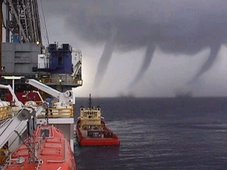
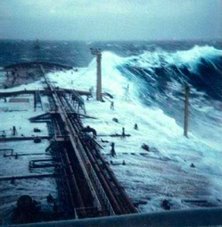
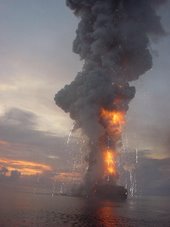


![[Valid RSS]](valid-rss.png "Validate my RSS feed")