Showing posts with label subtropical storm andrea. Show all posts

Monday, October 13, 2008

DEATH’S DOOR

DEATH'S DOOR

(The full story, with related interviews and full-color photos are in the article in Soundings Magazine November 2008 issue..
)

The Crew of a 44-foot cutter narrowly survive a knockdown, a 360-degree roll and, ultimately, the loss of their boat in a fierce Atlantic storm..


By Douglas A. Campbell Senior Writer

There was no conversation in the saloon of the 44-foot cutter Sean Seamour II, where the crew had retreated to ride out the huge storm waves one spring night in 2007. A drogue had been deployed on more than 500 feet of line, and a reefed storm jib was keeping the bow pointing downwind.

Outside, the storm howled, and mountains of water loomed 70 feet above the stern. Inside, only Rudy Snel’s voice occasionally broke through the roar, which had become background noise. Wind speeds were consistently reading above 70 knots. The 62-year-old Snel sat at the chart table and let his new friends know whenever there was a gust of more than 80 knots.

Ben Tye, 31, was sitting in the curved settee behind the oval table to port. Jean Pierre de Lutz, 56, the skipper, a citizen of the united States and France who owned the center cockpit Beneteau, was in one of the cushioned seats to starboard. As seas pounded the port bow with frightening frequency, Snel, a retired school teacher, remained at the nav station long enough to announce a high gust of 85.5 knots. Then he went back to the aft stateroom to nap. His rest would be short-lived; the following near-death experience would be anything but.

Sean Seamour II was caught in Tropical Storm Andrea may 6, 2007, off North Carolina. In the next 12 hours, two other yachts – one with a professional crew of three, the other sailed by a 75-year-old couple and their 45-year-old daughter – would be abandoned in the storm. And the 54-foot yacht Flying Colours would, after it’s EPIRB had transmitted two erratic signals, disappear without a track with it’s professional crew of four.

Although the search for Flying Colours was futile, Coast Guard helicopter crews saved nine sailors, including Snel, Tye and de Lutz, as they flew rescue sorties in this powerful storm, which at its peak generated 70-foot seas and produced winds as strong as 100 mph. Without exaggeration, the trio of sailors aboard Sean Seamour II are lucky to be alive today.

In hindsight, professional weather forecasters and yacht routers would agree there had been sufficient warning of the looming storm. Regardless, the severity of the conditions on board Sean Seamour II went far beyond what the three sailors had anticipated when they left Jacksonville, Fla., five days earlier for the start of a trans-Atlantic voyage.

The destination was France, with stops in the Azores and Gibraltar. Snel and Tye were volunteer crewmembers. They had never met de Lutz, a European management consultant and former hotelier in France, before he picked them up at the airport in Jacksonville when they arrived for the voyage. Each had signed aboard to acquire offshore sailing experience. Snel, from Ottawa had sailed a 27-footer on the Great lakes. Tye, a professional chef who had quit the hot kitchen to become a professional sailor, lives in the United Kingdom and had taught sailing around the world, though typically on lakes or coastal waters and within sight of land.

WELL PREPARED

Both were impressed with de Lutz when they saw his exhaustive preparations for heading offshore. Sean Seamour II, aboard which de Lutz had previously completed one of his two Atlantic crossings, had been stripped of its equipment following its last voyage. The gear was stored in an air-conditioned warehouse.

In preparation for the 2007 Atlantic crossing, de Lutz had the marina where he kept his 44-footer send out his life raft and GPIRB for recertification, which included checking the device’s battery. (A GPIRB is an electronic position-indicating radio beacon, or EPIRB, that incorporates a GPS and is able to send a precise location to rescuers.) De Lutz says the Georgia-based company reported that the emergency transmitter was in good condition and that its battery was good until the following November, but could last another five years.

Sean Seamour ii also had two drogues, once a Seabrake model de Lutz says he had used five or six times in a heavy mistral in the Mediterranean and three times in “critical conditions” at the tail end of Hurricane Bertha in 1996. He had bought a 500-meter reel of line, cut into four sections, for the drogue rode, as well as new chain segments and swivels. He says he trained Snel and Tye on the use of the drogue before departing.

Preparations for the voyage also included installation of a new wind sensor, autopilot hydraulic pump, stuffing box seal, house battery bank, fuel filter system, sail-handling sheets, rudder bearings, auxiliary tiller, and all life vests, flares and other safety equipment. In addition, de Lutz had examined the entire rig and the running lights, serviced the engine, polished the fuel, and sent the life raft and GPIRB for recertification.

For navigation and communications, Sean Seamour II had paper charts as well as two computers programmed with navigation and satellite telephone software, for sure in receiving weather information. The crew tried the electronics before they left, the skipper says.

De Lutz says he also briefed the crew on the boat’s equipment and tools, and discussed such safety contingencies as closing seacocks and companionway doors, executing proper lashings, and a discussion on how to use the electronics, drogues and more. Moreover, beginning a week before departure, the seven-day weather GPRIB files (computer generated weather forecasts) were downloaded and studied regularly. These shows two high- and two low-pressure systems “fairly balanced” over the western Atlantic, De Lutz says.

EPIRBs

Early on the morning of May 2, 2007, Sea Seamour II headed down Florida’s St. Johns River. In the afternoon, de Lutz stopped to top off his fuel tanks, and then the three men entered the Atlantic. Tye hoped for some adventure.

“Being outside one’s comfort zone is what it is all about for me,” says Tye. “Only then can you truly perform at your maximum level.” But no one on board expected the maelstrom they would encounter in just four days.

Sean Seamour II had two EPIRBs on board. The GPIRB, with its state-of-the-art technology, was mounted in a bracket in the cabin. The second EPIRB, an older 406 MHz model registered to de Lutz’s old boat, Lou Pantai, was mounted on the hard dodger. The emergency beacons certainly provided some sense of security for a boat headed offshore. Tye, for instance, says he wouldn’t have boarded de Lutz’s boat had there been no EPIRB.

But in the end, even they provided no guarantee of rescue. When the sailors were in desperate straits, confusion over the registration of the GPIRB actually caused rescue authorities to dismiss its emergency signal as a false alert (see accompanying story). What ultimately summoned rescue forces and saved the trio was the signal transmitted by the older backup device.

DeLutz steered for the Gulf Stream to take advantage of the current as long as the winds were favorable. On the first night out, Snel, taking the early watch, marveled at a large pod of dolphins.

There were squalls and some rough water in the Gulf Stream, and at one point, because the boat was taking on water from an unidentified leak, there was talk of heading for Norfolk, Va., to make repairs. But de Lutz determined that the leak was from the recently replaced rudder bearings. He packed in more grease and continued the northeasterly course.

When winds shifted to the northwest early May 5, de Lutz steered to the east on a route that would pass 300 miles north of Bermuda, on track for the Azores. At about 6;20 the following morning, the crew spotted an aircraft carrier heading to Newport News, Va. They were sailing in 30-knot winds, gusting to 35 knots.

HERE COMES ANDREA

“About 2 in the afternoon,” Snel says, “Ben and I were on the back of the cockpit, and off on the horizon we see these different-looking, wispy clouds, yellowish-brown on the top. I said it looks like fog. He said no, it’s rain.”

In fact, it was the leading edge of the low de Lutz now knew was coming. The GPRIB files and weather-fax indicated the storm was about eight hours away, de Lutz says. In about a half-hour, the crew of Sean Seamour Ii would find themselves in growing seas and increasing winds. De Lutz held the easterly course, hoping the weather would pass by. But at 4 o’clock in the afternoon may 6, in deteriorating conditions 217 miles east of Cape Hatteras, N.C., he turned to starboard to run with the north-northeast winds. Despite the sailors’ access to a variety of weather information, de Lutz apparently didn’t have enough data to fully grasp with the complex, converging weather systems would ultimately produce – an extremely powerful storm with hurricane-force winds and crippling seas.

With the storm jib reefed to one quarter on the roller furling of the inner forestay, the crew set the Seabrake drogue off the stern, the line passing through the aft starboard cleat and led to the main port-side winch so more line could be let out if needed. The drogues drifted back about 110 yards, to the second following wave. Then the crew wrapped the line with chafing tape and slathered it with grease. It was tiring work. The wind already was blowing hard from the north, and the seas had built to 20 feet or more.

The drogue set the boat on a slight angle to the following seas, on a starboard tack. Snel recalls climbing the companionway ladder a couple times and taking videos of the building seas, with waves riding above the stern, block the view aft.

Just before dark, de Lutz decided the drogue needed more line, and the crew joined him to add another 60 yards, bringing the total length to more than 500 feet.

“The boat handled very nicely throughout the storm, with very little rudder adjustment required,” de Lutz recalls. Now seas were 25 feet and the boat was heading south at 6 knots. Over the next several hours, the wind strengthened, and waves grew to 40 feet and higher.

With the extra line added to the drogue, the crew had retreated to the cabin for the night, riding alone in their thoughts, save for Snel’s occasional announcement of the wind speed. Outside, intermittent crossing waves hammered the port side of a hull, jarring Snel’s confidence. The noise, he thought, was like that of a truck running into the bow, again and again. When Snel announced that the wind instrument was at 85.5 knots 00 the maximum the unit could read – Tye said “That’s something to tell my chums back home.”

About 2:30 on the morning of may 7, Snel decided to try to get comfortable on the birth in the after cabin. De Lutz took over the watch at the nav station; Rye remained on the port settee.

KNOCKDOWNS

Not 10 minutes later, Snel found himself hurled across the aft cabin, slamming into the starboard furniture and straining his back. In the saloon, Tye became and projectile, flying through the air, reaching out, trying to grab something. De Lutz tried to break his fall; Tye hit the starboard side of cabin.

Sean Seamour II suddenly was on its side. As the yacht righted itself, de Lutz told his crew to remain on the starboard side, hoping that would eliminate further chance of injury. The crew didn’t know it at the time, but they now believe that during the knockdown, the line to the drogue parted. Without the tension of the drogue keeping the boat on course, disaster was imminent. It was just a matter of time. Moreover, there was water in the bilge, which apparently entered through engine room vents as waves washed across the boat’s stern. The crew ran the bilge pumps continuously.

Then the skipper looked out the companionway. The hard dodger had been sheered off in the knockdown and was gone, along with the 406 EPIRB, which did not have a hydrostatic release. De Lutz assumed the EPIRB had sunk with the dodger, preventing it was transmitting a signal.

Also, the helm was damaged so that the boat could not be steered. The hell seemed intact, and it was too early to assess the rig. But sending he had lost control of the vessel, de Lutz returned to the cabin, took the GPIRB out of its cradle on the wall beside the companionway, and activated it. The strobe on the unit began flashing, an indicator that it was performing properly. He put the unit back in its cradle and joined the crew in securing and assessing the conditions below deck.

FATAL BLOW

A crippling assault on the 44 foot cutter came about 15 minutes later, when an enormous wave hit the port side, rolling the boat. Water flooded in through vents in the cabin top around the mast. Rather than rolling completely over, however, the boat stabilized with its keep pointing to the night sky.

Snel had been in the galley, and de Lutz had been sitting on the cabin sole, his feet braced under the chart table. When the knockdown occurred, Snel heard the skipper yell and turned to see de Lutz pinned under the heavy saloon table, which had not been secured to the floor. As water flooded in through vents now positioned beneath the inverted hell, Snel sloshed across what had been the overhead and heaved the table off the skipper, who got to his feet in the rising water. Several of his ribs were broken.

There still was little discussion. De Lutz thinks he told the crew he planned to get outside to check the life raft. He was worried the boat might not right itself, and he wanted to make sure the raft was secure.

Snel made the first move to get out of the boat, but de Lutz gently pulled him back. Kneeling in a foot of water, the skipper reached down for the dogs securing a hatch now in the bottom of the capsized vessel. Showing remarkable courage, he opened the hatch, took what breath he could with several broken ribs, and made his way through the opening and into the dark sea.

The follow sequence of events happened very quickly. De Lutz swam after, under the cockpit, and toward the rear deck where the life raft was supposed to be mounted. In the darkness, he couldn’t locate the raft.

Meanwhile, in the cabin Tye was confused. He had seen the skipper leave without an explanation. How, Tye wondered, could de Lutz possibly survive out there? Feeling claustrophobic as the water level rose, Tye believed he was going to die.

Snel was worried, too. He didn’t know whether de Lutz had made it out or was stuck. After a few moments, Snel again prepared himself to follow de Lutz out the same hatch. Just then, the boat began to right itself.

SAVE THE LIFE RAFT

Outside, the skipper had his hands full. “I needed some air, so I swam to the port side,” de Lutz says. Just then, the boat resumed its roll, the starboard side rising out of the water just as he got his hands on the port rail. Like a sailor on a capsized dinghy, de Lutz allowed the turn of the boat to pull him back aboard. Clambering down into the cabin, he told the men to get the pumps going. The crew was incredibly calm, according to the accounts of all three. Tye still believed he was going to die; but he was right-side up again and, for the moment anyway, things appeared to be a bit more under control.

De Lutz returned to the deck to survey the damage and find the life raft. There was some moonlight filtering through clouds, and his eyes adapted quickly in the dark. The two forestays and the starboard shrouds had parted, and the most was bent and nearly severed three inches above the cabin top.

Standing on the heaving deck in seas that had reached 70 feet, de Lutz saw that the life raft was inflated and trapped upside down in the water beneath the mast. Its ballast bags and canopy lines were tangled in the spreaders and the rigging. De Lutz realized he had to somehow cut the raft free to keep it from being punctured. Adrenaline over-came pain from the broken ribs as he struggled to life the mast off the raft.

“I had to squeeze under the mast to lift it, keeping a leg free to push the raft forward,” de Lutz recalls. “Several times, the wave movement… compressed me against the deck and arch pole.”

To untangle the raft, De Lutz had had to cut off it’s ballast bags and then the canopy. He eventually was able to work the raft to the leeward, or starboard, side of the boat, where he tethered it. Tye and Snel, meanwhile, had cut open a plastic water jug and were bailing in 18-inch deep water, heaving it out the open companionway because the pumps were falling behind.

De Lutz wanted to lighten the bow by jettisoning anchors and 140 yard of chain. He also wanted to reroute the bilge pumps through the cabin top vents so he could close the companionway. But when he looked into the cabin and saw the green light on the GPIRB starting to fade, he says his plans suddenly were “uprooted.”

“I was absolutely panicked that if this EPIRB doesn’t work, nobody knows our predicament,” de Lutz says.

De Lutz concentrated on trying to revive the GPIRB and on sending a mayday by radio. Both efforts were unsuccessful. The single sideband radio was of little use with the backstay-mounted antenna missing. And with the rig on deck, the mast-head antenna for the VHF also was useless. The satellite telephone was out of commission, too.

ABANDON SHIP

All the while, waves that washed across the stern and broke over the boat slopped through the open companionway and down around the mast. Sean Seamour II began to wallow. Near first light at around 5:20, a large wave crashed on the boat. The bow was already riding low. De Lutz, who earlier had dismissed Snel’s suggestion that they take to the life raft, gave the order to abandon ship.

All three men were wearing foul weather gear and inflatable life vests on safety harnesses with tethers. As he climbed out of the cabin, Snel stuffed some flares in his pockets, where he also carried a knife and the GPIRB. But in their haste to get into the raft, they left the ditch bag with all it’s survival gear on board.

The noise was incredible, and the spray stung the men’s faces.

Tye says they got into the raft as quickly as possible but then realized it was still tethered to the boat. Fearful of puncturing the raft, Snel had dropped his knife into the sea. “Fortunately, I had a knife in my jacket, “ Tye says. He passed it to Snel, who cut the tether, and the raft went over the crest of the first wave. When it climbed When it climbed from the trough to the next crest, Sean Seamour II had vanished. They had gotten off just in time.

In some ways, their new vessel seemed little better than the one now headed for the bottom. When de Lutz had slashed away the canopy to free the raft from the rigging, the survival gear packed in the raft was lost. And without a canopy or ballast bags to keep it upright, the raft was pray to each towering, breaking wave and every 70-mph gust that got under the edge of the raft. Their tethers attached to webbing on the raft floor were the only things that kept them from being separated.

Things looked bad. “It didn’t take long to think, Here we are with a GPIRB that’s not working,” Snel remembers. “Nobody knows where we are. The three of us are dead.”

After a while, Snel says he decided to make the best of it by looking around and trying to “enjoy the scenery. I tried to estimate wave heights.” His conservative estimate – later verified by the Coast Guard – was 70 feet.

The waves came from different directions, and on several occasions they’d collide in spectacular fashion. “You’d see a pillar of water shoot up 15 feet across, just straight up,” Snel remembers. “Amazing!”

RESCUE

The hours in the raft were an ordeal. The men struggled with righting the raft every time it got knocked over and with helping the injured de Lutz back aboard. The skipper was not in good shape. “J.P. went through two episodes of shaking, lying with his head in my lap,” Snel remembers. “He was just waiting for that peaceful feeling of hypothermia coming over him so he could just fade away.”

De Lutz agrees that he was in serious trouble. “Hypothermia was gaining on me, and my strength was depleting with the very difficult tasks of attempting [to] upright the raft [and] climb on,” de Lutz says. “At one point, the pain… was so acute I hoped for relief in drowning and almost did. I was resigned to that fate.

“I had tied myself to the raft so my body might be found. The tether was short, and Rudy reached down and pulled me to the surface, and somehow they managed to pull me aboard. From there on, I was slipping in and out of consciousness, quite oblivious to what was happening.” De Lutz wound up with 10 broken ribs.

After two hours in the raft and with hope fading, the sailors spotted a C-130 aircraft. “J.P. gave a weak little cheer,” Snel says. “It flew by three or four times. I was busy trying to light hand-held flares.” Snel says he had practiced lighting flares before, but now the “stupid things wouldn’t strike. Finally, I got a parachute flare out, pointed it into the wind. It went up 50 feet and blew horizontally into the wave.”

Up in the C-130, a crewmember looking back saw the flare. The aircraft immediately dropped a big, floating flare to mark the location. It was 7:11 a.m. May 7.

A half-hour later, a helicopter was launched from Elizabeth City, N.C., assigned to rescue the crew of a boat identified as the Lou Pantai, which was the name of the same yacht the C-130 had been assigned to find. That’s the boat name that de Lutz’s older 406 EPIRB – the one that was lost when the boat rolled the first time – was still registered under. Unbeknownst to the men, the emergency beacon had activated when the boat capsized, and its signal had been received.

Not quite two hours later, a scene unfolded that Snel remembers as surreal. Without warning, a helicopter appeared, hovering above the huge waves, flying into wind that had by now subsided to 50 mph. “Awhile later, I see the rescue swimmer coming swimming up to the raft,” remembers Snel, who a year later was being treated for post-traumatic stress. “[He] puts his elbow over the raft and says, ‘How you all doing.’”

De Lutz was the first to ride up in Drew Dazzo’s basket. “Then there was a bit of a wait” Snel says. “Ben said, ‘They’re not coming back for the rest of us.’ “ But Dazzo returned and loaded Snel in the basket. The rescue swimmer waiting with Tye until the basket returned to the surface. The Dazzo retrieved the GPIRB, punctured the raft to deflate it, and rode up to the helicopter with Tye.

(The full story, with related interviews and full-color photos are in the article in Soundings Magazine November 2008 issue..)


Robin Storm previous s/v Sean Seamour II posts:

Summary of Action for CG6014 for the S/V SEAN SEAMOUR II- REDUX - Plus
WebExclusive EPIRBs and the s/v Sean Seamour II - Part III

WebExclusive EPIRBs and the s/v Sean Seamour II - Part II
EPIRBs and the s/v Sean Seamour II
NHC Report on Subtropical Storm Andrea
Cheating Death On The High Seas
The s/v Sean Seamour II & The Hatteras Trench
High Sea's Update On Sean Seamour II
The Story of the Sailing Vessel Sean Seamour II

gCaptain previous s/v Sean Seamour II posts:
gCaptain Exclusive - Sailing in Severe Weather
Lessons Learned

RS

Thursday, February 28, 2008

High Tech Cowboys of the Deep Seas: The Race to Save the Cougar Ace

I post this article because it presents a interesting backgrounder on people in the marine salvage community.

A industry that many have either never heard of or do not understanding what marine salvage companies actually do or go through to get the job done.

They are truly first responders and sometimes the only responders.


High Tech Cowboys of the Deep Seas: The Race to Save the Cougar Ace

Latitude 48° 14 North. Longitude 174° 26 West.

Almost midnight on the North Pacific, about 230 miles south of Alaska's Aleutian Islands. A heavy fog blankets the sea. There's nothing but the wind spinning eddies through the mist.

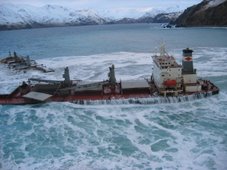
( Pix: The Cougar Ace lists at a precarious angle in Wide Bay, Alaska. Photo: Courtesy of US Coast Guard )

Out of the darkness, a rumble grows. The water begins to vibrate. Suddenly, the prow of a massive ship splits the fog. Its steel hull rises seven stories above the water and stretches two football fields back into the night. A 15,683-horsepower engine roars through the holds, pushing 55,328 tons of steel. Crisp white capital letters — COUGAR ACE — spell the ship's name above the ocean froth. A deep-sea car transport, its 14 decks are packed with 4,703 new Mazdas bound for North America. Estimated cargo value: $103 million.

Joshua Davis narrates this collection of photos and Coast Guard video taken during Titan Salvage's attempt to save the Cougar Ace.

(Video produced and edited by Wired's Annaliza Savage and Michael Lennon. Clips and photos courtesy of US Coast Guard and Titan Salvage.)

On the bridge and belowdecks, the captain and crew begin the intricate process of releasing water from the ship's ballast tanks in preparation for entry into US territorial waters. They took on the water in Japan to keep the ship steady, but US rules require that it be dumped here to prevent contaminating American marine environments. It's a tricky procedure. To maintain stability and equilibrium, the ballast tanks need to be drained of foreign water and simultaneously refilled with local water. The bridge gives the go-ahead to commence the operation, and a ship engineer uses a hydraulic-powered system to open the starboard tank valves. Water gushes out one side of the ship and pours into the ocean. It's July 23, 2006.

In the crew's quarters below the bridge, Saw "Lucky" Kyin, the ship's 41-year-old Burmese steward, rinses off in the common shower. The ship rolls underneath his feet. He's been at sea for long stretches of the past six years. In his experience, when a ship rolls to one side, it generally rolls right back the other way.

This time it doesn't. Instead, the tilt increases. For some reason, the starboard ballast tanks have failed to refill properly, and the ship has abruptly lost its balance. At the worst possible moment, a large swell hits the Cougar Ace and rolls the ship even farther to port. Objects begin to slide across the deck. They pick up momentum and crash against the port-side walls as the ship dips farther. Wedged naked in the shower stall, Kyin is confronted by an undeniable fact: The Cougar Ace is capsizing.

He lunges for a towel and staggers into the hallway as the ship's windmill-sized propeller spins out of the water. Throughout the ship, the other 22 crew members begin to lose their footing as the decks rear up. There are shouts and screams. Kyin escapes through a door into the damp night air. He's barefoot and dripping wet, and the deck is now a slick metal ramp. In an instant, he's skidding down the slope toward the Pacific. He slams into the railings and his left leg snaps, bone puncturing skin. He's now draped naked and bleeding on the railing, which has dipped to within feet of the frigid ocean. The deck towers 105 feet above him like a giant wave about to break. Kyin starts to pray.

Jackson Hole, Wyoming, 4 am.
A phone rings. Rich Habib opens his eyes and blinks in the darkness. He reaches for the phone, disturbing a pair of dogs cuddled around him. He was going to take them to the river for a swim today. Now the sound of his phone means that somewhere, somehow, a ship is going down, and he's going to have to get out of bed and go save it.

It always starts like this. Last Christmas Day, an 835-foot container vessel ran aground in Ensenada, Mexico. The phone rang, he hopped on a plane, and was soon on a Jet Ski pounding his way through the Baja surf. The ship had run aground on a beach while loaded with approximately 1,800 containers. He had to rustle up a Sikorsky Skycrane — one of the world's most powerful helicopters — to offload the cargo.

Rich Habib, Senior Salvage Master
Photo: Andrew Hetherington

Ship captains spend their careers trying to avoid a collision or grounding like this. But for Habib, nearly every month brings a welcome disaster. While people are shouting "Abandon ship!" Habib is scrambling aboard.

He's been at sea since he was 18, and now, at 51, his tanned face, square jaw, and don't even try bullshitting me stare convey a world-weary air of command. He holds an unlimited master's license, which means he's one of the select few who are qualified to pilot ships of any size, anywhere in the world. He spent his early years captaining hulking vessels that lifted other ships on board and hauled them across oceans. He helped the Navy transport a nuclear refueling facility from California to Hawaii. Now he's the senior salvage master — the guy who runs the show at sea — for Titan Salvage, a highly specialized outfit of men who race around the world saving ships.

(Full Story Wired Magazine)


MARTIME NOTES:

Messing About In Ships Podcast


Messing About In Ships Podcast #12 - Special Interview of US Coast Guard Rescue of Sailors Aboard the Yacht Sean Seymour II

February 25, 2008, 4:33 am
Filed under: podcast, shownotes

Here is the inspiring interview with the US Coast Guard helicopter rescue crew that saved the lives of three sailors aboard the yacht Sean Seymour II.

File Download:Messing About In Ships 12 - Special Interview

Interviewees:

  • Aviation Survival Technician Second Class Drew D. Dazzo, H-60 Rescue Swimmer
  • Lieutenant Commander Nevada A. Smith, H-60 Aircraft Commander
  • Lieutenant Junior Grade Aaron G. Nelson, H-60 Copilot
  • Aviation Maintenance Technician Second Class Scott D. Higgins, H-60 Flight Mechanic

Final log entry by Jean Pierre de Lutz, owner of Sean Seymour II

Robin Storm blog: Saved from the Angry Atlantic

Watch for future episodes with interviews with the C130 flight crew and the Sean Seymour II captain/owner.


RS

Friday, December 21, 2007

Saved from the Angry Atlantic

gCaptain and myself have reported heavily on the rescue of the s/v Sean Seamour II and we are please to report that the US Coast Guard Crew that rescued the survivors of the s/v Sean Seamour II were awarded honors for heroism today.

I will also note WAVY and WITN News coverage of the ceremony. Lt.Commander Nevada A. Smith the H-60 AC will be appearing on the Arnie Arnesen Show , Friday December 21, 2007, 0830, morning show!

Congratulations to all!

The full ceremony and citation reads as follows.

AWARDS CEREMONY
CGASECNOTE 5060.1AIR STATION ELIZABETH CITY NOTICE 5060.1

    Subj: 19 DECEMBER 2007 AWARD CEREMONY

  1. PURPOSE. To promulgate information and responsibilities for subject.
  2. DISCUSSION.
  1. D5 Commander RADM Rosa will present awards to the crews involved in the search and rescue cases of 17 April 2007 and 07 May 2007 on Wednesday, 19 December 2007.
  1. LTJG DeWinter is the project officer for this ceremony.
  2. A rehearsal will be conducted requiring the attendance of the awardees, XO (acting CO), CDR Gorman (acting XO), CDR Lyons (Formation Leader), LTJG DeWinter (Project Officer), section leaders and the AET assigned to play the CD player/music on Tuesday, 18 December 2007 at 1300.
  3. The Ceremony and practice will be held in the east bay of Hangar 55.
  1. UNIFORM. Uniform for the official party and station personnel is Tropical Blue Long with combo covers. The uniform for all military guests is Tropical Blue Long or equivalent. Ready crew/Duty Section will muster in flight suits or ODU with ball caps.
  1. ACTION. Tasks and responsibilities assigned to various personnel are set forth in enclosure (3).

        M. J. Andres

Encl: (1) Detailed Order of Events for Ceremony and Script

(2) Hangar Diagram

    (3) Personnel Task Assignments

    Dist: Participants listed in enclosure (3)


AWARDS CEREMONY: 19 DECEMBER 2007

Hangar 55

    0915 RADM Rosa and his aid, LTJG Tarrant, arrive via personal automobile and park in visitor parking. They will be met by the XO, who will escort them into his office for a short discussion.

    ODO: Pipe RADM Rosa aboard, “NOW, DISTRICT FIVE ARRIVING”.

    0930 CDR GORMAN, CDR LYONS, CHAPLAIN AND PROJECT OFFICER: Muster at podium.

0935 ODO: "FIRST CALL TO QUARTERS”.

    SECTION LEADERS: Call sections to attention. Dress and square off sections. Sections remain at attention. Take position four paces in front and center of section. Sections remain at open ranks at close interval.

0940 ODO: "NOW, ALL HANDS TO QUARTERS."

CDR LYONS: "REPORT."

    SECTION LEADERS: Execute hand salute and report "SECTION # IS ALL PRESENT OR ACCOUNTED FOR, SIR." Reports start with the Officer (section one), Engineering (section two), Support (section three), and Chief Petty Officer (section four).

    CDR GORMAN, CDR GILBRIDE AND CDR LYONS: Conduct open ranks inspection.

    CDR LYONS: When all sections have reported, order, "STATION, PARADE REST." Execute about face and come to parade rest.

0955 All guests seated.

0957 XO will escort RADM Rosa to staging area.

1000 VIPs arrive in staging area

    ANNOUNCER: “GOOD AFTERNOON LADIES AND GENTLEMEN. WELCOME TO COAST GUARD AIR STATION ELIZABETH CITY. TODAY WE WILL BE RECOGNIZING THE H-60 AND C-130 FLIGHT CREWS INVOLVED IN THE DARING RESCUES OF 17 APRIL AND 07 MAY 2007 OF DISTRESSED MARINERS ON THE HIGH SEAS. (FEW SECONDS PAUSE, THEN)WE WILL START TODAY’S CEREMONY WITH THE INTRODUCTION OF THE OFFICIAL PARTY. MILITARY ATTENDEES SHOULD REMAIN COVERED THROUGHOUT THE CEREMONY AND TAKE CUES FOR SALUTING FROM CDR LYONS. ADDITIONALLY, PLEASE SILENCE CELL PHONES AND PAGERS TO AVOID ANY DISTRACTIONS. WILL GUESTS PLEASE RISE FOR THE ARRIVAL OF THE OFFICIAL PARTY AND REMAIN STANDING FOR THE NATIONAL ANTHEM AND INVOCATION.”

    CDR Lyons: At the conclusion of the announcement, come to attention, about face and order: “STATION, ATTENTION” and about face.

    Project Officer: Coordinate arrival of official party – each member will walk to the platform and stand in front of chair in the following order: XO and RADM Rosa

    CDR Gorman: As each member of the official party approaches the platform:

    “NOW, AIR STATION ELIZABETH CITY ACTING, ARRIVING.”

    As RADM Rosa approaches Honors Area, announce:

    NOW, DISTRICT FIVE ARRIVING.”

    RADM Rosa: Steps to top of stage and comes to attention.

    CDR Lyons: When RADM Rosa is positioned, about face and order: “SECTION OFFICERS, HAND SALUTE” about face and hand salute.

    OFFICIAL PARTY, XO, CDR GORMAN, SECTION LEADERS AND UNIFORMED GUESTS: On order “HAND SALUTE,” execute salute.

    RADM Rosa: Executes and holds hand salute until completion of two Ruffles and Flourishes.

    MUSIC MONITOR: (AET3 Meseke) Play two Ruffles and Flourishes followed immediately by the Admiral’s March (PROGRAM #xx).

    MUSIC MONITOR: (AET3 Meseke) Plays National Anthem. (PROGRAM #24)

    RADM Rosa & XO: After last note of National Anthem, comes to “Ready, To”, RADM Rosa will be welcomed aboard by XO and escorted to his seat.

    CDR Lyons: As XO welcomes RADM Rosa aboard, complete salute, about face, order: “READY, TO” and execute about face.

    OFFICIAL PARTY, XO, CDR GORMAN, SECTION LEADERS AND UNIFORMED GUESTS: On order “READY, TO,” terminate salute.

    CDR GORMAN:LADIES AND GENTLEMEN, THE INVOCATION WILL BE GIVEN BY CHAPLAIN LIEUTENANT MARK TANIS.”

    CHAPLAIN: Delivers invocation, “LET US PRAY . . . . . . . AMEN”

    CDR GORMAN: “LADIES AND GENTLEMEN, PLEASE BE SEATED.”

    OFFICIAL PARTY AND GUESTS: At conclusion of invocation take seats.

    CDR Lyons: When RADM Rosa is seated, execute about face, order: “STATION, AT EASE.” Post to position near officer detail and come to at ease.

    XO: Delivers opening remarks and introduces VIPs and Special Guests. Invites RADM Rosa to present awards. “NOW I WOULD LIKE TO INVITE RADM FRED M. ROSA JR. TO PRESENT THE AWARDS.”

    RADM Rosa: Stands for presentation of awards.

    CDR GORMAN:

    “I WILL NOW READ THE SUMMARY OF ACTION FOR THE RESCUE OF THE THREE SURVIVORS FROM THE S/V WINDS-OR-KNOT ON 17 APRIL 2007. “ Pause…

    APPROXIMATELY 1400L ON 17 APRIL 2007 THE COAST GUARD RECEIVED A DISTRESS SIGNAL FROM THE VESSEL WINDS-OR-KNOT APPROXIMATELY 330MILE NORTH WEST OF BERMUDA. THE COAST GUARD C-130 1502 WAS LAUNCHED TO INVESTIGATE THE SOURCE OF THE SIGNAL. WHILE ENROUTE CG1502 ENCOUNTERED HEAVY RAIN SHOWERS AND WINDS AS HIGH AS 80 KNOTS. ONCE ON SCENE CG1502 QUICKLY ESTABLISHED RADIO COMMUNICATIONS WITH THE S/V AND DISCOVERED THEY HAD A 3-FOOT CRACK THAT HAD OPENED AT THE WATERLINE. THE ILL-FATED S/V WAS TAKING ON WATER FASTER THAN HER PUMPS COULD HANDLE. THE MARINERS HAD NO LIFE RAFT OR SURVIVAL SUITS. WHILE CG HELICOPTER 6041 WAS IMMEDIATELY LAUNCHED FROM THE AIR STATION, CG1502 MADE PREPARATIONS TO DROP SURVIVAL SUITS KNOWING THE SURVIVORS WOULD NEED TO JUMP INTO THE WATER TO BE RESCUED. DROPMASTER AMT2 POST AND AIRCREWMAN AET3 CANTU QUICKLY ARRANGED TWO PUMP CANS WITH THREE SURVIVAL SUITS IN EACH. WITH TURBULENCE CONSTANTLY SHAKING CG1502, PO POST AND PO CANTU REMOVED THE PUMPS FROM THE DROP CANS AND ADDED ENOUGH WEIGHT TO ENSURE A SUCCESSFUL DEPLOYMENT TO THE DISTRESSED MARINERS. UNFORTUNATELY, THE HIGH WINDS AND HEAVY SEAS CAUSED THE FIRST TWO ATTEMPTS TO BE UNSUCCESSFUL. WITH ALL THE NORMAL DROP EQUIPMENT NOW EXPENDED, PO POST AND PO CANTU EMPLOYED THEIR INGENUITY AND RE-RIGGED THE TRAINING DROP RAFT KIT WITH SURVIVAL SUITS. ON THE NEXT PASS CG1502 SUCCESSFULLY DELIVERED THE VITAL SURVINAL SUITS TO THE MARINERS.

    BATTLING THROUGH HEAVY RAIN SHOWERS, LOW VISIBILITY AND ICING CONDITIONS, CG6041 WAS VECTORED TO THE SCENE BY CG1502. ONCE IN A HOVER CG6041 WITNESSED THE 40 TO 50FT WAVES AND THE S/V AWASH IN WHITE WATER. DUE TO THE TOWERING SEAS, SOME OF CG6041’S AUTOMATIC FLIGHT CONTROL SYSTEM WAS RENDERED USELESS AND THE AIRCRAFT COMMANDER FOUGHT TO MAINTAIN A STABLE HOVER. WITH THE CONDITIONS DEMANDING THE AIRCREW’S UTMOST ABILITY AND TEAMWORK, THEY WORKED DILIGENTLY WITH PRECISE TIMING AND ACCURACY TO LOWER THE RESCUE SWIMMER BETWEEN THE VIOLENTLY PITCHING WAVES INTO THE ROILING SEAS. WITH DOGGED TENACITY AND DETERMINATION, THE CREW OF CG6041 METICULOUSLY EXECUTED EACH LIFESAVING HOIST. ONCE ALL THREE SURVIVORS WERE ABOARD, CG6041 PRECEDED THE 330NM TO BERMUDA.”

    “FOR THE CREW OF CG 6041…..”

    “RECEIVING THE AWARD OF THE AIR MEDAL, GOLD STAR IN LIEU OF A SECOND – CHIEF AVIATION SURVIVAL TECHNICIAN ARTHUR J. THOMPSON, RESCUE SWIMMER”

    “RECEIVING THE AWARD OF THE COAST GUARD COMMENDATION MEDAL, GOLD STAR IN LIEU OF A FIFTH – LIEUTENANT COMMANDER DANIEL J. MOLTHEN, H-60 AIRCRAFT COMMANDER – THE OPERATIONAL DISTINGUISHING DEVICE IS AUTHORIZED”

    “RECEIVING THE AWARD OF THE COAST GUARD COMMENDATION MEDAL – LIEUTENANT LANCE D. LEONE, H-60 COPILOT – THE OPERATIONAL DISTINGUISHING DEVICE IS AUTHORIZED”

    “AVIATION MAINTENANCE TECHNICIAN SECOND CLASS DANIEL F. CANCETTY, H-60 FLIGHT MECHANIC, IS UNABLE TO BE HERE AND WILL BE RECEIVING THE AWARD OF THE COAST GUARD COMMENDATION MEDAL – THE OPERATIONAL DISTINGUISHING DEVICE IS AUTHORIZED”

    “THE DROPMASTER AND AIRCREW OF CG1502….”

    “RECEIVING THE AWARD OF THE COMMANDANT’S LETTER OF COMMENDATION – AVIONICS ELECTRICAL TECHNICIAN THIRD CLASS RYAN CANTU, C-130 AIRCREWMAN – THE OPERATIONAL DISTINGUISHING DEVICE IS AUTHORIZED”

    “AVIATION MAINTENANCE TECHNICIAN FIRST CLASS BRADY PROST, C-130 DROPMASTER, IS ON DEPLOYMENT AND WILL BE RECEIVING THE AWARD OF THE COMMANDANT’S LETTER OF COMMENDATION, GOLD STAR IN LIEU OF A SECOND –– THE OPERATIONAL DISTINGUISHING DEVICE IS AUTHORIZED”

    Following applause, Award Detail proceeds to their original formation position.

    “NOW I WILL READ THE SUMMARY OF ACTION FOR THE RESCUE OF THE SURVIVORS OF THE S/Vs SEAN SEAMOUR II, SEEKER AND ILLUSION THAT TOOK PLACE ON 07 MAY 2007.”

    “EARLY ON THE MORNING OF 07 MAY 2007 THE COAST GUARD C-130 1502 WAS DIRECTED TO LAUNCH TO INVESTIGATE SEVERAL EMERGENCY BEACONS TRANSMITTING APPROXIMATELY 220NM SOUTHEAST OF ELIZABETH CITY, NC. THERE WAS AN EXTREME LOW PRESSURE SYSTEM STALLED OFF THE NC COAST WREAKING HAVOC ALONG THE ENTIRE SOUTHEASTERN SEABOARD. THESE TRANSMITTERS WERE LOCATED IN THE MIDDLE OF THIS LOW PRESSURE SYSTEM, LATER NAMED SUB-TROPICAL STORM ANDREA. THIS STORM WAS GENERATING 40-50 FT WAVES AND SUSTAINED WINDS OVER 50 KTS. THESE CONDITIONS WERE PREVALENT THROUGHOUT THE OPERATING AREA.

    COAST GUARD C-130, 1502 DEPARTED NORFOLK INTERNATIONAL AIRPORT AROUND 0530L, WHERE IT HAD RECOVERED THE DAY BEFORE DUE TO EXCESSIVE CROSSWINDS AT ELIZABETH CITY. DURING ITS TRANSIT TO THE SEARCH AREA, CG1502 ENCOUNTERED CLOUD DECKS AS LOW AS 500 FEET AND SUSTAINED WINDS OF 70 KNOTS WITH GUSTS TO 80 KNOTS.

    WHILE CG1502 WORKED ITS WAY THROUGH THE WEATHER, THE COAST H-60 6041 LAUNCHED TO RESCUE THREE MARINERS ON BOARD THE S/V SEEKER, WHICH FOUNDERED 75 MILES SOUTHEAST OF ELIZABETH CITY. CG6041 DEPARTED, CG6041 ARRIVED ON SCENE TO FIND THE S/V SEEKER TAKING 60-DEGREE ROLLS AS IT CAREENED TOWARD HAZARDOUS DIAMOND SHOALS. CG6041 DEPLOYED THE RESCUE SWIMMER AND HAD THE MARINERS JUMP ONE AT A TIME FROM THEIR VESSEL. WHEN THE FIRST MARINER JUMPED INTO THE WATER, IT SOON BECAME APPARENT THAT THE SLASHING WINDS AND ENORMOUS WAVES WERE HINDERING THE ABILITY OF THE RESCUE SWIMMER TO PULL THE MARINER AWAY FROM THE PITCHING VESSEL AND IT’S DANGEROUSLY SWAYING MAST. AFTER 40 MINUTES OF PRECISE COORDINATION AMONGST THE CREW OF CG6041, THE RECOVERY OF ALL THREE SURVIVORS AND THE RESCUE SWIMMER WAS COMPLETE AND THE GRATEFUL SURVIVORS OF THE S/V SEEKER WERE FLOWN TO AIR STATION ELIZABETH CITY FOR MEDICAL ATTENTION.

    FURTHER OUT TO SEA, CG1502 WAS CONDUCTING ITS SEARCH WHEN THEY SIGHTED A FLARE IN THE DISTANCE, BARELY VISIBLE ABOVE THE ENORMOUS WAVE TOPS. FLYING OVERHEAD, CG1502 LOCATED A RAFT, MARKED THE POSITION AND DROPPED FLARES TO HELP IDENTIFY THE LOCATION WHILE THEY ENTERED A HOLDING PATTERN. FIGHTING THE HURRICANE FORCE WINDS, AND FLYING AS LOW AS 200 FEET ABOVE THE TOWERING WAVES, CG1502 DETERMINED THERE WERE THREE PEOPLE IN THE RAFT. D5 COMMAND CENTER WAS NOTIFIED IMMEDIATELY, AND THE SECOND H-60 OF THE MORNING WAS LAUNCHED.

    RECALLED TO DUTY EARLY MONDAY MORNING, THE CREW OF CG6014 DEPARTED AIR STATION ELIZABETH CITY AT 0740L WITH THE REPORTED POSITION OF THREE PEOPLE IN A LIFE RAFT STRANDED AT SEA. THESE WERE THE SURVIVORS OF THE S/V SEAN SEAMOUR II. SOMETIME DURING THE NIGHT THE VESSEL HAD CAPSIZED AND TRAPPED THE THREE SAILORS INSIDE. WHEN THE VESSEL EVENTUALLY RIGHTED ITSELF THE THREE ABANDONED THE VESSEL TO THEIR LIFE RAFT AND ACTIVATED THEIR EMERGENCY BEACON WHILE THEY WITNESSED THE SEAN SEAMOUR II PLUNGE BENEATH THE WAVES.

    ARRIVING ON SCENE, CG6014 WAS VECTORED TO THE LOCATION OF THE LIFE RAFT BY CG1502. HAVING LOST ITS SEA ANCHOR UNDER THE STRAIN OF THE TUMULTUOUS SEAS, THE RAFT WAS NOW SKIMMING ACROSS THE WAVES. THE CREW OF CG6014 DECIDED ON DEPLOYING THE RESCUE SWIMMER TO RECOVER EACH MARINER ONE AT A TIME FROM THE RAFT. CG6014 DEMONSTRATED THE UTMOST IN CREW COORDINATION, TEAMWORK, AND AERONAUTICAL SKILL BY SUCCESSFULLY DEPLOYING THEIR RESCUE SWIMMER INTO THE PERILOUS SEAS THREE TIMES TO RECOVER THE SURVIVORS. AFTER THE THIRD SURVIVOR WAS HOISTED TO SAFETY, THE RESCUE SWIMMER, PHYSICALLY AND MENTALLY EXHAUSTED AND SUFFERING FROM SALT WATER INGESTION WAS RECOVERED. WITH THE RESCUE SWIMMER SAFELY ON BOARD, CG6014 DEPARTED FOR MARINE CORPS AIR STATION CHERRY POINT.

    WHILE THE CG6014 WAS RESCUING THE SURVIVORS OF THE SEAN SEAMOUR II, A SECOND C-130, CG1501 WAS LAUNCHED AT TO ASSIST WITH THE SEARCH FOR ANOTHER EMERGENCY SIGNAL EMINATING FROM THE S/V FLYING COLORS. DURING THE SEARCH CG1501 RECEIVED A CALL THAT THE 65FT S/V ILLUSION WAS IMPERILED 175NM SOUTHEAST OF ELIZABETH CITY. WHILE CG1501 DIVERTED TO ASSIST THE S/V ILLUSION, THE THIRD H-60 OF THE MORNING WAS LAUNCHED FROM AIR STATION ELIZABETH CITY. DEFTLY NEGOTIATING HEAVY RAINS, LOW CEILINGS AND VISIBILITY, AND ENCOUNTERING SEVERE TURBULENCE, CG6003 WAS VECTORED THROUGH THE MAELSTROM TO THE POSITION OF THE S/V ILLUSION WITH THE ASSISTANCE OF CG1501. ARRIVING ON SCENE, CG6003 FOUND THE S/V ILLUSION TRAVERSING THE WATER UNDER PARTIALLY UNFURLED SAILS. THE CREW OF CG6003 DECIDED TO RECOVER THE SURVIVORS ONE AT A TIME USING THE DIRECT DEPLOYMENT METHOD OF THE RESCUE SWIMMER. AS THE RESCUE SWIMMER APPROACHED THE FIRST SURVIVOR IN THE WATER, HE SAW THE LOOK OF DREAD IN HER EYES AND MADE A SPLIT SECOND DECISION TO DISCONNECT FROM THE HOIST AND ENTER THE PUNISHING SEAS WITH THE SURVIVOR IN ORDER TO CALM HER DOWN. RECOGNIZING THE CHANGE OF PLANS, THE CREW OF CG6003 SEAMLESSLY TRANSITIONED TO PERFORM A BASKET RECOVERY OF THE SURVIVOR. THE CREW OF CG6003 PERFORMED EACH HOIST FLAWLESSLY UNDER EXTREMELY DEMANDING CONDITIONS. WITH ALL THE SURVIVORS OF THE S/V ILLUSION SAFELY ABOARD AND THE RECOVERY OF THE RESCUE SWIMMER, CG6003 DEPARTED SCENE. UPON THE RETURN LEG TO ELIZABETH CITY, CG6003 EXPERIENCED A STRONG BURNING SMELL IN THE COCKPIT. IMMEDIATELY RECOGNIZING THE SOURCE, THE ENVIRONMENTAL CONTROL SYSTEM WAS SECURED PREVENTING AN ELECTRICAL FIRE AND FURTHER DAMAGE TO THE AIRCRAFT. CG6003 THEN MADE THE DECISION TO LAND AT THE CLOSEST AIRPORT IN BEAUFORT, NC.

    “IT SHOULD BE MENTIONED THAT AIR STATION ELIZABETH CITY SUPPORTED AROUND THE CLOCK FLIGHT OPERATIONS THAT EXTENDED THE FULL WEEK OF 07 MAY TO 11 MAY 2007 DURING ITS SEARCH FOR THE ILL FATED S/V FLYING COLORS. ALTHOUGH THE VESSEL IS BELIEVED TO HAVE BEEN LOST AT LOST SEA, THE MEN AND WOMEN OF THIS AIR STATION VALIANTLY DEMONSTRATED THEIR UNWAVERING DEDICATION AND DEVOTION TO DUTY IN THEIR EVER VIGILANT WATCH OVER THE GRAVE YARD OF THE ATLANTIC.”

    “FOR THE RESCUE OF THE THREE SURVIVORS ABOARD THE S/V SEAN SEAMOUR II THE CREWS OF CG 6014 AND CG 1502….”

    “RECEIVING THE AWARD OF THE AIR MEDAL – AVIATION SURVIVAL TECHNICIAN SECOND CLASS DREW D. DAZZO, H-60 RESCUE SWIMMER”

    “RECEIVING THE AWARD OF THE COAST GUARD COMMENDATION MEDAL, GOLD STAR IN LIEU OF A FOURTH – LIEUTENANT COMMANDER NEVADA A. SMITH, H-60 AIRCRAFT COMMANDER – THE OPERATIONAL DISTINGUISHING DEVICE IS AUTHORIZED”

    “RECEIVING THE AWARD OF THE COAST GUARD COMMENDATION MEDAL – LIEUTENANT JUNIOR GRADE AARON G. NELSON, H-60 COPILOT – THE OPERATIONAL DISTINGUISHING DEVICE IS AUTHORIZED”

    “RECEIVING THE AWARD OF THE COAST GUARD COMMENDATION MEDAL, GOLD STAR IN LIEU OF A SECOND – AVIATION MAINTENANCE TECHNICIAN SECOND CLASS SCOTT D. HIGGINS, H-60 FLIGHT MECHANIC – THE OPERATIONAL DISTINGUISHING DEVICE IS AUTHORIZED”

    “RECEIVING THE AWARD OF THE COAST GUARD COMMENDATION MEDAL – LIEUTENANT PAUL R. BEAVIS, C-130 AIRCRAFT COMMANDER – THE OPERATIONAL DISTINGUISHING DEVICE IS AUTHORIZED”

    “RECEIVING THE AWARD OF THE COAST GUARD COMMENDATION MEDAL – AVIONICS ELECTRICAL TECHNICIAN FIRST CLASS MARCUS C. JONES, C-130 NAVIGATOR – THE OPERATIONAL DISTINGUISHING DEVICE IS AUTHORIZED”

    “RECEIVING THE AWARD OF THE COAST GUARD ACHIEVEMENT MEDAL, GOLD STAR IN LIEU OF A SECOND – LIEUTENANT EDWARD C. AHLSTRAND, C-130 COPILOT – THE OPERATIONAL DISTINGUISHING DEVICE IS AUTHORIZED”

    “RECEIVING THE AWARD OF THE COAST GUARD ACHIEVEMENT MEDAL – AVIATION MAINTENANCE TECHNICIAN SECOND CLASS STACY A. SORENSON, C-130 FLIGHT ENGINEER – THE OPERATIONAL DISTINGUISHING DEVICE IS AUTHORIZED”

    “RECEIVING THE AWARD OF THE COAST GUARD ACHIEVEMENT MEDAL – AVIATION MAINTENANCE TECHNICIAN THIRD CLASS CASEY E. GREEN, C-130 DROPMASTER – THE OPERATIONAL DISTINGUISHING DEVICE IS AUTHORIZED”

    “RECEIVING THE AWARD OF THE COAST GUARD ACHIEVEMENT MEDAL – AVIONICS ELECTRICAL TECHNICIAN THIRD CLASS RYAN A. CANTU, C-130 AIR CREWMAN – THE OPERATIONAL DISTINGUISHING DEVICE IS AUTHORIZED”

    “AVIONICS ELECTRICAL TECHNICIAN SECOND CLASS JESSE W. BENNETT, C-130 RADIO OPERATOR, HAS BEEN HONORABLY DISCHARGED FROM THE COAST GUARD AND IS CURRENTLY SERVING IN THE COAST GUARD RESERVES AT ISC SEATTLE. HE IS RECEIVING THE AWARD OF THE COAST GUARD ACHIEVEMENT MEDAL – THE OPERATIONAL DISTINGUISHING DEVICE IS AUTHORIZED”

    “ALSO, THIS CREW OF CG1502 RECEIVED THE ELMER F. STONE AWARD, AWARDED TO THE COAST GUARD C-130 CREW SEARCH AND RESCUE CASE OF THE YEAR.”

    “FOR THE RESCUE OF THE THREE SURVIVORS ABOARD THE S/V SEEKER, THE CREW OF CG 6041….”

    “RECEIVING THE AWARD OF THE AIR MEDAL, GOLD STAR IN LIEU OF A SECOND – AVIATION SURVIVAL TECHNICIAN SECOND CLASS MICHAEL C. ACKERMANN, H-60 RESCUE SWIMMER

    “RECEIVING THE AWARD OF THE COAST GUARD COMMENDATION MEDAL, GOLD STAR IN LIEU OF A SIXTH – LIEUTENANT COMMANDER DANIEL J. MOLTHEN, H-60 AIRCRAFT COMMANDER – THE OPERATIONAL DISTINGUISHING DEVICE IS AUTHORIZED”

    RECEIVING THE AWARD OF THE COAST GUARD ACHIEVEMENT MEDAL – LIEUTENANT GREGORY A. CLAYTON, H-60 COPILOT – THE OPERATIONAL DISTINGUISHING DEVICE IS AUTHORIZED”

    “AVIATION MAINTENANCE TECHNICIAN SECOND CLASS DANIEL F. CANCETTY, H-60 FLIGHT MECHANIC, IS UNABLE TO BE HERE TODAY AND WILL BE RECEIVING THE AWARD OF THE COAST GUARD COMMENDATION MEDAL, GOLD STAR IN LIEU OF A SECOND – THE OPERATIONAL DISTINGUISHING DEVICE IS AUTHORIZED”

    “FOR THE RESCUE OF THE THREE SURVIVORS ABOARD THE S/V ILLUSION THE CREW OF CG 6003….”

    “RECEIVING THE AWARD OF THE AIR MEDAL – AVIATION SURVIVAL TECHNICIAN SECOND CLASS STEVEN M. FISCHER, RESCUE SWIMMER”

    “RECEIVING THE AWARD OF THE COAST GUARD COMMENDATION MEDAL, GOLD STAR IN LIEU OF A THIRD – LIEUTENANT SCOTT E. WALDEN, H-60 AIRCRAFT COMMANDER – THE OPERATIONAL DISTINGUISHING DEVICE IS AUTHORIZED”

    “RECEIVING THE AWARD OF THE COAST GUARD COMMENDATION MEDAL – LIEUTENANT JUNIOR GRADE WILLIAM F. COTY III, H-60 COPILOT – THE OPERATIONAL DISTINGUISHING DEVICE IS AUTHORIZED”

    “RECEIVING THE AWARD OF THE COAST GUARD COMMENDATION MEDAL – AVIATION MAINTENANCE TECHNICIAN THIRD CLASS JUSTIN J. CIMBAK, H-60 FLIGHT MECHANIC – THE OPERATIONAL DISTINGUISHING DEVICE IS AUTHORIZED”

    “LADIES AND GENTLEMEN, THE HEROES OF COAST GUARD AIR STATION ELIZABETH CITY.”

    PAUSE FOR APPLAUSE

    RADM Rosa: Presents awardees with citation, poses for pictures, and pins on medal. (With the summary of action being read only once, RADM Rosa may want to pin on award first, then present citation, pause for a photo with member and opened citation, then final hand shake and depart stage.)

    XO: Invite RADM Rosa to give remarks and present unit award. “NOW I WOULD LIKE TO INVITE RADM ROSA TO GIVE THE KEY NOTE ADDRESS.” (OR invite RADM Rosa to podium for remarks (opportune to time to summarize unit events from Aug 05 to May 07 and present Unit Award to Acting CO and CMC/LCPO, then Acting CO can give closing remarks)

    CDR GORMAN: Be prepared to read Unit Citation.

    CDR Lyons: Prior to the reading of Unit Citation. Reposition in front of troops, about face and order: “STATION, ATTENTION”, and about face.


THE CITATION

The Commandant of the Coast Guard takes pleasure in presenting the COAST GUARD UNIT COMMENDATION to:

COAST GUARD AIR STATION ELIZABETH CITY

ELIZABETH CITY, NORTH CAROLINA

for service as set forth in the following

CITATION:

"For exceptionally meritorious service from 29 August 2005 to 7 May 2007 while engaged in a broad spectrum of missions, extending the Air Station's resources far beyond the scope of normal operations. During this time, aircrews flew 10,398 flight hours, over 976 hours above programmed levels. The Air Station provided inspirational, often heroic, search and rescue (SAR) response on 408 occasions, resulting in 277 lives saved, including seven long-range, extremely arduous SAR missions to Bermuda, hazardous flood relief efforts in Pennsylvania, and a five aircraft maximum effort that saved 12 mariners from four stranded vessels ravaged by sub-tropical storm Andrea. Additionally, Air Station Elizabeth City flawlessly executed massive air support operations following Hurricanes KATRINA and RITA, conducting life-saving SAR and transporting over one million pounds of relief supplies to the devastated Gulf Coast region. Air Station Elizabeth City also supported critical law enforcement and security missions in the national capital region preventing terrorist attacks, and from Central America to Canada, resulting in the seizure of 3,713 pounds of cocaine with an estimated street value of $25 million, while maintaining an impressive 73 percent average aircraft availability rate. Despite this incredible operational tempo, the Air Station's nascent Maritime Security and Response Team forward deployed in support of a number of major counter terrorism exercises, including Frontier Sentinel '06. Elizabeth City's C130 and H60 Prime Units spearheaded the implementation of countless noteworthy projects that have had far-reaching impacts on the entire Coast Guard aviation community. Unit personnel positively enhanced the Coast Guard's image globally by providing hours of support as the Air Station and personnel were showcased in the major motion picture "The Guardian." The dedication, pride, and professionalism displayed by Air Station Elizabeth City personnel, reflect credit upon themselves, their unit and the United States Coast Guard."

The Operational Distinguishing device is authorized.

For the Commandant,


D. B. PETERMAN

Vice Admiral, U.S. Coast Guard


Commander, Atlantic Area

CONCLUSION


XO thanks guests
:


    CDR GORMAN: CHAPLAIN TANIS WILL NOW GIVE THE BENEDICTION. WILL EVERYONE PLEASE RISE AND REMAIN STANDING FOR THE DEPARTURE OF THE OFFICIAL PARTY.”

    CHAPLAIN: Proceed to lectern. When all people are standing, deliver benediction. “LET US PRAY. . . . . .AMEN”

    XO oders CDR Lyons: “OPERATIONS OFFICER, PREPARE THE STATION FOR DISMISSAL.”

    CDR GORMAN: NOW, DISTRICT FIVE DEPARTING…..NOW, AIR STATION ELIZABETH CITY ACTING DEPARTING.”

    CDR Lyons: About face and order: SECTION OFFICERS, HAND SALUTE,” Execute about face and hand salute.

    CDR Lyons: After RADM Rosa has exited the honors area, order, “READY TO.”

    CDR GORMAN: LADIES AND GENTLEMEN, THIS CONCLUDES TODAY’S CEREMONY, PLEASE HAVE A GOOD AFTERNOON.”

    CDR Lyons: After official party departs, execute about face and order: SECTION OFFICERS, DISMISS YOUR SECTIONS.” Return hand salute.

    Section Officers: On command, execute salute, about face, and dismiss your sections and advise them they are invited to the reception.

    MUSIC MONITOR: (AET3 Meseke) After RADM Rosa has exited the honors area, play “Stars and Stripes Forever” as the formation breaks up.

    (PROGRAM # 21)

  1. Approximate time of ceremony completion.

1101 Van arrives outside hangar 55 training room.

1115 Lunch at the galley.


From US Senator Bryon Dorgan

NORTH DAKOTA NATIVE HONORED FOR BRAVERY

For Immediate Release CONTACT: Barry Piatt

Wednesday or Brenden Timpe

December 19, 2007 PHONE: 202-224-2551

Williston native receives heroism medal from Coast Guard:

NORTH DAKOTA NATIVE HONORED FOR BRAVERY

(WASHINGTON, D.C.) --- U.S. Senator Byron Dorgan (D-ND) applauded a Williston native for his work of heroism and skill as a member of the Coast Guard, to save the lives of foundering sailors during a tropical storm.

Lieutenant Junior Grade Aaron Nelson was awarded the Coast Guard Commendation Medal Wednesday for actions and aeronautical skills "essential in saving three lives" the Coast Guard said. Serving as the co-pilot on the MH-60 helicopter on May 7, 2007, Nelson and the rest of the crew are credited with scooping from the ocean three sailors who had to abandon their ship during sub-tropical storm Andrea.

Lieutenant Nelson grew up in Williston and graduated from Williston High School.

Based at Air Station Elizabeth City in Elizabeth, North Carolina, the crew rescued the sailors during seas that climbed to 50 feet and winds that reached 70 knots. Lieutenant Nelson maintained a steady hover 100ft over the ocean in the trying conditions while skillfully lowering the rescue swimmer into the water to recover the sailors. It was necessary for Lieutenant Nelson to repeat this feat twice more so the sailors could be saved and the rescue swimmer could be recovered safely.

The medal was presented by Rear Admiral Fred Rosa, Commander of the Coast Guard Fifth District today at the Coast Guard Air Station in Elizabeth City, NC.

"Aaron Nelson is a true credit to North Dakota and the Coast Guard. His actions saved the lives of three people who are undoubtedly grateful, but so are the rest of us to know that we have such a dedicated person serving our nation," Dorgan said. "I'm so proud to say that Lieutenant Nelson has been recognized for his heroism. He makes North Dakota proud."

-- END –


ONCE AGAIN OUTSTANDING JOB AND CONGRATULATIONS TO ALL!

RS


Robin Storm previous s/v Sean Seamour II posts:

Summary of Action for CG6014 for the S/V SEAN SEAMOUR II- REDUX - Plus
WebExclusive EPIRBs and the s/v Sean Seamour II - Part III

WebExclusive EPIRBs and the s/v Sean Seamour II - Part II
EPIRBs and the s/v Sean Seamour II
NHC Report on Subtropical Storm Andrea
Cheating Death On The High Seas
The s/v Sean Seamour II & The Hatteras Trench
High Sea's Update On Sean Seamour II
The Story of the Sailing Vessel Sean Seamour II

gCaptain previous s/v Sean Seamour II posts:
gCaptain Exclusive - Sailing in Severe Weather
Lessons Learned