Friday, January 23, 2009

New NASA Balloon Successfully Flight-Tested Over Antarctica

New NASA Balloon Successfully Flight-Tested Over Antarctica


ScienceDaily (Jan. 12, 2009) — NASA and the National Science Foundation have successfully launched and demonstrated a newly designed super pressure balloon prototype that may enable a new era of high-altitude scientific research. The super-pressure balloon ultimately will carry large scientific experiments to the brink of space for 100 days or more.

This seven-million-cubic-foot super-pressure balloon is the largest single-cell, super-pressure, fully-sealed balloon ever flown. When development ends, NASA will have a 22 million-cubic-foot balloon that can carry a one-ton instrument to an altitude of more than 110,000 feet, which is three to four times higher than passenger planes fly.

"This flight test is a very important step forward in building a new capability for scientific ballooning based on sound engineering and operational development," said W. Vernon Jones, senior scientist for suborbital research at NASA Headquarters in Washington. "The team has further work to do to enable the super pressure balloon to lift a one-ton instrument to a float altitude of 110,000 feet, but the team has demonstrated they are on the right path."

Ultra-long duration missions using the super pressure balloon cost considerably less than a satellite and the scientific instruments flown can be retrieved and launched again, making them ideal very-high altitude research platforms.

The test flight was launched Dec. 28, 2008, from McMurdo Station, which is the National Science Foundation's logistics hub in Antarctica. The balloon reached a float altitude of more than 111,000 feet and continues to maintain it in its 11th day of flight. The flight tested the durability and functionality of the scientific balloon's unique pumpkin-shaped design and novel material. The material is a special lightweight polyethylene film, about the thickness of ordinary plastic food wrap.

"Our balloon development team is very proud of the tremendous success of the test flight and is focused on continued development of this new capability to fly balloons for months at a time in support of scientific investigations," said David Pierce, chief of the Balloon Program Office at NASA's Wallops Flight Facility at Wallops Island, Va. "The test flight has demonstrated that 100 day flights of large, heavy payloads is a realistic goal."

In addition to the super pressure test flight, two additional long-duration balloons have been launched from McMurdo during the 2008-2009 campaign. The University of Hawaii Manoa's Antarctic Impulsive Transient Antenna launched Dec. 21, 2008, and is still aloft. Its radio telescope is searching for indirect evidence of extremely high-energy neutrino particles possibly coming from outside our Milky Way galaxy.

The University of Maryland's Cosmic Ray Energetics and Mass, or CREAM IV, experiment launched Dec. 19, 2008, and landed Jan. 6, 2009. The CREAM investigation was used to directly measure high energy cosmic-ray particles arriving at Earth after originating from distant supernova explosions elsewhere in the Milky Way galaxy.

The super-pressure balloon was highlighted in the National Research Council's decadal survey "Astronomy and Astrophysics in the New Millennium," and will play an important role in providing inexpensive access to the near-space environment for science and technology.

NASA and the National Science Foundation conduct an annual scientific balloon campaign during the Antarctic summer. The National Science Foundation manages the U.S. Antarctic Program and provides logistic support for all U.S. scientific operations in Antarctica.

The Wallops Flight Facility is a division of NASA's Goddard Space Flight Center in Greenbelt, Md. Wallops manages NASA's scientific balloon program for the Science Mission Directorate. Launch operations are conducted by the Columbia Scientific Balloon Facility of Palestine, Texas, which is managed for NASA by the Physical Science Laboratory of New Mexico State University in Las Cruces.

Track the balloons online at: http://www.csbf.nasa.gov/antarctica/ice0809.htm
For information about the NASA balloon program visit: http://sites.wff.nasa.gov/code820

WEATHER NOTE

Tornado-proof dome under construction

A concrete dome capable of withstanding 300-mile-an-hour tornadoes is sure to become a landmark around the small Webster County town of Niangua, Webster County's emergency management director said of a project that will make major progress today.

A heavy plastic membrane that will act as a mold for concrete shot onto steel reinforcing bar will be inflated today, Emergency Management Director Bill Sexton said.

The dome will be the first monolithic dome approved for use by the Federal Emergency Management Agency for use as a tornado shelter, Sexton said.

The 61-foot-wide dome also can shelter students of the nearby Niangua School and other people, with a maximum capacity of 400.

Ninety percent of the structure's $311,000 cost is being financed by FEMA.

New emergency sirens going in rural areas

Rural Winona County residents will be better alerted in case of flood or tornado after county crews install 10 new sirens paid for by a $242,000 state grant.County commissioners earlier this month accepted the grant, which will pay to buy and install the sirens as early as this spring. The new sirens will alert residents to floods or tornadoes in areas that previously didn’t have sirens or are covered by aging sirens, County Emergency Management Director Bob Bilder said.

Officials in Stockton and Minnesota City said sirens there didn’t go off during a tornado warning in 2008, and Stockton leaders bought a new siren for their city last year.The new sirens won’t rely on electricity in an emergency: they’re solar-powered with battery backups, Bilder said.

New sirens are slated to be installed in the following locations:

Twin Bluffs near Pickwick on County Road 7
near the Gunderson subdivision in Goodview
Dresbach
Elba
Minnesota City
Green Terrace Mobile Estates near La Moille
In the mobile home park in Stockton
Near the Springbrook Addition on County Road 17,
And in the Hidden Valley Mobile Home Park.

County leaders still are trying to obtain funds to install six more new sirens, said Dave Belz, an emergency grants contractor for the county.Those locations are in Homer, Cedar Valley, Dakota, the Sunny Acres subdivision in Goodview, Minneiska and Whitewater State Park.

MARITIME NOTE

He serves hot soup in rough seas
By Mozart PastranoPhilippine Daily Inquirer


WHEN THE GOING GETS ROUGH, CHEF Choi goes beyond his comfort zone — he makes hot, steaming soup.

“It’s the most difficult thing to do in the galley of a ship caught up in big waves or some storm, and it’s SOP not to prepare soup during such times, but I have realized that it’s the best comfort food to whip up for my officers and crew,” confides the game 27-year-old chief cook of an international shipping lines.

His usual standbys are borsch, a traditional spicy Russian concoction made of beetroot, and eintofp, a German broth where all kinds of sausages and meats and beans broil in savory delectation.

And he makes these soups every now and then when his ship crosses, say, the Mediterranean Sea and the treacherous Indian Ocean. The video he took of one Indian Ocean crossing shows his ship heaving and dipping and facing head-on waves as impossibly tall as churches.

But Chef Choi—full name: Ian Jul Banghal, of Cagayan de Oro City—waves off these stomach-churning moments, saying, “What I keep in mind are our destinations.” He rattles off: Palma de Mallorca or Party Island in Spain; Marseilles, France; Salerno and Palermo, Italy; Rotterdam, the Netherlands; Hamburg, Germany; Swansea and Liverpool, UK; Istanbul, Turkey; Antwerp, Belgium, and even picturesque Chennai, the third largest city in India.“Once,” he chuckles, “we snaked through the Suez Canal in Egypt for the longest time. We also docked at the mythical island of Thessalonike in Greece, and I explored its nooks and crannies. For spooky kicks, nothing can beat our adventure at Constanza in Romania, home of Dracula. Then there were those memorable safari trips in Kenya and Tanzania. And the time I saw the breathtaking lay of the land from a mountaintop in the Croatian city of Split. But my favorite outing of all was our stop at the Seychelles Island. It’s paradise.

Paradise and hellish waves spice up Chef Choi’s thrilling ride through life.

When he graduated from the prestigious Liceo de Cagayan High School in Cagayan de Oro in 1998, he wanted to do three things in college: study architecture, major in voice and pursue stage acting. At the time, however, there were not many college opportunities for these artsy things in the city. So his parents, Juliano, a CPA, and Agustina, a businesswoman, sent him to the nearest possible school for such inclinations—the University of Mindanao in Davao City, where he took up BS Architecture.

Upon graduation, he worked for Comfac Corp., a multinational firm engaged in designing and producing furniture and fixtures. He was the interior designer and estimator. (“I designed the products and made the budget and production estimates.”)

Growing up in the kitchen

It paid well and allowed him to continue his involvement with Pasundayag, a community theater group in Cagayan de Oro. He got to do a successful Valentine’s concert with his sister Julie Ann in a hotel ballroom.

But he was also into cooking and baking. His mother ran a thriving restaurant and catering business, and he continued to help out when he could. He was known for treating his friends to wondrous culinary adventures.

One friend happened to mention to him that there was a scholarship for aspiring chefs. The successful applicants would be flown to a culinary school in Germany for a one-year course. Even better, the graduates of that course would be automatically offered jobs in an international shipping line —as chefs traveling around the world on the high seas.

He applied for the scholarship. During the interview, he was told, “You don’t belong here. You have no professional experience in the kitchen.”

Nonplussed by such putdowns—his theater background apparently prepared him for these dramatic moments—he replied, “While it’s true that I’m an architect by profession, I grew up in the kitchen. Food is my passion. It’s my life. All this I bring with me wherever you’ll take me. And I’m a very good student. Teach me.”

He got the scholarship.

Lessons in Germany

During the six-month preparatory training in General Santos City and in Manila, he surprised even himself by topping the class. “My classmates were professional chefs and they knew everything, but I was a newcomer and I wanted to learn everything,” he says now, leafing through his certificates and photographs.

In Germany, he had a grand time savoring the hands-on lessons in the kitchen. “Our teachers were European chefs, and they shared their professional secrets. They were very exacting. But they were also very helpful. My enthusiasm and diligence endeared me to them. I absorbed everything, not just the kitchen tricks, their ways of seeing and preparing and presenting—but also the culture, their way of thinking. I learned a lot.”

Chef Choi began his new career as a second cook in a freighter that carried container vans to ports all over Europe. It was a brave, new world for him. “It was not so much work as fun because I got to see the world for the first time,” he beams.

He had no trouble adjusting to life in the ship either. “In theater,” he says, “I learned how to deal with all sorts of personalities and egos in such a way that I could work with anyone well so the show could go on. I applied this mind set in the ship, and I was able to navigate through the various nationalities and their cultural quirks.”

In no time at all, he was promoted chief cook. It was then that he decided he was not going back to architecture.

“Food and travel—these are my life now,” Chef Choi declares.

World’s windiest ocean locale

With the whole world as his stage, guess what is Chef Choi’s most prized souvenir from all his travels. What would you know, but a certificate attesting that he has sailed across the Equator.

“This was not even in my dreams,” he lets out.

“This is like magic. Suddenly I’m doing all this. The world is no longer out there. It’s here. And I’m traipsing about it like crazy.”

Thar she blows: A weather report from the world’s windiest ocean locale

A buoy anchored southeast of Greenland dutifully gathered wave and weather data in one of the world’s most hostile environments for more than five months, until the really rough weather of winter arrived and the buoy snapped free — but not before it confirmed satellite data suggesting the region is the world’s windiest for oceans.

The seas east of Greenland’s southern tip, a desolate point called Cape Farewell, are notoriously storm-tossed, says Ian Renfrew, an atmospheric scientist at the University of East Anglia in Norwich, England. As storm systems race eastward from northernmost Canada, their frigid winds either pass over Greenland’s kilometers-thick ice sheet and gain speed as they rush down its eastern slope, or they spill around the southern tip of the island. Waters in the area are likewise buffeted by storm systems that approach the island from the east and are then steered southward by Greenland’s icy blockade.

The region’s bad weather is what spurred Renfrew and his colleagues to tether a weather buoy to the 3-kilometer–deep seafloor there in the summer of 2004. At least 10 times that summer and fall, and sometimes for extended intervals, instruments on the floating platform measured winds exceeding speeds of 20 meters per second (about 45 miles per hour), the researchers reported January 13 at the annual meeting of the American Meteorological Society in Phoenix. Then on December 7, after less than six months in service, either high winds or huge waves — or both — pummeled the buoy and broke its tether.

Satellite-based sensors supplied data in recent years indicating that the ocean region east of Cape Farewell is the windiest in the world, says Renfrew. Furthermore, he notes, the buoy’s measurements suggest that the wind speeds inferred from the satellite data are accurate — a calibration that’s useful for analyzing similar data gathered for other parts of the ocean.
Renfrew and his colleagues estimate that 20 percent of the time winds at the site east of Cape Farewell blow even faster than 20 meters per second.

Rain machines: Tropical cyclones supply bulk of rain for some places

Tropical cyclones, the immense rotating storm systems that include hurricanes and their weaker cousins, typically last only a short time and cover a relatively small part of Earth’s surface. Nevertheless, at some latitudes these storms provide a substantial part of the region’s rainfall, a new study suggests.

For each year from 1998 through 2007, meteorologists tallied between 90 and 100 tropical cyclones that had peak wind speeds of at least 17.5 meters per second (about 39 miles per hour), says Christopher L. Williams, a recent graduate of Georgia Tech in Atlanta. Using satellite data, he and colleague Frank Marks Jr. of NOAA’s Hurricane Research Division in Miami estimated total worldwide rainfall for those years, as well as the amount of precipitation dumped only by the tropical cyclones.

Overall, tropical cyclones drop between 2 and 3 percent of the world’s rainfall, the researchers reported January 13 at the annual meeting of the American Meteorological Society in Phoenix. And that fraction is particularly small at latitudes near the equator, where rainfall is plentiful but the forces that drive large-scale atmospheric rotation and cause cyclones to develop are practically nonexistent, says Williams.

However, at latitudes between 15° and 30° — a swath that in the Northern Hemisphere stretches from central Honduras to just north of New Orleans — rainfall is less abundant, and tropical cyclones account for as much as 17 percent of annual rainfall.

Sea diamond sinking


Messing About In Ships Podcast


HAVE A WONDERFUL WEEKEND!

RS

Thursday, January 22, 2009

Hazards Of Severe Space Weather Revealed

Hazards Of Severe Space Weather Revealed

ScienceDaily (Jan. 12, 2009) — A NASA-funded study describes how extreme solar eruptions could have severe consequences for communications, power grids and other technology on Earth.

The National Academy of Sciences in Washington conducted the study.

The resulting report provides some of the first clear economic data that effectively quantifies today's risk of extreme conditions in space driven by magnetic activity on the sun and disturbances in the near-Earth environment. Instances of extreme space weather are rare and are categorized with other natural hazards that have a low frequency but high consequences.

"Obviously, the sun is Earth's life blood," said Richard Fisher, director of the Heliophysics division at NASA Headquarters in Washington.

"To mitigate possible public safety issues, it is vital that we better understand extreme space weather events caused by the sun's activity."

Besides emitting a continuous stream of plasma called the solar wind, the sun periodically releases billions of tons of matter called coronal mass ejections.

These immense clouds of material, when directed toward Earth, can cause large magnetic storms in the magnetosphere and upper atmosphere. Such space weather can affect the performance and reliability of space-borne and ground-based technological systems.

Space weather can produce solar storm electromagnetic fields that induce extreme currents in wires, disrupting power lines, causing wide-spread blackouts and affecting communication cables that support the Internet. Severe space weather also produces solar energetic particles and the dislocation of the Earth's radiation belts, which can damage satellites used for commercial communications, global positioning and weather forecasting. Space weather has been recognized as causing problems with new technology since the invention of the telegraph in the 19th century.

A catastrophic failure of commercial and government infrastructure in space and on the ground can be mitigated through raising public awareness, improving vulnerable infrastructure and developing advanced forecasting capabilities. Without preventive actions or plans, the trend of increased dependency on modern space-weather sensitive assets could make society more vulnerable in the future.

NASA requested the study to assess the potential damage from significant space weather during the next 20 years. National and international experts from industry, government and academia participated in the study. The report documents the possibility of a space weather event that has societal effects and causes damage similar to natural disasters on Earth.

"From a public policy perspective, it is quite significant that we have begun the extremely challenging task of assessing space weather impacts in a quantitative way," said Daniel Baker, professor and director of the Laboratory for Atmospheric and Space Physics at the University of Colorado in Boulder. Baker chaired the panel that prepared the report.

"Whether it is terrestrial catastrophes or extreme space weather incidents, the results can be devastating to modern societies that depend in a myriad of ways on advanced technological systems," said Baker. "We were delighted that NASA helped support bringing together dozens of world experts from industry and government to share their experiences and begin planning of improved public policy strategies."

The sun is currently near the minimum of its 11-year activity cycle. It is expected that solar storms will increase in frequency and intensity toward the next solar maximum, expected to occur around 2012.

The Heliophysics Division of NASA's Science Mission Directorate in Washington provided funding for the study. The division seeks to understand the sun, its solar processes and the interaction of solar plasma and radiation with Earth, other planets and the universe.

Understanding the connections between the sun and its planets will allow better prediction on the impacts of solar activity on humans, technological systems and even the presence of life itself in the universe.

The National Academies are chartered by Congress to provide independent technical and scientific advice to the federal government.

For images related to the study and more information about the Heliophysics Division, visit: http://nasascience.nasa.gov/heliophysics

To view the National Academy of Sciences' complete report, visit: http://www.nap.edu/catalog/12507.html

WEATHER NOTE

Satellites Used To Measure Inland Floods

ScienceDaily (Dec. 23, 2008) — Satellites that were designed to measure sea level over the world's oceans can serve a valuable purpose over land, a new study has found. Researchers used NASA's TOPEX/Poseidon satellite and the European Space Agency's ENVISAT satellite to measure the height and extent of flooding in North America, South America, and Asia.

The study shows that satellites can supplement the measurements that the United States Geological Survey (USGS) gathers from flood gauges on the ground -- at little or no cost, said C.K. Shum, professor of earth sciences at Ohio State University.

"After a flood, we can look back at the satellite data to pinpoint when the flood began, and find out how far the flood waters extended, which is really important for flood modeling," he said.

Satellites such as TOPEX/Poseidon measure the height of land or water by bouncing radio signals off of surfaces and measuring how long the signals take to return.

Rough surfaces scatter some of the signal in other directions, and cause errors in a satellite's on board tracking system. This often happens over land. Scientists use "re-tracking" software to fix the errors, and make the satellite's measurements more precise.

That's what the Ohio State software does -- it re-tracks the satellite data, but in a way that enables detailed measurements of water on land.

The key to the software is an algorithm that can tell the difference between water and snow cover. Ohio State postdoctoral researcher Hyongki Lee developed the algorithm and graduate student Manman Zhang applied the algorithm for her doctoral thesis.

Zhang presented the work in a poster session at the American Geophysical Union meeting in San Francisco.

Shum, Zhang, and their colleagues used the software to process TOPEX/Poseidon data from the 1997 Red River flood in the upper Midwest of the United States, an area with abundant farmland and wetlands. They detected flooded regions within four river basins: the Red River Basin in North Dakota and Minnesota; the Missouri River Basin in North Dakota and South Dakota; and the Minnesota River Basin and the Mississippi River Basin, both in Minnesota and Iowa.

The flood happened in April of that year, as winter snows began to melt. Zhang's algorithm differentiated between the scattered radar signal produced by water and by areas still covered by snow. As the floodwaters began to move down the Red River, the satellite measurements provided estimates of flood levels.

After re-tracking, the satellite data agreed with USGS ground measurements taken at the time. For example, the software determined that flood waters in Grand Forks, North Dakota, rose 20 feet (6 meters), which matched data recorded from flood gauges there.

The researchers did the same for the June 2008 Iowa City flood that killed three people and damaged 2 million acres of farmland. They found that they could track the ebb and flow of that flood over a scale of several hours. For that part of the study, they worked with Carrie Huitger, a USGS hydrologist who supplied the flood gauge data. They performed similar studies with TOPEX/Poseidon data for a flood in the Amazon River Basin, and with ENVISAT data for a flood in southwestern Taiwan -- both with similar results.

The satellites can't be used to forecast a flood because the data isn't processed very quickly and the spatial coverage of the satellite measurements is limited, Shum explained. Even preliminary processing takes hours. But after a flood, such data can add to data collected on the ground, to help scientists better understand how floods happen.

Next, the researchers want to automate the software so that it can build an archive of flood data. Since the satellites are already in orbit collecting the data, there would be little cost beyond building the database and enabling scientists to access it.

In the future, a new satellite may enable more extensive and detailed measurements. Ohio State scientists lead an international team that has proposed the Surface Water Ocean Topography (SWOT) mission. The SWOT satellite will feature dual antennas that will gather high-resolution data over a much wider surface of the earth than is possible with today's satellites.

Collaborators on this project include Doug Alsdorf, associate professor of earth sciences, and Frank Schwartz, professor and Ohio Eminent Scholar in Hydrogeology.

This work was funded by the National Science Foundation and NASA.

Hail tornado severe storms lightning video Australia


MARITIME NOTE

Thousands urge rescue boat return

The crew of a Devon rescue boat is sending out its own SOS to get its vessel reinstated. A petition of 5,000 signatures is being handed in to parliament on Wednesday, saying lives are being put at risk.

The story made headlines last summer when the crew used the boat to rescue a teenage girl at Hope Cove.

The Maritime and Coastguard Agency (MCA), which had warned the crew that the boat was unsafe, impounded it. The MCA is due to hold talks on the issue.

The MCA later brought the boat back, with a restriction that it could be used within a certain distance from the beach in the South Hams area of Devon.

But two months ago the boat was locked away again, this time until a consultation was carried out.

The crew has said the boat is safe and fears lives are being put at risk.
MP Anthony Steen said: "The rescue boat had been successfully operated by four men who were able to launch the boat at a moment's notice in the event of an emergency since they worked locally.

"Now a large stretch of the south Devon coastline is suddenly without adequate sea rescue coverage."

The MCA said Hope Cove was covered by the nearby Salcombe lifeboat.
It said in a statement: "We will be consulting with stakeholders soon to discuss beach safety provision in the South Hams."

FROM HOLLAND AND KNIGHT

Singapore – comments sought re draft amendments to MARPOL Annex I The Singapore Maritime and Port Authority (MPA) issued a circular stating that it is seeking comments from owners, operators, masters, and others regarding draft interim guidelines and draft amendments to MARPOL Annex I adopted by the recent session of the IMO Marine Environment Protection Committee (MEPC). The draft documents relate to: (1) the method of calculation of the energy efficiency design index for new ships; (2) the Supplement to the IOPP Certificate; (3) prevention of pollution during transfer of oil cargo between oil tankers at sea; (4) amendments to Regulations 1, 12, 13, 17, and 38; (5) the IOPP Certificate; and (6) the Oil Record Book. The draft amendments are expected to be adopted at the next session of the MEPC, scheduled for July 2009. Shipping Circular No. 5 of 2009 (1/6/09).

UK – report on container ship-fishing vessel collision The UK Marine Accident Investigation Branch (MAIB) issued the summary of its preliminary examination of a collision between a container ship and a fishing vessel that occurred in good weather off Lizard Point on 18 September 2008. Visibility from the bridge of the container ship was impaired. Neither vessel was maintaining a good lookout or making proper use of their radar. (1/6/09).

UK – contract awarded for MSC NAPOLI wreck removal The UK Maritime and Coastguard Agency (MCA) issued a press notice stating that a contract has been awarded for removal of the stern section of the wreck of the MSC NAPOLI. The scrap is to be delivered to a recovery facility in the Netherlands. (1/6/09).

RS

Wednesday, January 21, 2009

NOAA Declares Buffalo Bills as First StormReady® Supporter Team in NFL

NOAA Declares Buffalo Bills as First StormReady® Supporter Team in NFL

NOAA is proud to announce the Buffalo Bills as the first National Football League team to become a StormReady® Supporter. With this designation the Bills are better prepared for severe weather and to make fans and spectators at Ralph Wilson Stadium aware of such events.

To achieve this status, the Bills organization met rigorous guidelines, which include developing severe weather safety plans, actively promoting severe weather safety through awareness activities and conducting safety training.

“The StormReady Supporter program was designed to help non-government organizations improve communications and safety skills needed to save lives while strengthening partnerships with NOAA's National Weather Service and local emergency management,” said Mickey Brown, deputy director of the National Weather Service Eastern Region. “The Buffalo Bills really scored a touchdown by being the first National Football League team in the country to be a StormReady® Supporter and creating a safer environment for all Buffalo Bill fans.”

StormReady® Supporter is a component of the nationwide StormReady® preparedness program that helps communities develop severe weather and flooding response plans with NOAA's National Weather Service and local emergency managers. Since the StormReady® program began in 1999, more than 1,300 U.S. communities have become StormReady®.
Buffalo Bills' Ralph Wilson Stadium.

“The Buffalo Bills are honored to be the first NFL team to achieve the StormReady® status,” said Joe Frandina, vice president of stadium operations for the Bills. “We feel this is another important step in making our stadium as safe as possible for our fans.”

The StormReady® program is part of NOAA National Weather Service's working partnership with the International Association of Emergency Managers and the National Emergency Management Association. NOAA understands and predicts changes in the Earth's environment, from the depths of the ocean to the surface of the sun, and conserves and manages our coastal and marine resources

WEATHER NOTE

Red Cross offers tips to recover emotionally after disaster

SEATTLE - The American Red Cross is reminding people not to overlook the emotional aspect of recovery after the devastating floods.

The Red Cross says disasters are upsetting experiences for everyone involved, but children, senior citizens, people with disabilities and people for whom English is not their first language are especially at risk. Some elderly people may seem disoriented at first and children may be afraid.
"When disaster strikes, a child's view of the world as a safe and predictable place is temporarily lost," said Lyle O'Neel, Red Cross disaster mental health worker. "Children become afraid that the event will happen again. How a parent or other adult reacts to a child following any traumatic event can help children recover more quickly and more completely."

The Red Cross says it’s important to let children and elderly people know that they are safe and that you will help them find a safe place to stay.

Some basic steps you can take:

- Try to return to as many of your personal and family routines as possible.
- Get rest and drink plenty of water.
- Limit your exposure to the sights and sounds of disaster, especially on television, the radio and in the newspapers.
- Focus on the positive.
- Recognize your own feelings.
- Reach out and accept help from others.
- Do something you enjoy. Do something as a family that you have all enjoyed in the past.
- Stay connected with your family and/or other support systems.
- Realize that recovery can take time.

Take care of your pets

If you have pets, try to find and comfort them. A scared animal may react by biting or scratching. Handle animals carefully and calmly. Pets can become upset and react in unusual ways, such as spraying urine, defecating on floors or scratching/biting furnishings.
Since pets will need regular care and attention to help them calm down, try to leave pets with a family member, friend, veterinarian or boarding facility while you are cleaning up your home. Animals are naturally inquisitive and could get injured if they are brought back to a damaged home.

- Use toys, a blanket or favorite human's unsoiled clothing to comfort pets.
- Make sure pets are fed their usual diet, and have plenty of water.
- Visit your pets regularly, speak calmly and take some time out to play with them. Doing so can help you in your recovery, as well.

How you can help

To help residents who have been affected by the Washington State flooding please go to http://www.seattleredcross.org/show.aspx?mi=4861 to make a secure online donation or call 1-800-REDCROSS. Checks can be made payable to the American Red Cross Serving King & Kitsap Counties, P.O. Box 3097, Seattle, WA 98114.

NWS CHICAGO

January 19-20 Snowfall Reports

MARITIME NOTE

Coast Guard says rescues still key mission

WASHINGTON, Jan. 13 (UPI) -- The U.S. Coast Guard says that it is not shirking rescues at sea despite a government report that found it was spending more effort on homeland security tasks.

The inspector general for the Department of Homeland Security said in a report issued last week that there had been "clear trend toward emphasizing homeland security missions" that could make it more difficult for the Coast Guard to carry out its traditional safety roles.

USA Today said Tuesday that Coast Guard commanders saw the conclusions as misleading and that its boats and aircraft still spend plenty of time on non-homeland security tasks.

"Our priority has always been and will continue to be saving lives," Coast Guard spokesman Lt. Cmdr. Christopher O'Neil told the newspaper.

A major finding of the disputed report was a decrease in the number of rescue operations from around 84,000 in 2001 to 60,000 in 2007 at a time the Coast Guard's ranks were growing. The report also noted the Coast Guard was spending more time patrolling U.S. fishing waters and intercepting boatloads of illegal immigrants.

From Holland and Knight

DHS OIG – review of USCG mission performance

The Department of Homeland Security (DHS) Office of Inspector General (OIG) issued it annual review of the US Coast Guard’s mission performance for fiscal year 2007. The report shows that performance is largely unchanged from the previous year. The agency met six of its eleven performance targets, the same as 2006. Non-homeland security mission resource hours decreased, while homeland security mission resource hours increased. OIG-09-13 (1/9/09).

Heavy Rolling and My Seesaw


RS

Tuesday, January 20, 2009

Met Office mystery over rare ice circle formed in Devon


Met Office mystery over rare ice circle formed in Devon

An unusual rotating ice circle, normally found in the cooler rivers of Scandinavia or North America, has formed in the UK waterways.

The cause of the rare phenomenon is unclear, with very little scientific evidence available to explain the formation of the discs. UFO-enthusiasts claim that, like crop circles, the perfect discs are created by visiting aliens, but scientists believe the extreme cold weather combined with an unusual current is the more likely reason.

The 10ft disc was seen by a rambler on the River Otter in Devon, who estimated that it was spinning through 360 degrees every four minutes.

The Meteorological Office said today that they could not explain why the ice circle appeared last week.

“We’re kind of a bit stumped to be honest,” a spokesman said. “Our best guess, and it is a guess, would be that it was formed by some kind of a circular eddy set up in the river. We have not seen anything like this before and we’ve no idea why they seem to be more common in Scandinavia.”

The disc was spotted on January 7 as temperatures in southern England reached as low as minus 10C. The freeze caused unusual behaviour amongst British wildlife, which is ill prepared for such conditions. The rare cold snap may also have caused the ice formation, which has been recently recorded and investigated in the US and Sweden.

Mystery has surrounded the discs since they were first described as long ago as the nineteenth century. A drawing of an ice circle was published in the Scientific American in 1895. Illustrated London News also catalogued one that formed near Toronto in 1930 under the headline “Jack Frost describes a circle”.

The lack of a clear explanation from the scientific community allowed conspiracy theorists to add the ice circles to the annals of “unexplained phenomena” until 1993 when MIT attempted to end the debate.

Ice circles began to form on the Charles River in Cambridge, Massachusetts, which runs through the MIT campus, prompting scientists at the university to study their formation. David Ricks, an ocean engineering graduate, helped systematically rule out effluent from submerged pipes, down draughts from helicopters, alien activity, bubbles from decomposition and underwater springs.

He concluded that eddies from the Harvard bridge caused parts of the sheet ice to break away and the movement of the ice created circular holes which were filled by further ice formation. Other theories suggest that slow moving rivers can create eddies which spin the ice until it takes on a circular shape.

Photographs of the phenomenon emerged from Russia recently, and it appears that the discs are quite common in Norway as well as Sweden, where they have been recorded on the River Ljusnan measuring up to 200m wide, as well as on the River Pite and on Lake Hotagssjon.

WEATHER NOTE

Flooding like that which devastated the North of England last year is set to become a common event across the UK in the next 75 years, new research has shown.

Flooding like that which devastated the North of England last year is set to become a common event across the UK in the next 75 years, new research has shown.

A study by Dr Hayley Fowler, of Newcastle University, predicts that severe storms - the likes of which currently occur every five to 25 years across the UK - will become more common and more severe in a matter of decades.

Looking at 'extreme rainfall events' - where rain falls steadily and heavily for between one and five days - the study predicts how the intensity of these storms may change in the future.

Dr Fowler found that across the UK, the amount of rain falling during one of these extreme events was likely to increase by up to 30 per cent by 2080. This increase is most likely to occur in autumn, winter and spring when the ground is already saturated, posing the biggest threat of flooding.

Dr Fowler, Reader in Climate Change Impacts at Newcastle, explained: "Predicting how extreme rainfall might change many years in the future is very difficult because events can be quite localised, especially in the summer.

"You only have to think about how difficult it is for the Met office to predict the weather two or three days in advance - the overall picture for the country tends to stay the same but local weather patterns can change quite dramatically.

"By taking a much more detailed look at the results from different regional climate models, we have created a more accurate picture of how wet Britain will be by 2070.

"What the data quite clearly shows is that we're going to see far more of these extreme downpours in years to come, putting more and more homes at risk from flooding, particularly in autumn and winter months when the ground is already saturated."

The research, published online today in the International Journal of Climatology, looks at changes to seasonal extreme rainfall across the UK by 2070-2100.

Dr Fowler, who worked on the study with Dr Marie Ekstrom from Exeter University, examined seasonal rainfall data from 13 Regional Climate Models for nine regions across the UK and used this to study the projected changes.

Consistent with global warming, the team found that as the air becomes warmer and is able to hold more moisture, Britain will get wetter.

In general, the study suggests larger changes to the intensity of short duration extreme rainfall events - those lasting one or two days. Northern and western regions of the UK are predicted to be worst hit.

Dr Fowler added: "Unfortunately, we still have least confidence in the model's predictions for the summer months and it is still highly uncertain how summer flash flooding such as the Hull and Hereford and Worcester floods in 2007 will change.

"What our data does show is that floods are no longer going to be freak events. All 13 models we looked at predict increases in extreme rainfall in winter, autumn and spring by the 2080s although the percent increase varies.

"This has major implications for flood risk management. We need to be looking now at where we build new homes, drainage systems and water storage in order to protect our homes and businesses from flooding in the future."

Episodes of short-term extreme rainfall - such as was seen in Morpeth in 2008 - are predicted to increase in intensity by between 15 and 30 per cent.

In winter, one day downpours are predicted to increase in intensity in all regions with Scotland and northern England seeing changes of more than 20 per cent. Smaller increases are projected for southern regions, particularly south-east England.

In autumn, some regional climate models project potentially very large increases in extreme rainfall, with a rise of up to 60 per cent in some regions such as north-west England.

Note: This story has been adapted from a news release issued by the Newcastle University

MARITIME NOTE

Stranded men call pub for rescue

Two Frenchmen who became stranded on a Cornish cliff with their dog have been rescued after calling a pub for help.

The trio were cut off by the tide in Trebarwith Strand, but did not know who to call for assistance, the Maritime and Coastguard Agency said.

The men decided to call a directory inquiry service and ask for the number of a pub they had passed earlier in the day - The Port William, near Tintagel.

Dozens of people went outside the pub with their pints to watch the rescue.
Pub owner Sue Sleight, 56, said the men were unable to pinpoint their exact location.

"We picked up the phone and the signal wasn't very good, and obviously they were foreign," she said.

"I thought he was saying the road was closed and he wanted to know how to get to the pub, because he kept saying he was stuck.

"But I soon realised he was on the beach. We went out but couldn't see anything, and we thought we just had to phone the coastguard.

"To be honest, if we hadn't phoned the coastguard, they could have been there all night. The coastguard were just brilliant."

The RNLI lifeboat from Port Isaac and Boscastle coastguard rescue team were called out to search the cliffs near Trebarwith Strand and the men, aged 21 and 35, were found, along with their dog.

A Royal Navy helicopter from Culdrose lifted them from the cliffs. All were unharmed. Peter Bullard, watch manager at Falmouth Coastguard, said: "The two French men were unaware of the 999 or 112 emergency numbers and so decided to call a pub that they had passed on the way to the beach.

"It's very fortunate that we found them as quickly as we did."


RS

Monday, January 19, 2009

New Power Line De-icing System Developed

New Power Line De-icing System Developed

(From Storm Reports. Org )

ScienceDaily (Jan. 13, 2009) — Dartmouth engineering professor and entrepreneur Victor Petrenko—along with his colleagues at Dartmouth and at Ice Engineering LLC in Lebanon, N.H.—have invented a way to cheaply and effectively keep ice off power lines.

The new proprietary technology is called a variable resistance cable (VRC) de-icing system. With only minor cable modifications plus some off-the-shelf electronics, the system switches the electrical resistance of a standard power line from low to high. The high resistance automatically creates heat to melt ice build-up or keep it from forming in the first place.

"The beauty of the VRC system is that it's fully customizable and is an affordable addition to the current manufacturing and installation process," said Gabriel Martinez, Ice Engineering's Vice President who studied under Professor Petrenko while earning his M.S. in engineering sciences from Dartmouth. "And it works without causing any service interruption whatsoever," he added.

"The technology builds on many years of research in materials science, power electronics, and ice physics with my colleagues at Dartmouth such as Professor Charles Sullivan, an expert in power electronics and a co-inventor of the VRC de-icer," said Petrenko who is founder, Chief Technology Officer and Chairman of the Board of Ice Engineering.

Ice Engineering plans to install and test a full-scale VRC system prototype on a section of power line in Orenburg, Russia, in late January 2009. The company is also currently negotiating full-scale installations of VRC in other regions of Russia and in China.

Martinez says the changes in manufacturing and installation required to implement the VRC system would result in a less than 10 percent increase in overall cost. Since utility companies normally replace 3 percent of their cables every year, the system could be installed as part of the regularly scheduled maintenance process and still achieve a significant portion of the installation by the time the next major storm hits.

Furthermore, the life span of the de-icing system would match or exceed the life-span of the utility cable, approximately 30–50 years. The system would pay for itself during the next storm by practically eliminating the cost of fixing downed cables and power outages due to ice and snow, according to Martinez.

Another benefit to the VRC system is that utility companies using the system would have full control over its functionality, says Martinez. Time, temperature, and location can all be adjusted manually or set and controlled automatically with electronic sensors.

Ice Engineering in Lebanon, N.H. develops and licenses technology and applications that enable products that interact with ice and snow to perform significantly better than ever before. Dartmouth engineering professor Victor Petrenko is the primary inventor of the technology. Ice Engineering was founded by Petrenko as a Delaware LLC in April of 2001 to commercialize the technology in specific industries.

Weather Note

NOAA Twin Otter Aircraft to Support West Coast Ocean Research, Management

Highly capable plane will be based in Monterey, Calif.
January 12, 2009


Senior federal officials today dedicated a specially equipped twin-engine NOAA aircraft that will support ocean research and management along the West Coast. The NOAA Office of Marine and Aviation Operations is basing the plane and flight crew in Monterey, Calif., to meet the needs of NOAA programs and national marine sanctuaries.

NOAA will use the DHC-6 Twin Otter aircraft to observe marine mammals and other living ocean resources, conduct offshore and coastal surveys, and support emergency response and enforcement missions.

“The highly modified aircraft is well-suited for offshore and coastal surveys and marine resource management,” said John H. Dunnigan, NOAA assistant administrator for the National Ocean Service. “We are pleased that this valuable asset will serve the West Coast.”

Built by de Havilland Canada, the Twin Otter is a maneuverable, versatile aircraft that can be flown at slow speeds and in tight circles. The NOAA version of this high-winged turboprop plane is equipped with color weather radar, dual GPS/Loran-C navigation systems, radar altimeter, and camera ports in the nose and belly areas. A standard flight crew consists of two pilots and up to six scientists.

By basing the aircraft in Monterey, NOAA will have the ability to quickly monitor and protect the waters off the West Coast and Alaska, including five national marine sanctuaries that encompass more than 9,000 square nautical miles of open ocean and remote, rugged coastlines from Washington to the Mexico border. They include Olympic Coast National Marine Sanctuary in Washington, Cordell Bank and Gulf of the Farallones national marine sanctuaries off San Francisco, Monterey Bay National Marine Sanctuary, and Channel Islands National Marine Sanctuary off Santa Barbara.

As part of the NOAA fleet of research and survey ships and aircraft, the NOAA Twin Otter will be operated, managed and maintained by NOAA Corps officers and civilians with the NOAA Aircraft Operations Center. Specific research instrumentation or remote sensing technologies will be supplied by program scientists.NOAA understands and predicts changes in the Earth's environment, from the depths of the ocean to the surface of the sun, and conserves and manages our coastal and marine resources.

Top International Weather Events: 2008

Guest contributor Robert Henson recently ran down his selection of highest impact U.S. weather events of 2008 (1-5, 6-10), while CWG's Ann Posegate reviewed her choice of last year's top D.C. area weather stories.

Weather, of course, knows no boundaries. Year in and year out, extreme weather from around the world offers a treasure trove of fascinating phenomena, many of which have sobering consequences for those in harm's way. International weather can also have significant impacts in the U.S.

Keep reading for my selection of the top 2008 international weather events...

For example, floods and droughts in agricultural centers around the globe can lead to food shortages and price increases in supermarkets here; tropical storms that devastate foreign lands can mean massive U.S. financial aid, ultimately affecting your taxes; and ocean storms can disrupt shipping of imports and exports (and provide great waves for surfing in California and Hawaii!).

I don't ascribe significance to the ordering, since generally I find it too difficult to judge the importance of any single event -- both weather conditions and impacts on human activities, life and property must go into such judgements. Note, too, that I'm avoiding (for now) the question that some might ask about possible links between extreme weather events and climate change.
Cyclone Nargis, a monstrous Category 4 hurricane that developed over the North Indian Ocean, struck Burma (also known as Myanmar) on May 2.

It was not only 2008's most deadly tropical cyclone (estimated 150,000 people killed), but also believed to be second only to Typhoon Nina (1975) as the deadliest named storm on record. See these posts on Nargis from the Capital Weather Gang: Inside the Burma Cyclone and Bangladesh's Example for a Post-Nargis World.

On March 1-2 heavy rains accompanied by hurricane force winds (up to an estimated 125 mph) ripped across central Europe. Thirteen people were killed along the storm's trail of destruction (tens of millions of dollars), which included cars blown off roads, roofs ripped off houses, thousands of felled trees, and bridges collapsed into flooded rivers. It was this storm that led to the near crash (and remarkable, must-see video) of a Lufthansa Airbus A320 as it attempted to land at Hamburg International Airport during high winds.

Flooding of the Kosi River, between Nepal and India, on Sept. 2, 2008 (top), and pre-flood conditions in June (bottom). Courtesy NOAA. Click here to enlarge image.

The 2008 Southeast Asian Monsoon season started earlier than it has in more than a century, and was among the deadliest and most destructive seasons on record. Massive flooding from torrential monsoon rains between June and September resulted in 2,600 deaths and displaced millions of people from inundated villages throughout southern Asia, including India, Bangladesh, Pakistan, Nepal and Vietnam.

Tropical Cyclone Ivan, a borderline Category 4 hurricane, slammed into Madagascar on Feb. 17. Ivan has been described as one of the strongest ever to hit the island nation off the southeastern coast of Africa. It was blamed for at least 22 deaths.

Between Jan. 25 and Feb. 26, a series of winter storms walloped large portions of southern and central China with heavy snow, icing and extreme cold. The winter weather -- China's worst in half a century -- is blamed for 129 deaths and caused massive disruptions in power and transportation, just as millions of Chinese were traveling through the country in celebration of the Chinese New Year.

In South America, a large part of Argentina, Uruguay and Paraguay experienced a prolonged and intense drought during most of 2008, which caused severe damage to agriculture. Heavy rainfall in November caused severe flooding and deadly mudslides in southern Brazil. In what is considered the country's worst weather disaster ever, dozens were left dead and millions isolated in cities behind overflowing rivers.

Widespread heavy rains with severe thunderstorms, damaging winds, hail, and flash floods occurred across much of Australia in November. These events largely ended a long-term drought characterized by severe water shortages and extensive crop failures.Though I've not found it on any list of top weather events of 2008, my sentimental favorite goes to the remarkable and unusual hail (or was it snow?) storm in the vicinity of Exeter in southwest England.

MARITIME NOTE

Scientists Launch First-Ever Exploration of Antarctica's Deep-Sea Vents

Also see Stunning Photos of Antarctica

COMMUNITY NEWS British Antarctic Survey scientists and colleagues from the National Oceanography Centre, Southampton, the Zoological Society of London and Woods Hole Oceanographic Institution in the USA are set to be the first to investigate in detail the creatures living around hot water vents surrounding the coldest continent, Antarctica.

The team is onboard the BAS research ship the RRS James Clark Ross on a voyage to locate and explore life around two poorly understood deep-sea habitats — hydrothermal vents and cold seeps. The five-week NERC-funded project called ChESSO, or Chemosynthetic EcoSystems in the Southern Ocean, is part of a ten-year scientific initiative known as the Census of Marine Life.
The research cruise begins on 14 January and finishes on 18 February.
They will be reporting regularly on classroomatsea.net

American Meteorological Society Recognizes Navy ContributionStory

PHOENIX, Ariz. (NNS) -- The commander of the Naval Meteorology and Oceanography Command (NMOC), was named one of 28 new Fellows of the American Meteorological Society (AMS), the nation's leading professional society for scientists in the atmospheric and related sciences, at the AMS Annual meeting in Phoenix Jan. 12.Rear Adm. David W. Titley, along with other awardees, will be recognized at a banquet Jan. 14. The Fellow is given to an individual for recognition of outstanding contributions to the atmospheric or related oceanic or hydrologic sciences, or their applications, during a substantial period of years.

Only two-tenths of one percent of AMS membership is approved as Fellow each year. "I am humbled to be named an AMS Fellow. As a professional meteorologist, this is a significant honor for me," Titley said. Titley earned a doctorate in meteorology at the Naval Postgraduate School in Monterey, Calif., on tropical cyclone intensification.A native of Schenectady, N.Y., Titley was commissioned through the Naval Reserve Officers Training Commissioning program, after graduating from Pennsylvania State University. He earned a master's in meteorology and oceanography at the Naval Postgraduate School.

He attended the Massachusetts Institute of Technology Seminar XXI on Foreign Politics, International Relations and National Interest from September 2003 to June 2004.Titley's awards include the Legion of Merit, Meritorious Service Medal, Navy Commendation Medal, Navy Achievement Medal, and various unit and service awards. All awards were presented by the U.S. Navy and awarded throughout his 28-year career.NMOC, based at Stennis Space Center, Miss., is a Navy operational command with about 3,500 military and civilian personnel worldwide. The command provides weather and ocean forecasts and geospatial information and services for Navy operations.

Founded in 1919, the AMS has a membership of more than 12,000 professionals, professors, students, and weather enthusiasts. AMS publishes nine atmospheric and related oceanic and hydrologic journals, sponsors multiple conferences annually, and directs numerous education and outreach programs and services. For more news from Naval Meteorology and Oceanography Command, visit www.navy.mil/local/cnmoc/.


Container Vessel Crashes Into Barrier Reef

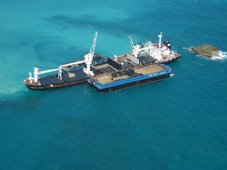
A cargo ship is tonight lodged on Belize’s barrier reef system. It is the Westerhaven – a Netherlands registered vessel that left Belize last night enroute to Santo Tomas in Guatemala. It should have been there by now but while leaving Belize it ran into bad weather and ran aground. 7NEWS travelled 32 miles from the city to the accident site and tonight we’ll show you the ship and underwater footage of the damage it did as it tore through Belize’s reef.

Keith Swift Reporting, We found the Westerhaven cargo ship where it has been since last night – stuck on the reef 32 miles from Belize City in an area near Caye Glory. It ran aground on the reef while sailing out of Belize enroute to Guatemala. This afternoon we met the coast guard on site with an assessment team.

Direl Garrido, Coast Guard“We were called out to assist the DOE and an assessment team to come and check the vessel that grounded here.”

Keith Swift,Have you been on the boat?

Direl Garrido,“No, no.”

Keith Swift,Have you spoken to anyone who has been on the boat?

Direl Garrido,“No sir, nothing. All the information we get from our headquarters.”

Keith Swift,So it is lodged on the reef?

Direl Garrido,“It is aground on the reef, yes.”

Keith Swift,Do you know what efforts are being made to move it?

Direl Garrido,“Right now the assessment team is just conducting an assessment and then based on the result then they will make a decision.”

As the footage shows- it is a large vessel – estimated to be about 100 meters long. A massive ship and it did extensive damage. Marine scientist Melanie McField accompanied us on the boat to the accident site and she says a large area of pristine reef has been destroyed. This is underwater footage she shot with her camera. She says it is the worst reef accident she has ever seen.

Melanie McField, Marine Scientist“This is by far the worst I have ever seen. I’ve never seen anything like this. It is unbelievable. I even saw blast fishing in Indonesia and this looks much worse because it is the whole area.

The reef has been completely levelled, basically from the stern to after the boat. It seems as if the boat just came in on top of, you know the reef has these spurs, it is like hills of corals, valleys of sand, and all the hills of corals have just been scraped clean, levelled. I have never seen anything like it; usually damage is a little bit spotty. And down there near the front of the boat there are areas where big coral heads are knocked over but here in the middle, the whole think is flattened, actually levelled like a parking lot.”

Keith Swift,And what is the size of the area we’re talking about?

Melanie McField,“Well it is basically it is the length of the boat, maybe a little bit less. The two ends aren’t quite as bad. The length of the boat and then out to at least this point where we are here so that’s bigger than a football field.”And as bad as it is – McField the damage has been done and it should be easily moved.

Melanie McField,“There are a few places where it actually pushed into the reef, the spurs as you get towards the reef crest there are a little bit lower but the boat is just pushed on to about two of them so I don’t think they are going to have a lot of trouble getting it off because as you pull it out there is nothing to block the path, all the coral is gone so it should be fairly easy to take it off. It is in a weird position because it is sideways to the current but I don’t think it will be too bad. All of this is levelled so they are not going to hurt much if they pull it off this way.”

Keith Swift,How far is this from the channel?

Melanie McField,“Well they came out the English Caye channel. I don’t know what the legal distance is offshore that they are supposed to travel but they shouldn’t have been travelling anywhere close to the reef crest, especially at night and they should have known where that was with their GPS equipment.”

The ship’s owner – who we are told is on his way to Belize – will be more than likely be fined but McField says no dollar amount can measure the damage.

Melanie McField,“Each square meter of reef is worth something like US$2,000. I haven’t calculated yet but we’ll get out the numbers and it is a lot of square meters that is damaged here and so there should be a considerable fine.”

Keith Swift,What will be the effect on the wider reef system?

Melanie McField,“Well the rest of the reef system, there is some sedimentation coming off of the pulverized reef but that’s pretty negligible. The main thing is that we’ve lost some important habitat. This is really healthy reef. We don’t have a lot of healthy reef, the eco-system report card that we came out with earlier this year was pretty bleak; most of our reef is in poor condition. But this particular chunk of reef is pretty healthy.

This is not the first time it has happened. There was the grounding of a cargo ship back in late November and I think we really need to be tough on our regulations and with Coast Guard, Port Authority, Fisheries, and DOE and get everyone to really come down on these ships. I don’t understand why this is happening.”

The assessment team was still onboard the ship when we left. The ship’s agent in Belize is Eurocaribe Shipping. As we mentioned it was bound for Guatemala and had stopped in Belize for only 4 hours to drop off a few containers. It is registered in the Netherlands and the captain was Fritz Schroeder. It is of note that this is only Schroeder’s 3rd trip as the captain of the Westerhaven to Belize. The owner is on his way to Belize. Tomorrow he is expected to hire a salvage company to tow the ship off the reef.

On a final note – if we use Melanie McField’s math – the ship damaged 10,000 meters of reef which would amount to US$20 million. McField is a marine research scientist with 18 years experience.

RS

Saturday, January 17, 2009

Tips To Prevent Frostbite During These Sub-zero Temperatures

Tips To Prevent Frostbite During These Sub-zero Temperatures

ScienceDaily (Jan. 15, 2009) — Severe temperatures are hitting most of the country this week, but cold weather is no excuse to sit inside over the long winter months.

If you do go outside for some fresh air and exercise, make sure to guard yourself from frostbite.

When body tissues are frostbitten, skin cells become damaged—sometimes permanently.

Therefore, the American Academy of Orthopaedic Surgeons (AAOS) has some suggestions to help keep your skin safe from the cold.

“It takes only minutes for exposed skin to become frostbitten if the temperature falls below 20 degrees Fahrenheit and the wind is blowing at 20 miles per hour or more,” says Taizoon Baxamusa, MD, spokesperson for the AAOS.

“Your hands, fingers, feet, toes, and ears are especially susceptible, so you need to take special care protecting them.”

Frostbitten areas may feel numb or hard and frozen, and may appear waxy, white, or grayish. Symptoms such as cold sensitivity, numbness, or chronic pain may last for years after an incident of frostbite; in extreme cases, the frostbitten tissue may be permanently damaged and need to be amputated.

The AAOS offers the following tips to help prevent frostbite:

Dress appropriately.

Light, loose, layered clothing provides both ventilation and insulation. Top your outfit with a water-repellent (not waterproof) fabric.

Additionally, check for gaps in your clothing (such as between your glove and sleeve) that might expose bare skin to the cold.

Take special care to protect your head, hands and feet. Substantial heat loss occurs through the scalp, so head coverings are vital.

Mittens are warmer than gloves, and two pair of socks (wool over lightweight cotton) will help keep your feet warm.

If you plan on being out in the cold for a prolonged period, do not drink or smoke. Alcohol, caffeine and nicotine leave the skin more prone to thermal injury.

If you get wet, get inside and remove the wet clothing as quickly as possible.

Check yourself every half-hour or so for signs of frostbite. If your toes, fingers, ears or other body parts feel numb, get inside.

If you do get frostbite, you should seek medical attention. Should you be unable to see a physician immediately, follow these tips to prevent further injury: Get to a warm room as soon as possible and call for medical assistance. You can have warm drinks, such as broth or tea.

Rest the injured areas (avoid walking on frostbitten feet, for example) and elevate them slightly.
Take off any wet or restrictive clothing.

Warm the affected area by immersing it in warm (NOT HOT) water for at least 30 to 45 minutes, or until it feels warm and sensation returns. During warming, you may feel severe pain and the injured area may swell and change color.

Do not do anything that will further injure the frostbitten tissue. Leave blisters intact, and cover them with a sterile or clean cloth until you are seen by a physician.

Do not rub the area with your hands, with snow, or with anything else.

Do not start to warm the affected area if there is any chance that it will be exposed to the cold again.

Do not use dry heat, such as from a heating pad, sunlamp, fire, or radiator, to try to warm the area. Because the skin is numb and will not feel the heat, it can easily be burned.

Remember Stay Safe! Its that important!
RS

Friday, January 16, 2009

The day a F4 tornado hit Wallingford Conneticut

The day a F4 tornado hit Wallingford Conneticut

AMERICAN STANDARD - BOSTON, MA - AUGUST 15TH 1878

( FROM THE HISTORY CELLAR BLOG )

Greetings. In this 1878 paper I found a article on a tornado disaster that I was not aware of. In 1953 a massive tornado hit Worcester MA which is now the deadliest tornado to hit New England. This Connecticut tornado had that title until then.

If you look at this chart from the USA TODAY, it is not unusual when tornado's hit this area, but it is at this magnitude. The article below is slightly difficult to read - it is transcribed below at the end of this post. Also there are some interesting photos and engravings below of the disaster.

The Wallingford Tornado was the deadliest tornado ever to strike the state of Connecticut, and the second deadliest ever in New England. It struck the town of Wallingford, Connecticut on August 9, 1878. The violent tornado destroyed most of the town, killing 34 people and injuring at least 70, many severely.[1] The tornado started as a waterspout over Community Lake, just west of town.

It then moved through the center of town along Christian Street, damaging almost every structure as it went. The tornado tore houses from their foundations, throwing some more than 600 feet (180 meters).

A receipt from the town was later found 65 miles (105 km) east in Peacedale, Rhode Island.[2]A district schoolhouse was converted into a temporary morgue immediately after the storm; 21 bodies were discovered and placed there that night. One person was found dead 3300 feet (1 km) from where he had been standing.[3]More than 50 special police were sworn in to prevent looting, and to control the crowds of curious onlookers who had come by train from surrounding cities.[4]

DESTRUCTIVE STORM!

Great Loss of Life and ProperlyHouses, Barns and Trees Hurled tothe Ground.Wallingford, Conn, AUG 9, A terribletornado passed over Wallingford about sixo'clock this afternoon, and blew overhouses, uprooted trees, and caused thegreatest devastation. It is estimated thatthe killed will number at present at leastwhile the wounded will reach twicethat number.

Telegraph wires and poleswere blown down, making it impossible; tocommunicate with New Haven or thesouth or Meriden or Hartford to the north.Word was finally sent by the up 7 o'clocktrain to the two latter places, and on thenext down express, which leaves Meridenat 7:30 o'clock. came physicians and help.

The greatest excitement prevails, and thewildest rumors are afloat as to the loss oflife. The tornado was confined to a belt ofterritory about half a mile wide, and thewhole loss of life took place on the sandplains about a quarter mile north of therailroad station, near the line of the NewYork, New Haven and Hartford Railroad.At 6 o'clock, while the men were leaving the factory, a gentle rain began to fall, andsoon increased to a perfect deluge, whilealmost continuous arid vivid lightningilluminated the darkened sky as bright asday, and the thunder rolled with an unceasingand deafening roar.

Without warning,the tornado, with hail and rain, sweptacross the northern part of the town, fromwest to cast, anti everything movable in itscourse was carried away. It seemed to lastbut a moment, but the results were fright-ful.

Afterward a light rain fell, and thissoon ceased, and at 8 o'clock the moonshone brightly down upon a scene of desolation.By actual count, forty dwellinghouses were demolished, and at least fifty barns.

WEATHER NOTE

What the storm has wrought’
By Paulita RoaPast Speaks


THE recent flood that hit Cagayan de Oro in the early morning of Saturday, January 3, 2009 brought back stories that old families had of a bigger deluge that happened 93 years ago on January, 1916. A strong typhoon brought continuous heavy rain for three days (some said that it rained for 16 days) to the town. The Kagay-anons found this unusual for Cagayan then was never visited by typhoons.

Arroyo Watch: Sun.Star blog on President Arroyo [1]

In that 1916 typhoon, the Cagayan River overflowed its banks. The waters entered the cogon areas of Macasandig, past the coconut grooves till it reached Camaman-an and the present site of the Cogon public market. In the Poblacion, all of Divisoria and Pabayo St. (then known as Calle Nueva), were underwater. Residents had to navigate around that area by boats. Many people died or went missing during the flood including a great number of animals. Farmlands were leveled and crops destroyed.

When the flood waters receded, the town smelled from the stench of the rotting animal carcasses. There was a severe lack of potable drinking water and sanitation was a big problem.

Then cholera came and spread throughout Cagayan.

At that time, a young 32 year old American named Dr. Frank Laubach was living in Cagayan with his wife Effa, a nurse, and their sons in Calle Burgos near the river. He was the first missionary sent to establish a mission station here by the American Presbyterian Board. The two chapels that he built in Bonbon and in Barra were washed away by the flood. The Laubachs did all they can to help the sick and the grieving families. He also dispatched his group of young people to the Municipio to assist in sending information on ways to sanitize their houses to prevent cholera from spreading.

Cholera then turned into epidemic proportions and many people were dying daily. A relative recalled that his granduncle attended the funeral of a cholera victim and 24 hours later, he also died of the same disease and was buried at once. The death count was so high that corpses were placed in carromatas and were buried on mass graves far away from Cagayan. A pall of heavy grief could be felt for each family lost a relative or two from cholera. It is said that after witnessing the twin tragedies, Dr. Laubach, known as a man of piety and prayer, got on his knees and dedicated the town to the most Almighty God.

Ninety three years later, another big flood visited Cagayan de Oro. Rev. Alex Eduave told his congregation that they still have to be thankful to the Lord for the deluge came early in the morning and the damage was not as massive as the 1916 flood. Had this happened at night, the calamity would have been of tragic proportions for hundreds would have died or gone missing. Many agreed with the observation of Mayor Constantino Jaraula that since much of our forests have been converted to farmlands, there are now very few big trees that can protect the city from the floods.

We need to take the necessary steps now in order to prevent a tragedy similar to the one that befell Ormoc years ago from happening here. Though the recent flood was traumatic to many of us, it was also a way of reminding us that we have to do something about our almost denuded forests before it is too late. We need to have a viable environmental program with the active participation of the citizenry so our lives, and our city as well, can be saved from another big natural disaster.

MARITIME NOTE

Fishermen question rescue response
Gloucester tragedy remains a mystery

By Stephanie Ebbert and Brian R. Ballou, Globe Staff January 9, 2009

GLOUCESTER - As Gloucester lay to rest two fishermen who died in a mysterious accident at sea, their fellow seamen raised concerns about a published report that said the Coast Guard did not launch a search-and-rescue mission for more than 2 1/2 hours after it was alerted that the vessel was in trouble.

The Coast Guard command in Boston did not begin searching for the missing boat, called the Patriot, until nearly 4 a.m. on Saturday, the Gloucester Times reported yesterday. The Fire Department had responded to a 1:17 a.m. fire alarm broadcast by the boat, discovered that the Patriot was not at port, and contacted the wife of one of the fishermen, who said he was out at sea. She then contacted the Coast Guard for help.

Coast Guard Captain Gail Kulisch, commander of the Coast Guard Sec tor in Boston, would not confirm the timeline at a news conference last night, where she said repeatedly that the Coast Guard had responded immediately but had to follow an established protocol for its response. Though the Coast Guard is conducting a case study of its response - as is routine in fatalities - the command was ready and reacted quickly, she said.

"They are always poised. They are guardians," Kulisch said. "We joined to save lives. That's what we do and we take this business very, very seriously."

The Coast Guard has learned that another vessel was in the area at the time of the accident and is investigating whether there was a collision or whether anyone witnessed what happened to the Patriot, she said.

Kulisch said the case was unusual because it was triggered by a fire alarm on the vessel and reported by a fisherman's wife. The Patriot had a device that sends out a signal in an emergency showing its location, but it did not work until hours later, when the Coast Guard was already at the scene, she said.

A Coast Guard commander told the Gloucester Times on Wednesday that the agency could not launch a response effort without knowing the boat's approximate location. But the Patriot was equipped with a vessel-monitoring system that lets the Coast Guard track its location. Since November 2006, fishermen have been required to use those tracking devices so the government can keep tabs on their whereabouts and guard against overfishing. The Patriot had broadcast signals of its location as recently as 12:30 a.m. Saturday, the Times reported.

Kulisch said that whatever happened to the Patriot appeared to have been quick: The men, both experienced fishermen, were not wearing survival gear they had on board.

Yesterday, fishermen and a lawyer who represents them questioned whether the technology used so readily by the Coast Guard to penalize fishermen for straying into protected waters could have been used more effectively to try to save the two fishermen lost at sea.

"It's kind of like wearing an ankle monitoring bracelet, so they know where you are at all times," said Stephen M. Ouellette, a lawyer whose primarily represents fishermen. "It's always tough to second-guess these people, but they spend so much time and energy chasing fishermen down for violations."

It was unclear yesterday whether the time lost would have made a difference to the fishermen in the frigid water of the Middle Bank, 15 miles off Gloucester. But some fishermen said they found the Coast Guard's response time troubling.

"The whole sinking is a mystery to begin with, but the response is rather distressing for those of us who have to rely upon the system," said Paul Cohan of Beverly, who fishes out of Gloucester.

Investigators have not determined what caused the Patriot, a well-kept, 54-foot, steel-hulled trawler, to founder. The owner, Matteo Russo, was killed along with his father-in-law and fishing partner, John Orlando. Kulisch said the Coast Guard is trying to restrict the area around the sunken boat, but the family wants to hire its own divers to investigate.

At the fishermen's funeral yesterday in Gloucester, the close-knit fishing community filled Saint Ann Church, leaving only standing room. Several men with gray facial stubble and in heavy winter jackets sat among the crowd and whispered in Italian, shaking their heads from side to side as they looked at the coffins.

Family, friends, and well-wishers paid respects to Russo, a 36-year-old father whose wife is expecting a second child, and Orlando, a 58-year old father of two.

The Rev. Ronald Gariboldi told the approximately 700 mourners that he was approached by Russo's mother moments before the funeral began. Josephine Russo looked at him with teary eyes and said her son's death was a mystery.

The service was laden with references to the industry that has characterized Gloucester. A prayer was made for those who go out to sea and those who wait for them on shore. The Gloucester Times reported that the Coast Guard in Boston, before launching a search, ordered its Gloucester station to double-check the Fire Department's conclusion that the boat was not in the port. That cost an hour, the newspaper reported.

The Times also reported that the search was delayed while officials at the Coast Guard command in Boston tried to contact the crew of the Patriot by phone and e-mail, after the wife of one of the men said he was not answering calls. A dispatcher also called the boat's former owner, who told him it had been sold, according to the Times.

Study Evaluates U.S. Maritime Policies

The Maritime Administration has issued a new study that evaluates the adequacy of current U.S. maritime policy to meet the commercial, economic, security and environmental needs of the nation over the next three decades.The report titled, ìAn Evaluation of Maritime Policy in Meeting the Commercial and Security Needs of the United States,î was researched and prepared by IHS Global Insight, Inc., of Lexington, Mass.

The 72-page report finds that current U.S. maritime policy only supports Americaís domestic maritime trades and is not supportive of U.S. participation in the international trades. However, the study also advises that possible reforms in national policy may lend more support to the U.S. maritime industry.Maritime Administrator Sean T. Connaughton said, It is clear that marine transportation is the most important mode of transportation for future growth of the U.S. economy; but current U.S. policy does not seem to reflect the importance of this modeóand for America to succeed, it must.

To help create a more robust marine transportation system, Administrator Connaughton continues to advise U.S. policymakers that government support of the freight transport system must anticipate and respond to potential shipping bottlenecks that cause delays and undermine regional and national economic growth.

The main task for policymakers, he says, is to ensure that the maritime system will have adequate capacity and reliability to transport ever increasing volumes of cargo and numbers of people in an efficient and environmentally sound manner.

The full report and its findings are available online at Maritime Administration web site, http://www.blogger.com/www.marad.dot.gov.

FROM HOLLAND AND KNIGHT

Bill introduced re ocean and coastal observations

Senator Snowe (R-ME) introduced the Coastal and Ocean Observation System Act of 2009 (S. 171) to develop and maintain an integrated system of coastal and ocean observations for the Nation's coasts, oceans, and Great Lakes, to improve warnings of tsunami, hurricanes, El Nino events, and other natural hazards, to enhance homeland security, to support maritime operations, to improve management of coastal and marine resources, and for other purposes. (1/8/09).


Messing About In Ships Podcast


Have a really super weekend and ...STAY WARM!

RS

UPDATE -Dangerous Wind Chills Through Friday Morning

Dangerous Wind Chills Through Friday Morning

NWS CHICAGO (KLOT)

A wind chill warning remains in effect for all of northern Illinois and northwest Indiana through Friday morning for very dangerous wind chills of 25 below to 40 below.

Some improvement is expected by Friday afternoon as air temperatures warm above zero. Please refer to the following for the latest information on the wind chill warning.

FORECAST AND WARNING INFORMATION -----------------------

Wind Chill Warning information
NWS Chicago Winter Weather Page

CURRENT CONDITIONS ---------------------------------------------------

Illinois Current Wind Chill Values, Temperatures, and Wind Speeds
Indiana Current Wind Chill Values, Temperatures, and Wind Speeds

REFERENCES ---------------------------------------------------------------

Winter Weather Definitions:

Wind Chill Warning - Extreme wind chills of -30oF or colder.A Wind Chill Warning is issued when the wind chill will be less than or equal to -30oF AND winds greater than or equal to 10 mph.

Wind Chill Advisory - Dangerous wind chills of -20oF to -30oF.A Wind Chill Advisory will be issued when the wind chill is less than or equal to -20oF AND the winds are greater than or equal to 10 mph.

Wind Chill Temperature Chart Click here for a Wind Chill Calculator

Additional References
COLD WEATHER ISSUES
COLD WEATHER SURVIVAL
Extreme Cold: A Prevention Guide to Promote Your Personal Health and Safety
Cold Weather Survival Guide - History.com
Key to battling cold: Dress warmly, experts say
Preparation key, say residents of chilliest cities
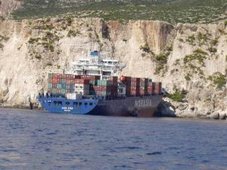

City Of Chicago
City of Chicago Warming and Cooling Centers
Where to Go for Safety in Extreme Heat or Cold


During extreme cold or hot weather, the City of Chicago offers these six warming and cooling centers. Call 311 to learn more or to schedule free transportation to the centers.

Need Transportation? CALL 3-1-1!

North Area Center
4740 North Sheridan Rd.
Chicago, IL 60640
312-744-2580

Trina Davila Center
4345-47 West Armitage Ave.
Chicago, IL 60639
312-744-2014

Garfield Center
10 S. Kedzie Ave.
Chicago, IL 60612
312-746-5400

King Center
4314 South Cottage Grove Ave.
Chicago, IL 60653
312-747-2300

Englewood Center
845 W. 69th St.
Chicago, IL 60621
312-747-0200

South Chicago Center
8759 S. Commercial Ave.
Chicago, IL 60617
312-747-0331

Keep posted to the NWS CHICAGO (KLOT) website for updates on this very dangerous weather condition.

RS