Showing posts with label sinkings. Show all posts

Monday, September 29, 2008

New approach to warning siren activation unveiled

New approach to warning siren activation unveiled

Oakland County officials have announced and implemented a new countywide severe weather warning system that involves activating existing and future tornado sirens before a tornado is spotted in the field or indicated on radar.

County Executive L. Brooks Patterson and Emergency Response and Preparedness Director Mike Sturm detailed the sweeping change in the county's outdoor warning siren system on Wednesday, Sept. 10. Under the new approach, sirens will be activated when winds of 70 mph have been recorded in or around the immediate county borders.

"In the past, the sirens have only been activated when a tornado has been sighted or indicated on radar," Patterson said. "Henceforth, the outdoor warning system will be activated when severe thunderstorms with damaging winds at or near 70 mph are in Oakland County or within a 10-mile buffer around the county."

If a 70 mph standard had been in place, Oakland County would have activated warning sirens an additional half a dozen times since January 2006, rather than just the three times the sirens were sounded during the same period of time based on National Weather Service standards.

Sturm said it was felt that any severe weather condition that could result in widespread or severe damage, injury or loss of life or property should warrant activation of the outdoor warning system. He added that winds of 65 mph or more could do as much damage as a low-grade tornado.

The previous outdoor warning system began in 1977. There are 228 sirens in place across the county, with two more about to be installed. The total cost of siren installation is around $20,000, according to county officials.

Last October, three new tornado sirens were slated to be installed in three lakes area communities. Commerce, Highland, and Waterford townships netted the warning devices in the last year after the county received a $68,000 Urban Area Security Initiative Grant — federal money passed to the state and then passed on to the county — that made the purchase and installation of the sirens possible.

WEATHER NOTE

Response agencies scramble to keep up with storm season

For the fourth time in as many weeks federal disaster response officials found themselves shifting gears to address a storm.

As Hurricane Ike barreled toward the Gulf Coast of Texas, the Federal Emergency Management Agency was already moving its rapid response teams into southern Texas in advance of the storm, repeating preparations it made in recent weeks for Hurricane Fay in Florida, Hurricane Gustav in Louisiana, and Tropical Storm Hanna in North Carolina.

A new approach

“The lesson learned is we must plan for these events well in advance of the event,” said Glenn Cannon, assistant FEMA administrator for disaster operations. “We plan for different events and scenarios … so we have the same game plan and are on the same page.”

The ad hoc, independent response that marred FEMA’s response to Hurricane Katrina is a thing of the past, he said. “We don’t need to relearn that lesson.”

That’s why, since August, FEMA has conducted daily — and sometimes more frequent than daily — videoconference calls to coordinate state and federal response for tasks as diverse as medical evacuations, supply delivery and rescue teams staging, he said.

As the chief coordinator for disasters, FEMA makes sure all local and federal agencies come in with the necessary resources and staffing. FEMA has developed more than 220 prescriptive mission assignments for its partners. The plans contain everything from checklists to draft documents so nobody is starting the process from scratch, Cannon said. Before Katrina, there were fewer than 30 such plans, he said.

The General Services Administration, which supports FEMA’s supplies purchasing, is one of the agencies dialed in on the daily phone call. Its Office of Emergency Response and Recovery, set up after Katrina, is getting its first real test this year with the battery of storms slugging the Gulf Coast.

The daily video teleconferences have allowed agencies on the federal, state and local level to reach out to one another and discuss what is needed and who can provide it, said Joshua Sawislak, acting director of the Office of Emergency Response and Recovery at GSA. The briefings ensure that agencies like GSA, which is responsible for trucking supplies into disaster areas, coordinate with, say, the Transportation Department, which knows which roads are closed, or the National Hurricane Center, which knows where storms are heading.

Role of technology

Technology has also provided real-time situational awareness, Sawislak said. During the evacuation of New Orleans in advance of hurricane Gustav, Customs and Border Protection and military reconnaissance technology helped give responders real-time knowledge of where ambulances transporting patients were and whether additional aircraft were needed to evacuate them, he said.

“Cooperation and communication has made the biggest difference,” Sawislak said. “FEMA can roll in mobile command centers with full capability and show us video of what is going on. … We don’t have to rely on CNN.”

The centralized emergency management office has also helped GSA coordinate internally, Sawislak said. The office is in charge of mobilizing GSA’s regional emergency response teams and reservists to make sure the right people with the right skills are in the right place at the right time, he said.

A deep bench

Although Ike is the second major storm this season to hit areas within GSA’s Fort Worth, Texas region, the regional emergency staff is ready to respond in full force, he said.

GSA staff from California, working with FEMA at the time, had deployed in response to Hurricane Gustav, relieving some of the pressure on the region, he said.

But GSA has a plan in place to supplement people from regions outside of the storm zone in order to give those in the storm zone a break, he said.

“The hardest part is to make sure people understand we’re in it for the long haul, and they need rack time … so they don’t get burned out,” Sawislak said.

At the same time FEMA is planning for the response, it is also working with partner agencies to plan for recovery, Cannon said.

FEMA is already planning for mass feeding and sheltering should Ike wipe out homes in the affected area. The agency is also working to ensure temporary housing is available should anyone be left homeless from the storm, he said.

The Small Business Administration, which administers home and business recovery loans, is also planning for the day after.

The agency has 1,500 of its 3,500-plus reserve staff on call to respond to Ike within 24 hours, said James Rivera, deputy associate administrator for SBA’s Office of Disaster Assistance. SBA has trained 3,500 people for its disaster recovery reserve force, which is used to staff up regions during times of emergency.

The reservists process loans, inspect property damage and perform other recovery duties. That reserve staff is 18 times larger than the reserve available during Hurricane Katrina, he said.

Although SBA has been part of the responses to many of this year’s natural disasters, employee fatigue has not yet been an issue, said Sandy Baruah, acting SBA administrator.

“But if Ike packs a punch and we’re dealing with it for a long time, or if it is followed by another serious hurricane, we do have this 3,500-person team of active reservists to work through the system,” Baruah said.

In addition to people power, the agency is also prepared to respond with technology. The agency has beefed up its loan processing system now allows 12,000 users to run cases simultaneous, 10,000 more than were allowed in the system during Katrina, Baruah said. People seeking assistance can also apply for their loans online, a development made in response to the long-distance evacuations after Katrina where many loan seekers couldn’t go to disaster recovery offices in person.

24-hour hurricane center

Whether agencies are involved in the response or the recovery phase, they rely heavily on the forecasts from the National Hurricane Center, which is staffed around the clock, to determine where to stage its crews and when to begin evacuations.

The Hurricane Center has two specialists tracking Ike at any given hour, but while Ike was being tracked alongside Hurricane Gustav and Tropical Storm Hanna, each storm had its own team working overtime, said Bill Read, the center’s director. “It is a bit of a balancing act,” but because hurricanes are the agency’s business, there isn’t a lot of staff shuffling going on, Read said. The agency is always prepared to give officials briefings at any time of the day or night. “For some reason, the storms won’t take off on weekends, so we work weekends,” Read said. “Hurricanes don’t go to sleep at night

World is Now Committed to a Significant Warming

Even if greenhouse gas concentrations would remain constant at 2005 levels for the next century, which is a highly optimistic scenario, according to a group of researchers from the Scripps Institution of Oceanography, the earth will still warm about 4.3 degrees F (2.4 C) above pre-industrial levels.

According to Climate Sciences professor V. Ramanathan and co-author Yan Feng, 90% of this warming will most likely be experienced in the 21st century.

Below are exerpts from the ScienceDaily article...............

"This paper demonstrates the major challenges society will have to face in dealing with a problem that now seems unavoidable," said Ramanathan. "We hope that governments will not be forced to consider trade-offs between air pollution abatement and mitigation of greenhouse gas emissions."

The authors point out that the real problem is not the reduction of air pollution, but it is the lack of comparable reductions in emissions of CO2 and other greenhouse gases to offset the reductions in the surface cooling effect of fog. The paper also offers potential solutions.

There's a special room at the Marshall Space Flight Center. Researchers call it the "Anechoic Chamber" and they love to test their high-tech instruments there. Normal people think it's just plain spooky.

"In here, no one can hear you scream," says engineer Mark James as he opens the door on the surreal:

The door creaks shut behind James and suddenly it's like someone hit the mute button. Dead silence. Pyramids on the wall seem to be closing in. The urge to scream ... hard to resist.

James just gets on with the job. He's lead engineer on a research team using this cavernous facility to test a prototype hurricane sensor called HIRAD. Short for Hurricane Imaging Radiometer, HIRAD is designed to scan large areas of ocean for microwave signals that portend storm strength and dynamics. By collecting and transmitting these data to forecasters, HIRAD could reduce property damage and even save lives.

The Anechoic Chamber is the perfect place to check HIRAD's antenna.

Weird shapes lining the chamber's walls are made of a radio-frequency damping material arranged in a pattern akin to soundproof rooms. The shapes minimize microwave reflections and eliminate electromagnetic interference.

"The electromagnetic quiet allows us to test and fully characterize the HIRAD antenna," explains James. "Lack of sound is just a weird bonus."

A microwave source at one end of the chamber sends signals to the HIRAD antenna at the other end. In this way, engineers can explore the antenna's beam pattern to check that it meets the requirements of the mission ahead.

Using microwaves, "HIRAD will be able to map out wind speeds on the ocean's surface--in particular the hurricane strength within the eye wall and elsewhere," says Tim Miller, HIRAD principal investigator at the National Space Science and Technology Center in Huntsville, Alabama. "We can also determine how heavy the rain is and the temperature of the ocean surface, more indicators of hurricane characteristics."

Because of its design, HIRAD can make observations over a wider swath of area than instruments currently used by NOAA. And by using electronic rather than mechanical means to scan and create a two-dimensional image of the storm's dynamics, HIRAD can operate on less power than current wind measuring instruments. It's also smaller, lighter, and relatively inexpensive to build.

"HIRAD's observations will not only give weather officials more and better real-time information on storm strength, but it will also help them determine how the storm will develop and where it will go," says Miller. "All of this adds up to more advanced warnings to the public."

How is HIRAD doing so far in the "bat cave" testing?

"We're still reviewing our test data, but so far HIRAD is passing with flying colors," says Robbie Hood of the MSFC, former principle investigator for the project and still intimately involved in its development.

The next step, she says, "is to build the real thing. This is just a test unit – a laboratory prototype. Ultimately, HIRAD will be more compact and lighter weight than the unit we're testing now."

The team hopes to have HIRAD ready to fly checkout tests onboard an aircraft by fall 2009, and ready for its first hurricane experiment in 2010. HIRAD will have to compete with other candidate instruments for the hurricane experiment.

The whole team feels confident that their instrument is going to succeed. "We've got top-notch personnel working long hours to make it happen," says Miller. "We all know that HIRAD is a valuable instrument, and we want to place it in the hands of weather officials so it can do its work -- saving lives."

The trick, says James with a smile, "is not getting locked in the bat cave."

What?

MARITIME NOTE

Ship with 10 crew sinks off Black Sea coast

SOFIA (Reuters) - A North Korean-registered cargo ship with 10 Ukrainian and Russian crew on board sank in rough waters in the Black Sea early on Saturday, Bulgarian authorities said.

Rescuers have so far failed to find any survivors as stormy conditions hampered rescue operations, said Nikolay Apostolov head of Bulgaria's Maritime Administration Agency. Rescue workers have also not found any bodies.

Efforts to save the crew, which consisted of nine Ukrainian and one Russian seamen, will be halted for the night because of the bad weather, he said.

The Tolstoy, which carried 2,500 tonnes of metal scarp and was sailing from Russia to Turkey, sank at about 4 a.m. (0100 GMT) some 12 miles off Cape Emine on Bulgaria's Black Sea coast, officials said. It issued no SOS call, they said.

"We received the exact crew list from the authorities in Rostov (Russia). It shows the ship had 10 not 12 crew, which was the preliminary information," Apostolov said.

He said the vessel was owned by an Ukrainian company and sailed under the North Korean flag.

Nine dead after Indonesian ferry catches fire, sinks

AP, JAKARTA Rescuers were searching yesterday for a missing two-year-old boy after a packed ferry caught fire and sank in eastern Indonesia, killing at least nine people, an official said. The wooden boat, the Usaha Baru, was traveling between two coastal villages in Maluku province carrying 77 passengers and crew when a fire broke out in the engine, local search and rescue agency head Eddy Paays said.

Most of the passengers were Muslims traveling home to celebrate Id al-Fitr, marking the end of Ramadhan, Paays said.

Panicked passengers started jumping into the sea after the fire broke out in the engine as the boat traveled on Friday between two coastal villages in the Maluku islands, he said, adding that fisherman helped pluck many from the sea.

Rescuers continued to search for a missing toddler near the fishing village of Salahutu, he said.

At least nine people were killed in the accident and 35 others were being treated at a hospital for burn injuries, Paays said.

Ferries and passenger boats are a major form of transportation in Indonesia.

Maritime Expert Witness On Reconstruciton of Collision

Both Robert LaPointe and Terry Raye Trott apparently violated boating safety rules prior to a fatal boat crash on Long Lake, Maine, last summer, witnesses for the state testified at LaPointe's manslaughter trial Tuesday. Milford Daily News writes:

LaPointe, 39, of Medway, Mass., was going too fast at night and did not exercise care to avoid a collision when he came up on Trott's boat from behind, said Maine Warden Kevin Anderson and boat reconstruction expert William Chilcott.

Trott was in violation because his rear "all-around" light was not working, and he may not have had a sounding device on his motorboat, they said.But both witnesses agreed that under federal navigation rules, LaPointe was at fault for the Aug. 11, 2007, crash. His obligation as the boat coming up from behind superseded the obligation Trott had to maintain proper lighting, they said.

"Mr. LaPointe was driving too fast at night," said Anderson, who conducted a reconstruction of the collision using the salvaged boats. "He wasn't able to avoid the collision. He ran over a boat." Boaters on Maine's lakes are required to obey the navigation rules maintained by the U.S. Coast Guard, and any other state laws or local ordinances specific to each body of water.

Anderson said boaters must travel at speeds low enough to avoid a collision with another boat, a log, a loose dock, a swimmer or any other hazard that might present itself. Anderson estimated LaPointe was going between 40 and 50 mph at the time of the crash, and Trott was going between 10 and 20 mph.


RS

Tuesday, January 22, 2008

Are we really prepared?

I am continually amazed by reports like the following. We are entering 2008 and still there are many County and State Emergency Management Agencies that still lacking the proper funding.

I have just one question. What's it going to take?

Preparedness center lags on hiring, training Jan 12, 2008 @ 05:27 PM By JENNIFER FUSCO Observer-Dispatch WHITESTOWN — New York state is spending $3.4 million this year on a state Preparedness Training Center that’s fallen far short of meeting initial projections for both employees hired and emergency responders trained.

Total spent: Close to $3,000 per police officer, firefighter, correction officer, health official or National Guardsman trained in 2007.

SLOW TO PREPARE
WHAT
* The State Disaster Preparedness Center was announced in December 2005 for the then-Oneida County Airport in Whitestown.

* Its purpose is to train emergency personnel for situations dangerous to the public including terrorist attacks.

THE GOAL
* State officials said it could become a hub for anti-terrorism training in the Northeast.

* Officials projected more than 25,000 trainees per year and the hiring of dozens of employees.

THE REALITY

* Fewer than 1,800 people have been trained, 641 in 2006 and 1,100 last year, the state says.

* The center employs 10 people.

* It lacks sufficient classroom space at the airport site and conducts some classes at Utica College.

PARTICIPANTS
* A total of 376 agencies used the center in 2007, according to the state Office of Homeland Security.

* Groups included the Fire Department of New York, the Syracuse fire Department, the Broome County Department of Health and the National Guard.

NEW HOPES

* The state said it will double the number of classes from 40 to 80 in 2008, serving an additional 275 emergency responders.


Local and state officials say they remain committed to the center, which opened two years ago in the terminal building of the former Oneida County Airport.

Still, some are concerned with its slow growth rate.

“This program needs to start moving in the direction of strong activity,” said Legislator William Goodman, D-Whitesboro. “It’s not moving fast enough.”

The O-D reviewed records and interviewed state and local officials about the center, which was once touted as New York’s hub for emergency-response disaster training for first responders.

The O-D’s findings include:
* The 10 people employed at the center represent only one-sixth of hiring goals.
Now, instead of as many as 60 jobs added in Whitestown, officials are projecting only 20.

* The 1,100 public-safety and health personnel trained in 2007 represent less than 5 percent of the initial projection of 600 trainees per week.

* More than two years after the center was created, it still lacks sufficient space at the former airport and must conduct some classes at Utica College. Officials blame the delayed signing of a lease.

* The O-D repeatedly requested a list of the employees at the center, as well as their titles and salaries, but the state failed to provide it. The O-D has filed a Freedom of Information Law request.

State officials offered no clear timetable for meeting initial projections for hiring and training.

Dennis Michalski, a Homeland Security spokesman, said classes at the center will double from 40 to 80 this year, but would not predict how many people would be trained in 2008.

“That's the unknown,” he said. “We can't speculate on numbers.”

Later, another Homeland Security spokeswoman, Jody Ankabrandt, said the number of trainees would rise at least 20 percent this year, or by about 275 people.

Initially, the center was supposed to train more than 25,000 emergency responders per year.

Classes will be on subjects such as cybersecurity, bombs and weapons of mass destruction.

State Assemblywoman RoAnn Destito, D-Rome, said she follows the progress of the center closely, and is confident it will grow as projected.

“As far as I’m concerned, the future is very bright for the Homeland Security center,” she said. “If I have any disappointment, it’s the time frame in which it’s been moving.”

Oneida County Executive Anthony Picente said it’s too early to tell if taxpayer money is being well spent at the Whitestown center.

“I don’t feel I can answer that right now,” Picente said. “If a year from now the same numbers exist, then it’s not.”

‘A model for the nation’

When then-Gov. George Pataki announced Whitestown would get the center in December 2005, officials hoped it would be the type of economic boost the area needed.

“Our goal is to develop this training facility into a federally recognized and accredited center, which will serve as a model for the nation and the training hub for the first response community from across the Northeast,” Pataki said at a Dec. 5, 2005, news conference. “The selection of the Oneida County Airportwill ensure that this important training begins as soon as possible.”

Leaders said the center would create jobs, boost local businesses and raise Oneida County's profile. The Convention and Visitors Bureau spoke of hotel rooms filled with hundreds of trainees each week.

Some trainees did come – from the New York Police Department, from Niagara County Emergency Management, from the Oneida Indian Nation. But they did not come in nearly the numbers initially expected.

On Friday, a sign declared the old airport terminal to be the home of the State Preparedness Training Center, but the building sat amid a vast expanse of empty parking lot, with only a few vehicles parked next to the structure. The center did conduct training, but at Utica College, which had available classroom space that the former airport site lacks.

Spitzer spokeswoman Jennifer Givner said the state is committed to the center and its growth.

“Clearly, I would say emergency preparedness is the utmost priority for the governor in this administration,” she said. “We’re definitely meeting the same numbers last year, with hopes to exceed that.”

Budget details sought
The center’s projected 2007-08 budget is $3.4 million, according to the state’s Budget Office. The O-D has filed a Freedom of Information Law request to learn just how the money is being spent.

The center employed nine people a year ago, and 10 now. Their names and salaries are also the subject of an O-D FOIL request.

The former airport ultimately should see about 20 employees working at the center, Destito said.

Homeland Security spokeswoman Amy Bonanno said there are 64 positions on the books for the center.

Some of those jobs will be in Albany, not Whitestown, but Bonanno said she was unsure of the breakdown.

Whatever the number, Picente said the center was never about the number of jobs. It was about making the region a hub for Homeland Security training and about an economic impact from high volumes of trainees traveling here.

“It’s going to take a couple of years to grow that much,” Picente said. “There’s no question it’s moving much slower than we thought, and I hope in this new year it will begin to move.”

Hope for progress
Why hasn’t more occurred?

Leaders cited the change in gubernatorial administration a year ago, as well as lease issues.

The lease between the county and the state was signed several months ago, which gives the center more space for additional programs and more training.

“I would hope we would see those numbers by June or so,” Picente said, referring to an increase in training numbers.

State Sen. Joseph Griffo, R-Rome, acknowledged the center hasn’t met its projections, but said part of that is due to the change in administration from Pataki to Spitzer — which happened shortly after the center first opened.

“Each administration has to pursue the direction they want to pursue,” he said.
Protecting the public remains a priority in the post-9/11 era, Griffo said. Having the center in Oneida County meets that need and also creates the potential for a greater economic impact locally, he said.

“I’ve got to give the benefit of the doubt to the administration,” Griffo said.
EDGE not involved

Mohawk Valley EDGE is the region’s main economic-development arm. It did not have a role in bringing the training center to the Mohawk Valley, spokesman Rob Duchow said.

He would not comment on the initial goals for the center.
“This is an investment that New York state wanted to make,” he said. “And for
them to invest in our community is good for us, opposed to investing in another
part of the state.”

The center is worth having as long as the state manages it right, Goodman said.
As for Legislator Goodman, he retains some optimism.

“The state itself will hopefully move more rapidly to make sure the goals are achieved that were presented in the past,” he said. “I think the concept is very good.”

Still, he said, he’d be watching.

“It should be an ongoing monitoring system,” he said.


MARITIME NOTES


Ministry of Transport requires report on Vanessa sinking
17 January 2008 | 13:31 | FOCUS News Agency
Sofia. Bulgaria’s Ministry of Transport sent a letter to the Ministry of Foreign Affairs requiring the Ukrainian part to introduce the report, worked out by the Commission engaged with the investigation on the Bulgarian Vanessa ship’s si1qazzzzzzz1qa1qa

On Wednesday, the Commission, established by Ukraine’s PM Yulia Timoshenko, has a sitting in Kiev. Bulgarian experts from the committee on ship accidents and failures to the Ministry of Transport and representatives of the Bulgarian embassy to Ukraine took part in the sitting.

RS


Wednesday, January 16, 2008

January 2008 A Interesting Start to the Maritime New Year!

January 2008 has started out as a lion for the maritime acccident business.

To date (January 16, 2008) there have been some 68 reported casualities world wide. of the 68 incidents, 19 were due to heavy weather with approximately 13 total deaths reported.

There was one reported casuality reported due to terrorism.

Make Light Of Heavy Weather - 16 January 2008

The London P&I Club has warned of the risk accidents caused by heavy weather.

In the latest issue of its StopLoss Bulletin, the club notes, “The types of incidents reported have included injuries to crew members falling while working aloft, a hand injury when a heavy auxiliary engine part unexpectedly shifted while being removed for maintenance, and a chest injury suffered when a power tool slipped as a ship rolled.”

It adds: “Where a risk assessment had been carried out in respect of the accidents involving deck crew, the responsible officer had been fully aware of the prevailing conditions but had not made sufficient allowance for the ship’s motion. Interestingly, in the cases where the task was being performed in the engine room, the entry on the risk assessment form for ‘Weather and Sea Hazard’ was in each case “not applicable”.”

The Club concludes, “While it is the case that dealing with rolling, for example, is less of an issue for someone on the bottom plates in the engine room than it is for a crew member on the monkey island, these recent cases are reminders that, when a ship rolls, the engine room moves too.”

Here are just a few new incidents.


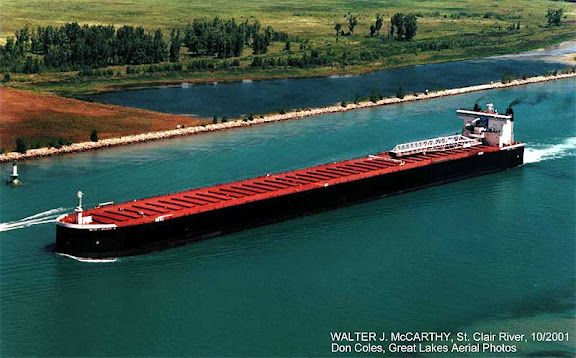
U. S. Coast Guard Marine Safety Unit responds to sinking laker McCarthy at Hallet

Coast Guard Marine Safety Unit Duluth responded to the partial sinking of the 1,000-foot laker McCarthy at the Hallett No. 8 Dock at approximately 11:30 a.m. yesterday The vessel has been made fast to the pier until a salvage plan is in place.

There are no reports of oil in the water. The Coast Guard is working closely with the vessel's owner, the city of Duluth and both the states of Minnesota and Wisconsin to protect the environment. The McCarthy, owned by American Steamship of Buffalo, N.Y., was docking into a slip when it struck an object and began taking on water in the engine room.

The after section of the ship sank to approximately 20 feet at the dock, while the rest of the ship remained above water. The cause of the incident is under investigation.


Three crew airlifted to hospital as freak wave hits vessel

By CHARLOTTE THOMSON

THREE offshore workers were airlifted to hospital yesterday after a freak wave hit their ship in a storm. They were securing cargo on the storage offloading vessel Bleo Holm when the incident occurred, 50 miles north-east of Aberdeen.

The three were taken to Aberdeen Royal Infirmary by air ambulance but the extent of their injuries was not clear last night.

The vessel, owned by Talisman Energy (UK), had a crew of 70 on board.

A spokeswoman for the firm said: "We can confirm that four personnel have sustained injuries following an incident on board the Bleo Holm.

"All 70 people on board have been accounted for.

"The injuries were sustained after items broke free on the deck of the vessel during bad weather, with wind speeds in excess of 40 knots and a swell of nine metres.

"One person sustained minor injuries and has remained on board. Three personnel were airlifted onshore by helicopter for medical treatment."

Last year the firm admitted its safety procedures needed to be improved following the death of an employee on the same vessel on 6 January.

Matthew Grey, 59, of Darlington, suffered fatal injuries while fitting pipes in one of the cargo tanks.

Nick Walker, Talisman UK's vice-president, later admitted that some of its safety systems were not sufficiently robust.


From the BBC
Timber hazard after ship wrecked

Measures are being put in place to protect shipping in the area where a cargo ship sank off the Dorset coast.

The Greek-registered Ice Prince went down about 26 miles (42km) off Portland Bill after being damaged in a storm.

She shed more than 2,000 tonnes of her 5,260-tonne timber cargo - causing a potential hazard to other vessels.

A 1,000m (3,280ft) temporary exclusion zone is in place around the ship, and emergency buoys are to be placed around the area as a visible warning.

Broken bundles

The 6,395-ton Ice Prince sent out its initial emergency call at about 1900 GMT on Sunday.

Rescuers battled gale force winds and rough seas with 16ft (5m) swells to evacuate the vessel's crew. Twelve were airlifted to Portland, Dorset, and eight others taken by lifeboat to Brixham, Devon.

It is understood the members of the Ice Prince's crew were all foreign nationals and were wearing lifejackets and immersion suits when rescued.

The 328ft (100m) ship finally sank at about 0045 GMT on Tuesday in 9ft (2.7m) waves and strong winds.

The vessel was carrying 5,258 tonnes of sawn Swedish red and white timber. About 2,000 tonnes of the cargo was being carried on the deck and a quantity of wood - about 3,000 tonnes - is still believed to be in the hold.

It was also carrying an estimated 400 tonnes of fuel oil and other lubricating oils in its engine spaces.

Coastguards said the risk of oil pollution was low, but they were concerned a "wood slick" of the cargo could be a hazard to shipping.

The 10m (33ft) lengths of wood were put on board in bundles, but sea conditions broke many apart.

Kelly Reynolds, of the Maritime and Coastguard Agency, said: "We believe it is a danger to navigation because there are bundles of wood that are breaking down into loose planks."

Coastguards said they were expecting a "slick" to end up somewhere on the south coast over the next few days. Police forces have been alerted.

Warnings have been sent to all shipping in the area to avoid floating timber and emergency navigational buoys are due to be added in the area on Wednesday.

On Thursday, underwater surveillance equipment will survey the wreck to see how much of a threat it poses.

UPDATE

  • Published Date: 15 January 2008
  • Source: Edinburgh Evening News
  • Location: Scotland

Stricken cargo ship sinks after dramatic rescue for 20 crew

THE cargo ship Ice Prince, abandoned by its crew after she listed to 40 degrees off the Devon coast, has sunk.

Twenty crew were rescued by helicopter and lifeboat in storm conditions last night from the stricken Greek-registered ship after the vessel's cargo of timber shifted and she listed.

A spokesman for the Maritime and Coastguard Agency said: "At 12.45am, the general cargo vessel Ice Prince sank in very rough weather."

He also confirmed a counter-pollution surveillance aircraft would be flying over the scene at first light to see the extent of the debris on the surface of the water.

The Ice Prince, which is more than 328ft long and weighs 6395 tons, sent out an emergency call at 7pm on Sunday after getting into difficulties.

A Portland Coastguard helicopter airlifted 12 of the crew, including a 41-year-old Greek man with a broken leg.

The remaining eight crew members were taken to safety by lifeboat crews from Torbay and Salcombe.

They battled gale force winds and rough seas with 16ft swells to evacuate the men in a mission one lifeboatman described as a "once-in-a-career" rescue.


Rebels bomb oil tanker in Nigeria, exports spared

REUTERS
7:32 a.m. January 11, 2008
PORT HARCOURT, Nigeria – Militants fighting for autonomy in Nigeria's oil-producing south detonated a remote controlled bomb on an oil tanker on Friday, causing a big fire.

It was the second rebel attack on Africa's largest oil industry in a week, but exports of crude oil were unaffected, industry sources said.

'There was an explosion and the tanker went up in flames,' Police Commissioner Felix Ogbaudu told Reuters, adding that the cause was under investigation.

The Golden Lucy was preparing to discharge refined fuel at the main port in the southern city of Port Harcourt when it burst into flames after two loud explosions, witnesses said.

The Movement for the Emancipation of the Niger Delta (MEND), an umbrella organisation for several militant groups, claimed responsibility.

'Freelance freedom fighters working inside the oil industry detonated a remote explosive device that caused the fire,' the group said in an e-mail to the media.

Nobody was killed by the blast but several people received minor injuries, port sources said.

The city port has storage tanks for refined fuels, but is not involved in the export of crude oil. Nigeria's largest oil and gas export terminal at Bonny Island is 30 miles (50 km) away.

VIOLENCE INCREASES

Rebel violence around Port Harcourt has been rising in recent weeks after the collapse of peace talks with the government, and in the wake of an army raid on the hideout of a Port Harcourt militia boss last month.

Militant and security sources told Reuters this week that armed groups were building up weapons and supplies for a major attack on an oil facility.

Two people were injured on Wednesday when MEND-affiliated gunmen opened fire on six oil industry ships in the channel leading to the Bonny Island terminal.

The militants, who want to halt oil exports from Africa's top producer, demand regional autonomy over the vast natural resources in the Niger Delta, development of their impoverished region and compensation for decades of pollution.

Oil output has been running at 20 percent below capacity for two years since MEND launched a wave of bombings of oil pipelines, production plants and export terminals, and kidnapped foreign staff. Thousands of foreign workers have fled and many investments have been put on hold.

Vice President Goodluck Jonathan held a meeting on Thursday with elders and militants from the delta in an attempt to revive the collapsed talks.

He said he would assume leadership of a committee designed to lay the foundations for talks, and set an end-February deadline to conclude his work.

The delta representatives asked the government to stop army raids on militant hideouts and said the prolonged detention of a factional MEND leader in Angola on gun-running charges was an obstacle to progress.

(Writing by Tom Ashby; Editing by Keith Weir)


Heck of a start for a New Year!

RS

Thursday, January 10, 2008

Air-drop in effort to free trawler from ice

New Zealand Herald - New Zealand Sunday January 06, 2008

The Antarctic ice is unforgiving to stranded ships.


United States Air Force loadmasters dropped an engine piston and casing from approximately 121m above the Ross Sea ice this morning to a British fishing boat which has been stranded in the ice for a week.

USAF Lieutenant Colonel Jim McGann, the New Zealand-based Deep Freeze commander, told Radio New Zealand that repairs using the parts should enable the trawler to sail back to Christchurch.

The C-17 Globemaster III flew out of Christchurch with the 68kg parts at the request of the New Zealand Rescue Coordination Centre, which had been told the Argos Georgia, lost all main engine power a week ago and became frozen in the ice floes off the Ross Ice Shelf, north of Scott Base.

The US Air Force said other options to rescue the ship were either no longer available or would have taken another 10 days, the Seattle Post Intelligencer newspaper reported.

The 36m vessel had been chartered for long-lining for toothfish and is registered in St Helena, an island in the South Atlantic, and owned by the Argos Group, based in the Falklands

The flight crew, from the USAF 446th Airlift Wing and 62nd Airlift Wing, dropped the parts while travelling at a speed of 220km/h just after midnight.

New Zealand is responsible for coordinating rescues and marine safety in the Ross Sea.

Argos Oceanic Ltd of Bermuda, which chartered the vessel for toothfish voyages, was last year fined $13,500 in the Christchurch District Court for spilling fuel oil in Lyttelton Harbour.

The Argos Georgia Ltd fishing company recently joined two New Zealand fishing companies, Sanford Ltd and New Zealand Long Line Ltd, in applying for assessment of the Antarctic toothfish longline fishery in the Ross Sea by the Marine Stewardship Council.

The fishery is made up of 21 vessels from nine countries.

MARITIME NOTES

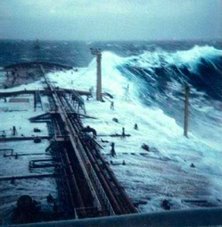
Try handling these waves!


Ship In Rough Water - Watch more free videos


And then there is the....
http://www.gonhs.org/images/NewFlameWreck_000.jpg

Costa de la Luz
New Flame salvage operation reported to be underway off Gibraltar
By m.p.
Jan 6, 2008 - 7:38 PM

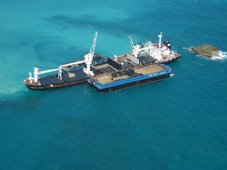
The Warrior, a specialised tow boat which flies under a United States flag, arrived on Saturday to assist in the salvage operation for the stricken cargo ship, the New Flame, which has been lying half sunken off Gibraltar since it was hit by a tanker last August. The vessel broke in two in heavy weather on 22nd December.

Titan Maritime, one of the largest companies in the field of marine salvage, is now in charge of the operation to recover the New Flame and its cargo of 42,000 tons of scrap metal.

The Mayor of Algeciras, Tomás Herrera, has meanwhile said that work to clean up La Concha Beach is proceeding well, and said there have been no new spills on the local beaches. The Environment Ministry said last Thursday that a team of 10 personnel from the Coastal Authority remains on standby in the area to take immediate action in the case of any further pollution. The Ministry said 239 tons of polluted material have been removed from the beaches in Algeciras, which authorities in Spain believe came from the New Flame.


Volunteer Efforts...

A volunteer cleanup effort will be held Saturday to help pick up after a tornado tore through northern Boone County on Monday. The cleanup will start at 8 a.m. at the Poplar Grove Fire Station on Illinois 173 in Poplar Grove. Lt. Phil Beu of the Boone County Sheriff’s office released totals for injuries and damage today. Four homes were determined to be uninhabitable, four others sustained major damage and nine homes received minor damage. There were 38 structures, including outbuildings and silos, and nine vehicles that were also harmed by the storm. Four people were injured, none fatally. The most seriously injured was Jeannette Nichols, who sustained broken ribs, broke her collarbone in two places and had a punctured lung, among other injuries. One horse, belonging to George Conley of Capron, was killed.

LASTLY
Thursday, 03 January 2008200801030500

Round-the-world skipper hails 'guardian angel'

Record-breaking British sailor Dee Caffari has been reunited with her "guardian angel" in Wellington.

She embraced Westpac rescue helicopter crewman Dave Greenberg for the first time yesterday after he plucked one of her crew from the Pacific Ocean in a dramatic rescue during the Global Challenge almost three years ago to the day.

Ms Caffari was delighted to finally meet her friend's saviour, who now holds a special place in her heart.

"He is my southern hemisphere guardian angel. I owe a lot to Dave and we will always be friends because of what happened," she said.

"Whenever I am in the water I think of guys like him that make everything okay."

The rescue helicopter flew overhead as the pair embraced, and Ms Caffari remarked that three years ago it was the best sight she could have seen.

The rescue was sparked after John Masters, a crew member on her yacht, was thrown into a cabin when a rogue wave hit the boat off the Chatham Islands. He was later found to have potentially fatal peritonitis.

Mr Masters, a 59-year-old Kiwi-born Essex teacher, who was also suffering from an abdominal infection, was lifted off the yacht by helicopter before being flown the 600 kilometres to Wellington by fixed-wing aircraft for treatment.

The mercy mission, involving four aircraft, was the third-longest-distance rescue in the history of Wellington's Life Flight service.

Mr Greenberg said he looked back proudly on the rescue. "But I hope we never meet again in those circumstances. She is a very remarkable woman, and I wish her all the best in her future endeavours."

Mr Greenberg was invited to launch Ms Caffari's new Kiwi-built 20-metre yacht, Aviva, at Chaffers Wharf. She will race the boat in the Vendee Globe non-stop solo round-the-world race in November. The Ocean 60 yacht was built by Hakes Marine in Seaview, Lower Hutt.

The 33-year-old from Hampshire, the first woman to sail around the world alone going west, is now aiming to become the first to complete the voyage both ways.

She decided to have the yacht built in New Zealand because of the technology and craftsmanship available.

She will spend the few weeks getting acquainted with Aviva, which took seven months to build, before it is shipped to Europe. She will then compete in a race from France to the United States to prepare for the Vendee Globe.

The Open 60s are some of the fastest boats in sailing, created for solo sailors who push their machines to the limit.

"This boat rocks, it is really fast. I will spend the next couple of weeks sailing it to see if there are any issues, but, fingers crossed, it is okay."


RS

Saturday, January 5, 2008

Dar be Storms Ablow'in!

Monster storm sweeps through California

Updated Sat. Jan. 5 2008 7:52 AM ET

The Associated Press

"We don't take these evacuation orders lightly. We do everything we can to make sure they're necessary," Blawn said. "The thing with debris flows, mudslides and flash floods is that you can't see them coming."

A voluntary evacuation was in effect at an apartment complex northwest of downtown Los Angeles because of flooding and a small mudslide.

Flash flood warnings were issued late Friday for most of Los Angeles County and all of southeastern Santa Barbara and Ventura counties. Riverside and San Bernardino counties deployed swift-water rescue teams in case torrential rains brought flash floods and mudslides.

Homeowners in Southern California stacked sandbags and hay bales around their homes while residents in the low-lying areas of the Central Valley piled sandbags to barricade their homes from streams and creeks that forecasters warned might swell.

The state opened its emergency operations center Friday morning to coordinate storm response, and Gov. Arnold Schwarzenegger said he had spoken with Homeland Security Secretary Michael Chertoff by phone.

The National Guard said it had personnel on standby, and the California Department of Forestry and Fire Protection dispatched inmate crews in Northern California's Butte, Glenn and Placer counties to clear debris from roadways, spokesman Daniel Berlant said.

The agency also deployed swift-water rescue teams in Butte, Placer and Riverside counties to handle torrential rains that might bring flash floods and mudslides.

In the Sierra National Forest, a frantic daylong search for three missing members of a Clovis family ended just after nightfall when rescuers found them in good condition with three other hikers who had apparently gotten trapped in the woods after the storm hit.

Forecasters expected the storm to dump as much as 10 feet of snow in the Sierra Nevada, where a blizzard warning was downgraded Friday evening to a winter storm warning.

Lake Tahoe was forecast to get between 1 to 2 feet of snow, and the Sierra foothills could get some light accumulation when a third, colder storm moves into the region Saturday.

"It's going to be a mess for travelers," said Chris Smallcomb, a weather service meteorologist. "We expect the road conditions will be hazardous if not impossible."

Friday evening, the California Department of Transportation closed Interstate 80 across the Sierra, the main east-west link between Northern California and Nevada.

The Red Cross set up a 200-bed shelter in Truckee for stranded motorists, as well as a shelter in Butte County.

Air travelers saw their flight plans put on hold when airlines delayed or canceled flights in Sacramento and the San Francisco Bay Area.

About 600,000 people from the Bay Area to the Central Valley were in the dark early Saturday, down from about 1.5 million the day before. Crews worked to restore power, but it could be days before all the lights are on, Pacific Gas & Electric officials said.

Howling winds, pelting rain and heavy snow took its heaviest toll Friday on Northern California, where trucks flipped on interstates.

The huge storm also toppled trees and cut power to thousands of residents in Washington and Oregon.

"A huge tree, over 100 years old, just fell across the house. It just wrecked the whole thing," said Faye Reed, whose daughter Teenia owns the damaged home north of Sacramento. "They won't be able to live in it. The whole ceiling fell in, and now it's raining inside."

INTERNATIONALLY - IAEM EUROPE REPORTS

MEXICO: Authorities in Tijuana are preparing for the heavy rains. Emergency officials are working to spread word about the storm to people in Tijuana's far flung neighborhoods. KPBS Reporter Amy Isackson has the story. Tijuana's director of Civil Protection, Alberto Escobedo, says weather officials predict the same amount of rain as 1993 when storms killed 28 people in Tijuana and left about 5,000 homeless. He says then the city's lack of infrastructure combined with four inches of rain in just six hours spelled disaster. Escobedo says a similar prediction for heavy rain this weekend has them preparing for the worst. Escobedo says shelters in Tijuana and Rosarito are ready to take in 2000 people and more shelters are open in neighborhoods throughout the region. Tijuana still suffers from overcrowded neighborhoods and drainage problems that contributed to massive flooding in 1993. Many newcomers live in makeshift homes on hillsides. Escobedo says that makes them vulnerable and many don't realize what heavy rain can do.

AUSTRALIA: New South Wales - Parts of the NSW North Coast have been declared natural disaster areas after heavy rain and severe flooding. NSW Emergency Services Minister Nathan Rees has officially declared the Tweed and Kyogle areas natural disaster zones after visiting the region today. A spokesman for the minister says they're still considering natural disaster declarations for the Richmond valley and Lismore depending on whether more rain falls tonight. Overnight some 500 people were evacuated from areas around Kyogle and South Murwillumbah where more than 300mm of rain fell in just three hours.

AUSTRALIA: Queensland - The Queensland State Emergency Service says flash floods in the Gold Coast Hinterland have caught many people by surprise. More than 350 millimetres of rain fell in some areas overnight, causing flash flooding and raising floodwaters in the Logan and Albert Rivers. The Logan River is expected to flood later today. SES spokesman Andy Christie says volunteers have been involved in 20 rescues overnight.

AFRICA: Deadly floods hit southern Africa
Heavy rain is expected to continue until February. Severe flooding in Zimbabwe and Zambia has killed at least 21 people and left thousands homeless in the past month, and threatens to affect farming. In Mozambique, the authorities have declared a red alert, with rivers rising above "critical" levels. The rains, which began in early December, have washed away homes and livestock throughout the area.

FROM PUERTO RICO

Coast Guard rescues passengers of Puerto Rican ship

Coast Guard rescues passengers of <span class=Puerto Rican ship" border="0" height="205" width="389">
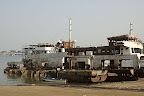
KEY WEST, Fla. (WSVN) -- The Coast Guard rescued six people from a foreign boat stranded at sea.

Authorities said crews navigated through rough waves and strong winds before reaching the 127-foot Puerto Rican-based passenger ship, which experienced engine failure 33 miles south of Big Pine Key.

Officials transferred the passengers to a Coast Guard cutter before towing their ship to Key West.

MARITIME NOTE

Bulgarian cargo ship sinks in Azov Sea

Vanessa-C


SOFIA, Bulgaria, Jan. 4 At least seven sailors died when a Bulgarian cargo ship sank in a wind storm in the Azov Sea adjoining the Black Sea, Russian authorities said.

Russian and Bulgarian rescuers in ships and helicopters searched the area Friday for the three sailors who were still unaccounted for, the Bulgarian Sofia News Agency reported. One sailor was rescued.

The Bulgarian Vanessa ship, with a crew of 11 -- 10 Bulgarians and one Ukrainian -- sank Thursday morning at the Russian-Ukrainian maritime border in the Kerch Strait, Serbia's radio-television RTS reported quoting Russian officials.

The Vanessa was carrying Russian iron to the Bulgarian Black Sea port of Burgas.

The storm that sank the Vanessa affected land travel, too. Highways leading from central Bulgaria to the Black Sea coast were blocked by snowdrifts, leaving hundreds of vehicles stranded. The two major Black Sea ports, Varna and Burgas, were closed to sea traffic.

More than 300 villages and towns across Bulgaria were left without electricity and more than 30 villages had no tap water.


OTHER MARITIME STORM RELATED CASUALTIES
FROM CARGOLAW

42-ft sailboat Red Cloud, with two men, a woman and a dog, was overwhelmed by high winds and 20-ft seas nearly 200 miles offshore Galveston, Texas on Jan. 1. The vessel reported it was taking on water and that its cabin roof was being ripped apart. A rescue helicopter made it to to the vessel for rescue in about 50 minutes. From our Sr. Correspondent Tim Schwabedissen (Thurs. Jan 3 2008).

554-ft Thai-flagged freighter M/V Mathawee Naree (ex Ocean Camellia, Joy Victory), Vancouver to Japan with 28,000 tons copper concentrate and 24 aboard, lost power and became disabled 180 nautical miles northwest of Attu on Dec. 31 The vessel is adrift in heavy seas the Bering Sea. USCG Jarvis dispatched to the scene and a USCG C-130 was conducting aerial surveillance. From our Sr. Correspondent Tim Schwabedissen (Thurs. Jan 3 2008).

Unidentified North Korean fishing vessel, with 3 crew, disabled and required urgent assistance in the Japan Sea on Jan. 2. Russian-flagged M/V Kapitan Kiriy (IMO 7384261) assisted the vessel and took the crew aboard, though two crew had died of hypothermia. From our Moscow Correspondent Mike Voitenko (Thurs. Jan 3 2008)


RS

Monday, August 13, 2007

50 drowned, 100 missing in Sierra Leone as boat capsizes

Aug 3, 2007 FREETOWN, Sierra Leone (Reuters) -- Around 50 people were feared drowned and more than 100 were missing after their boat capsized in heavy rain at the mouth of a river in Sierra Leone, police said on Friday.

A spokesman for a local boat owners' association said seven bodies had so far been recovered from the sea at the estuary of the Great Scarcies River, near Sierra Leone's northern border.

Police in the northern Kambia district estimated around 50 people had died based on accounts from the only two survivors found so far.

The boat, which was en route from the coastal capital Freetown to the riverside town of Rokupr, was believed to be carrying around 200 passengers when it ran into the choppy river waters, swollen by a week of torrential rains.

"Members of the Sierra Leone navy, backed by some members of the boat association, left in the early hours for the disaster scene to join local fishermen who have been searching since the tragedy took place," said the spokesman for the boat owners' association, Michael Asuman.

Authorities say that the heavy rains have washed away scores of homes in the hilly Freetown area over the last week, leaving more than 500 people on the streets.

Boating accidents are common during Sierr Leonea Leone's treacherous rainy season. Some 25 people drowned in July last year when a wave overturned their boat at the mouth of the Great Scarcies river.

Many of the vessels plying trade and passenger routes on inland waterways and off West Africa's coast are poorly maintained, with accurate passenger manifests a rarity.

Copyright 2007 Reuters. All rights reserved.This material may not be published, broadcast, rewritten, or redistributed.

Martiime Notes:

This from my shipmate at gCaptain.com
Tanker Grounded off Coney Island, NY

After experiencing a steering problem the tanker “White Sea” ran aground off of Coney Island New York. The Gotahamist tells us: Continue reading at gCaptain.com .

Casualties from Cargolaw.com:

Cari-carrier M/V Nobleza, Monrovia-flagged, was caught by strong wind and pushed against pilings in the Kiel Canal with its port side while passing from Brunsbuettel to Kiel-Holtenau on Aug. 5. The vessel lated resumed its voyage with minor dents. From our Sr. Correspondent Tim Schwabedissen (Thurs. Aug. 9 2007)

F/V Zhu Wan 4209 sank in a tropical storm in the waters of the Xisha Islands in the South China Sea on Aug 3. All five abaord were rescued by 35,500-ton German container M/V Northern Faith. From our Sr. Correspondent Tim Schwabedissen (Thurs. Aug. 9 2007).

Weather Story:

CHINA:Thousands of China homes flooded. More than 3,600 homes in southern China have been destroyed by floods resulting from a now fading tropical storm, Chinese state media has reported. The floods in Guangdong province have affected about 1.2 million people and caused an estimated 1.3bn yuan ($171m) of damage, Xinhua news agency said. The rain was caused by Tropical Storm Pabuk, which hit Hong Kong on Friday, disrupting transport and business.

The latest on Hurricane Flossie:

HONOLULU, Hawaii (AP)
-- Hurricane Flossie strengthened to a Category 4 storm Saturday as it spun more than 1,000 miles south of Hawaii.
art.flossie.satellite.noaa.jpg

Satellite image taken at 10:30 a.m. ET shows Flossie's position relative to Hawaii.

At 11 a.m. EDT, Flossie had intensified with maximum sustained winds near 132 mph, and was about 1,100 miles southeast of Hilo, Hawaii. Flossie was upgraded to Category 3 from a Category 1 overnight.

The storm was expected to weaken later in the day as it passed over cooler waters. It was traveling west at about 12 mph.

Jeff Powell, lead forecaster at the National Weather Service in Honolulu, said Flossie hadn't changed its course and was expected to pass the Hawaiian Islands early Wednesday with rough surf. A "ramp up" of surf on the Big Island was expected late Monday.

The island's southeastern shores could see waves of 8 to 12 feet, forecasters said, with the surf rising during the day Monday and peaking Tuesday. The island's South Point is the southernmost area of the United States.

State civil defense officials urged residents to be prepared because of the unpredictable nature of hurricanes. A one or two degree direction change, they say, could make a big difference.

"If this thing fizzles out, so what? Everybody should still be prepared," said Dave Curtis, spokesman for the state Civil Defense Agency.

Flossie formed as a tropical storm Wednesday about halfway between Mexico's southern Pacific coast and Hawaii. Its winds surpassed 74 mph, making it a hurricane, on Friday.

The last time a hurricane hit Hawaii was in 1992, when Iniki ravaged Kauai, killing six people and causing $2.5 billion in damage.

Hurricane season runs from June 1 to Nov. 30. In May, forecasters predicted that Hawaii and the rest of the central Pacific face a slightly below-average hurricane season, with just two or three tropical cyclones expected because of lower sea surface temperatures.The islands get an average of 4.5 tropical cyclones a year and one hurricane about every 15 years. Last year, the central Pacific had five tropical cyclones after the National Oceanic and Atmospheric Administration predicted two to three.

On July 21, a tropical depression moved past the Big Island, bringing a few inches of rain to the parched island but no major problems. Cosme, the year's first Pacific tropical cyclone, reached hurricane status for a day before it weakened.

Finally, how about a little rough seas off of the coast of Japan?


RS